How Long Was Paul in Ephesus? His Ministry and Biblical Timeline
The Apostle Paul spent approximately two to three years in Ephesus during his third missionary journey, making it one of the longest periods of ministry in a single city recorded in the New Testament.
His time in Ephesus was particularly important for the development of early Christianity. According to the Acts of the Apostles, Paul taught in the synagogue, continued his ministry in the lecture hall of Tyrannus, performed extraordinary works and helped spread Christian teaching throughout the Roman province of Asia.
But how long was Paul actually in Ephesus? When did he arrive, what did he do there, and why did this ancient city become so important in biblical history?
This guide explores the biblical accounts, the approximate timeline of Paul's visits and the historical significance of Ephesus in early Christianity.
How Long Did Paul Stay in Ephesus?
According to the New Testament, Paul spent approximately two to three years in Ephesus during his third missionary journey.
Acts 19:8–10 describes two important periods of his ministry:
-
He taught in the synagogue for three months.
-
After leaving the synagogue, he continued teaching daily in the lecture hall of Tyrannus for two years.
Later, in Acts 20:31, Paul reminded the elders of the Ephesian church that he had served among them for three years.
These references are generally understood as describing a stay of roughly two years and several months, commonly rounded to three years.
The short answer: Paul spent approximately two to three years in Ephesus during his main period of ministry there, in addition to an earlier brief visit.
When Was Paul in Ephesus?
Paul visited Ephesus on two important occasions described in the Acts of the Apostles.
Paul's First Visit: The Second Missionary Journey
Paul first arrived in Ephesus during his second missionary journey, as described in Acts 18:18–21.
During this visit:
-
Paul entered the synagogue and spoke with the Jewish community.
-
He discussed his message with those who listened.
-
He left Priscilla and Aquila in Ephesus.
-
He promised to return if it was God's will.
This first visit was relatively brief. The biblical account does not specify its exact duration.
Priscilla and Aquila remained in the city and later helped explain the Christian message more accurately to Apollos, an eloquent teacher who had arrived in Ephesus.
Paul's Main Stay: The Third Missionary Journey
Paul returned to Ephesus during his third missionary journey, as recorded in Acts 19:1.
This became his most significant period of ministry in the city.
He initially taught in the synagogue and later moved to the lecture hall of Tyrannus, where he continued teaching daily.
The account describes an extended period of activity, including teaching, religious disputes and events that attracted considerable attention throughout the region.
The exact calendar dates of Paul's stay are not certain. Many historical chronologies place his main Ephesian ministry broadly around AD 52–55, although proposed dates vary.
What Did Paul Do During His Time in Ephesus?
Paul's ministry in Ephesus involved teaching, developing relationships with believers and spreading the Christian message.
The Acts of the Apostles describes several important events during this period.
1. He Taught in the Synagogue
When Paul returned to Ephesus, he initially preached in the synagogue.
According to Acts 19:8, he spoke there for approximately three months, discussing the Kingdom of God and trying to persuade his listeners.
Some accepted his teaching, while others opposed it.
2. He Taught in the Lecture Hall of Tyrannus
After opposition developed in the synagogue, Paul continued his teaching in the lecture hall of Tyrannus.
Acts 19:9–10 states that this teaching continued daily for two years.
This became an important part of his ministry in Ephesus. According to the biblical account, people from across the Roman province of Asia heard the Christian message during this period.
The lecture hall is known from the biblical text, although its exact archaeological location has not been conclusively identified.
3. He Performed Miracles
Acts 19:11–12 describes extraordinary events associated with Paul's ministry.
The passage mentions healings involving cloths that had touched Paul.
These accounts were important to the early Christian community and contributed to the reputation of his ministry in the city.
4. The Burning of Magic Scrolls
Another significant event took place when people who had practised magic publicly burned their scrolls.
Acts 19:18–20 describes how some people who had accepted the Christian message brought their books together and burned them.
The event is presented in the biblical account as a public demonstration of their change in beliefs and practices.
5. The Riot of the Silversmiths
One of the most dramatic events during Paul's stay in Ephesus was the disturbance involving the silversmith Demetrius.
According to Acts 19:23–41, Demetrius and other craftsmen were concerned that the spread of Paul's teaching would damage their trade.
They produced silver shrines associated with Artemis, the city's principal goddess, and feared that fewer people would buy them if the worship of Artemis declined.
A large crowd gathered in the Great Theatre, creating a serious public disturbance.
The event illustrates the connection between religious traditions, local commerce and civic identity in ancient Ephesus.
Why Was Ephesus So Important to Paul's Ministry?
Ephesus was one of the major cities of the Roman province of Asia. Its commercial activity, religious traditions and regional influence made it an important place for Paul's missionary work.
A Major Centre of the Ancient Mediterranean
Ephesus was an important urban centre with extensive commercial and cultural connections.
Its position in western Asia Minor made it a natural location from which ideas and religious movements could spread to surrounding communities.
The Temple of Artemis
The Temple of Artemis was one of the most famous religious sanctuaries of the ancient world.
The worship of Artemis was deeply connected to the identity and economy of Ephesus.
Paul's teaching challenged some established religious practices, which helps explain the strong reaction described in Acts 19.
A Centre for Early Christian Communities
The biblical account connects Paul's work in Ephesus with the wider spread of Christianity throughout the province of Asia.
The city's importance continued after Paul's departure, and the Ephesian Christian community remained significant in early Christian history.
Who Founded the Church in Ephesus?
The development of the early Christian community in Ephesus involved several individuals rather than one founder alone.
The New Testament describes the contributions of Paul, Priscilla, Aquila and Apollos.
Priscilla and Aquila
Paul left Priscilla and Aquila in Ephesus during his first visit.
According to Acts 18:24–26, they later met Apollos, who was teaching in the synagogue. They took him aside and explained the Christian message more accurately.
Their role suggests that Christian teaching was already developing in Ephesus before Paul's longer return.
Apollos
Apollos was a Jewish teacher from Alexandria who arrived in Ephesus and spoke publicly about Jesus.
After receiving further instruction from Priscilla and Aquila, he travelled to Achaia.
His work forms another important part of the early Christian history of Ephesus.
Paul
Paul's extended ministry strengthened the Christian community and helped spread the message throughout the region.
His teaching and the events described in Acts 19 made Ephesus one of the most significant centres of his missionary activity.
What Happened to the Christian Community After Paul Left?
Paul's relationship with the Ephesian Christians continued after he left the city.
Acts 20:17–38 describes his farewell meeting with the elders of Ephesus at Miletus.
During this meeting, Paul reminded them of his ministry and encouraged them to care for the community.
The New Testament also contains the Letter to the Ephesians, which is closely associated with the Christian community in the city. Its authorship and historical circumstances are subjects of scholarly discussion.
Ephesus later became an important centre in early Christian tradition and is associated with several important figures and events in Christian history.
Where Can You See the Places Associated With Paul in Ephesus Today?
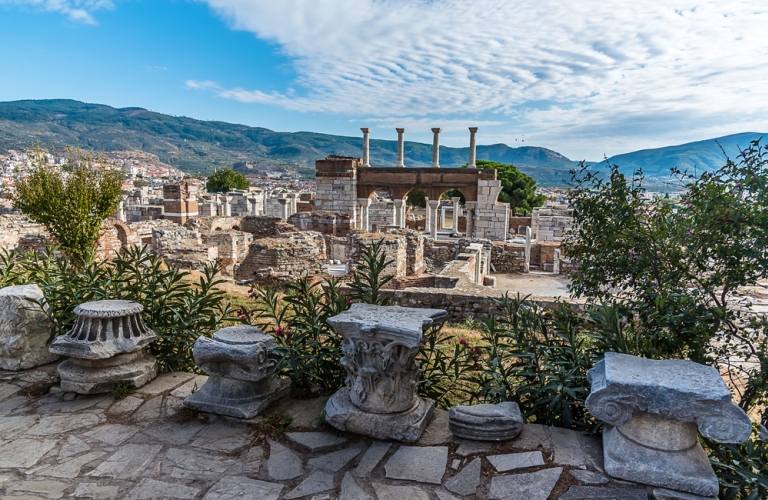
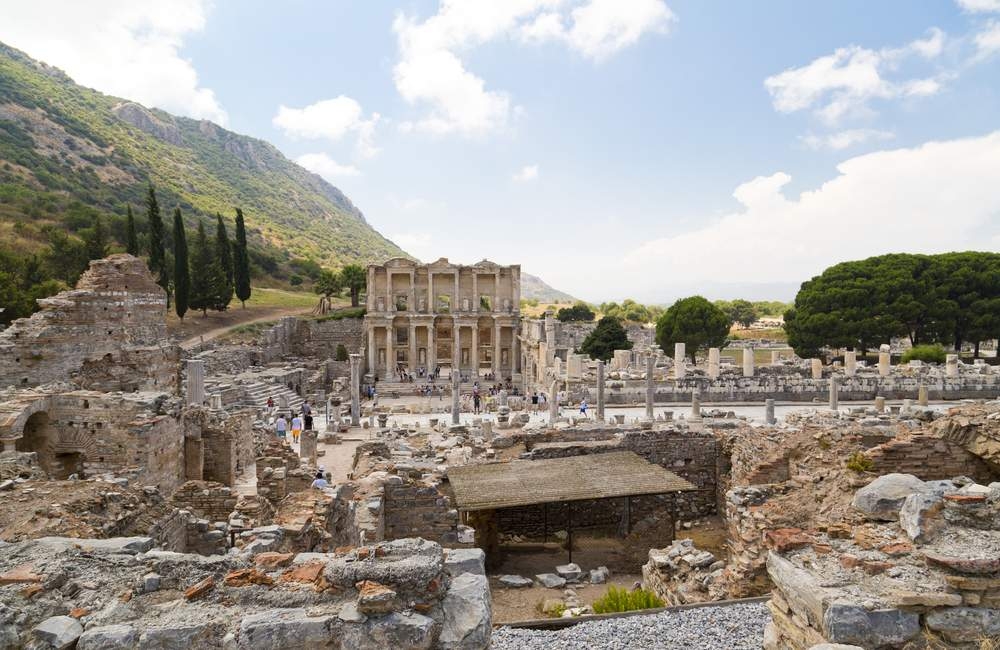
Visitors can explore the archaeological remains of ancient Ephesus and imagine the setting in which Paul lived and taught.
Although the exact locations of several events described in Acts cannot be identified with certainty, the ancient city provides important historical context.
The Great Theatre
The Great Theatre is one of the most impressive structures in Ephesus.
It is traditionally associated with the public gathering described in Acts 19, when a crowd assembled during the disturbance involving the silversmiths.
The theatre remains one of the most memorable landmarks of the archaeological site.
The Ancient Streets of Ephesus
Walking along the ancient streets gives visitors an impression of the city's size and urban layout during the Roman period.
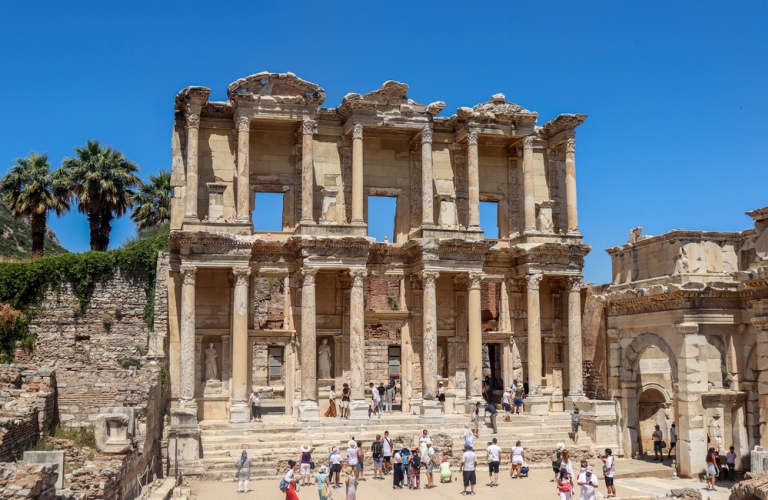
The Library of Celsus, Curetes Street and other monuments help illustrate the environment in which the early Christian community developed.
The Temple of Artemis
The Temple of Artemis stood near the ancient city and was central to the religious life of Ephesus.
Although little of the original structure survives today, its historical importance helps visitors understand the religious environment described in Acts 19.
Frequently Asked Questions About Paul in Ephesus
How many years did Paul spend in Ephesus?
Paul spent approximately two to three years in Ephesus during his main period of ministry on his third missionary journey. Acts 19 describes three months in the synagogue and two years in the lecture hall of Tyrannus, while Acts 20:31 refers to three years.
Did Paul visit Ephesus more than once?
Yes. Paul first visited Ephesus briefly during his second missionary journey and returned for an extended period during his third missionary journey.
When did Paul first arrive in Ephesus?
Acts 18 describes Paul's first visit, but the Bible does not give an exact calendar date. His main period of ministry is commonly placed in the early-to-mid 50s AD, although historical chronologies differ.
Where did Paul teach in Ephesus?
Paul initially taught in the synagogue. After opposition developed, he continued teaching daily in the lecture hall of Tyrannus, according to Acts 19:8–10.
Did Paul write the Letter to the Ephesians while he was in Ephesus?
The Letter to the Ephesians is traditionally associated with Paul, but it is generally understood as having been written after the period of his ministry in the city. Its precise date, place of composition and authorship are debated by scholars.
What happened during the riot in Ephesus?
According to Acts 19:23–41, the silversmith Demetrius organized opposition because Paul's teaching threatened the trade associated with silver shrines of Artemis. A large crowd gathered in the Great Theatre before the city official brought the disturbance under control.
Can visitors see the places associated with Paul today?
Visitors can explore the Great Theatre, ancient streets and other archaeological remains of Ephesus. However, the exact location of the lecture hall of Tyrannus has not been conclusively identified.
Discover Biblical History in Ancient Ephesus
Paul's time in Ephesus was one of the most important periods of his missionary work. His teaching, the development of the early Christian community and the events described in Acts 19 all contributed to the city's place in biblical history.
Today, visitors can explore the ancient streets, see the Great Theatre and discover the religious and cultural setting in which early Christianity developed.
If you are interested in exploring these historical sites with a knowledgeable local guide, discover our Ephesus Tours and experience the history of this remarkable ancient city.

Erdal Serbest is a travel content writer and tourism professional with a background in Tekirdağ Tourism Vocational High School. He has extensive experience in the hospitality and travel agency sectors, where he worked for several years supporting tour operations and destination marketing.
Throughout his career, he has created travel-focused blog content and contributed to destination promotion projects for various tourism platforms. Today, he focuses on developing engaging, informative, and experience-based content for turkeytravel.com.
He believes that travel is the most authentic way to understand cultures, flavors, and human stories, and he aims to reflect this perspective in every article he writes.