Quick Answer
For a first visit to Ephesus, prioritize the Library of Celsus, Curetes Street, the Great Theatre, Terrace Houses, and the Temple of Hadrian inside the ancient city. If you have more time, visit the House of the Virgin Mary, Basilica of St. John, Temple of Artemis, and Ephesus Archaeological Museum in nearby Selçuk.
Most visitors need 2–4 hours to explore the main ruins of Ephesus. A half-day or full-day visit allows you to combine the ancient city with nearby attractions.
Ephesus at a Glance for First-Time Visitors
| Experience | Priority | Time Needed | Best For |
|---|---|---|---|
| Ephesus Ancient City | Essential | 2–4 hours | First-time visitors, history lovers |
| Library of Celsus | Essential | 15–20 min | Architecture, photography |
| Curetes Street | Essential | 20–30 min | History, walking, photography |
| Great Theatre | Essential | 15–30 min | History, ancient architecture |
| Terrace Houses | Highly Recommended | 30–45 min | Ancient daily life, mosaics |
| House of the Virgin Mary | Recommended | 30–45 min | Religious and cultural interest |
| Ephesus Archaeological Museum | Recommended | 1 hour | History, archaeology |
| Basilica of St. John | Recommended | 30–45 min | Byzantine history, views |
| Temple of Artemis | Optional | 15–20 min | Ancient history |
| Selçuk & Şirince | Optional | 1–3 hours | Local culture, food, village life |
Why Visit Ephesus?
Ephesus is one of the most impressive ancient cities in Turkey and one of the best-preserved archaeological sites in the Mediterranean.
Once an important center of the ancient Greek and Roman world, Ephesus was home to monumental buildings, temples, theatres, markets, and residential areas. Today, visitors can walk along its ancient marble streets and see many of these structures remarkably well preserved.
Ephesus is also closely connected with early Christianity and the history of the region, making it important not only for archaeology but also for religious and cultural tourism.
What Makes Ephesus Special?
- Walking along ancient Curetes Street
- Seeing the iconic Library of Celsus
- Exploring the enormous Great Theatre
- Viewing mosaics and frescoes in the Terrace Houses
- Visiting the nearby House of the Virgin Mary
- Discovering artifacts at the Ephesus Archaeological Museum
- Exploring the remains of the Temple of Artemis, one of the Seven Wonders of the Ancient World
What Should First-Time Visitors Prioritize?
If you only have a few hours in Ephesus, focus on the ancient city's main monuments rather than trying to see everything.
If You Have 2 Hours
Prioritize:
- Library of Celsus
- Curetes Street
- Great Theatre
- Temple of Hadrian
This gives you a good introduction to the most iconic parts of the ancient city.
If You Have 3–4 Hours
Add:
- Terrace Houses
- Agora
- Ancient public buildings
- Additional monuments along Curetes Street
This is a better option if you want to explore Ephesus at a comfortable pace.
If You Have a Full Day
You can combine Ephesus Ancient City with nearby attractions such as:
- House of the Virgin Mary
- Basilica of St. John
- Ephesus Archaeological Museum
- Temple of Artemis
- Selçuk
- Şirince
The 10 Must-See Things to Do in Ephesus
1. Explore the Ancient City of Ephesus
The main attraction is, of course, Ephesus Ancient City itself.
Walking through the ruins allows you to see the remains of streets, temples, public buildings, fountains, theatres, and residential areas that once formed one of the most important cities of the ancient world.
For first-time visitors, the ancient city should be the clear priority.
Highlights Inside Ephesus
- Library of Celsus
- Curetes Street
- Great Theatre
- Temple of Hadrian
- Terrace Houses
- Ancient Agora
- Arcadian Way
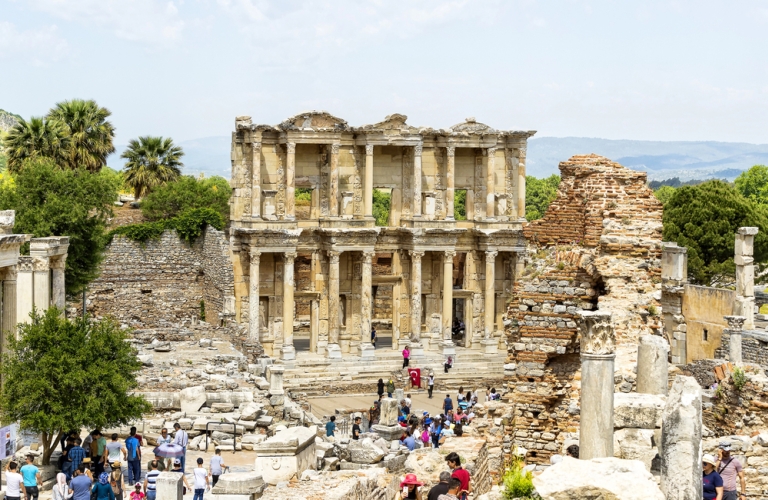
2. See the Library of Celsus
The Library of Celsus is the most recognizable monument in Ephesus and one of the most photographed ancient structures in Turkey.
Built in the 2nd century AD, the library was constructed as a monumental tomb and library for Tiberius Julius Celsus Polemaeanus.
Why Is the Library of Celsus a Must-See?
- Its monumental Roman façade
- Detailed columns and decorative elements
- Statues representing important virtues
- Its importance as a symbol of ancient Ephesus
Tip: Early morning is generally the best time for photography and a more comfortable visit.
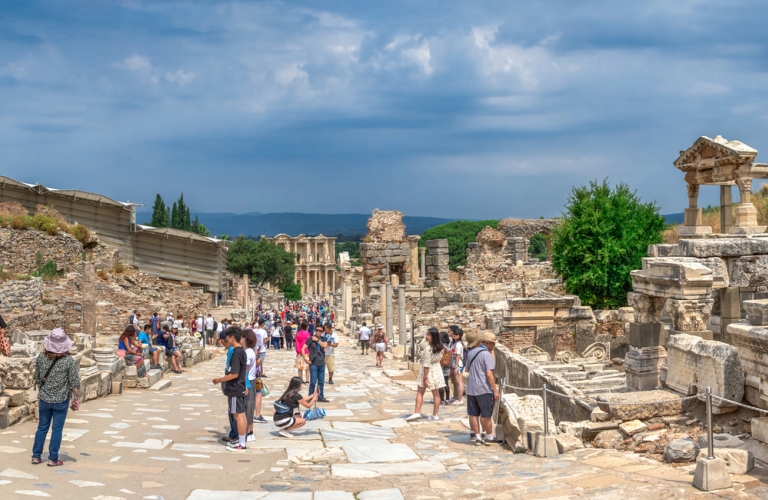
3. Walk Along Curetes Street
Curetes Street was one of the main streets of ancient Ephesus.
Walking along its marble surface gives you a strong impression of how people moved through the ancient city. The street is lined with monuments, fountains, columns, and entrances to important buildings.
Highlights Along Curetes Street
- Temple of Hadrian
- Nymphaeum of Trajan
- Terrace Houses
- Ancient fountains
- Monumental columns
Take your time here rather than simply walking through it. This is one of the best places to appreciate the scale and layout of ancient Ephesus.
4. Visit the Great Theatre
The Great Theatre of Ephesus is one of the most impressive structures in the ancient city.
Built into the slope of Mount Pion, the theatre was used for performances, public gatherings, and other events.
Why Visit the Great Theatre?
- Impressive size and architecture
- Views over the ancient city
- Remarkable acoustics
- Strong connection with the history of early Christianity
The theatre is also associated with St. Paul, who is traditionally said to have preached in Ephesus.
5. Explore the Terrace Houses
The Terrace Houses provide a fascinating look at how wealthy residents of Ephesus lived.
Unlike the city's monumental public buildings, these houses reveal details of everyday life, including residential rooms, courtyards, mosaics, frescoes, and decorative features.
What Can You See Inside the Terrace Houses?
- Mosaic floors
- Wall frescoes
- Courtyards
- Residential rooms
- Decorative architectural details
The Terrace Houses require a separate admission ticket, so check the current ticket arrangements before your visit.
6. Admire the Temple of Hadrian
The Temple of Hadrian is one of the best-preserved monuments along Curetes Street.
Although relatively small compared with the Great Theatre or Library of Celsus, its detailed architectural decoration makes it one of the most attractive structures in Ephesus.
What Should You Look For?
Pay attention to the decorative reliefs and architectural details around the entrance. They provide a good example of the artistic style used in Roman-period Ephesus.
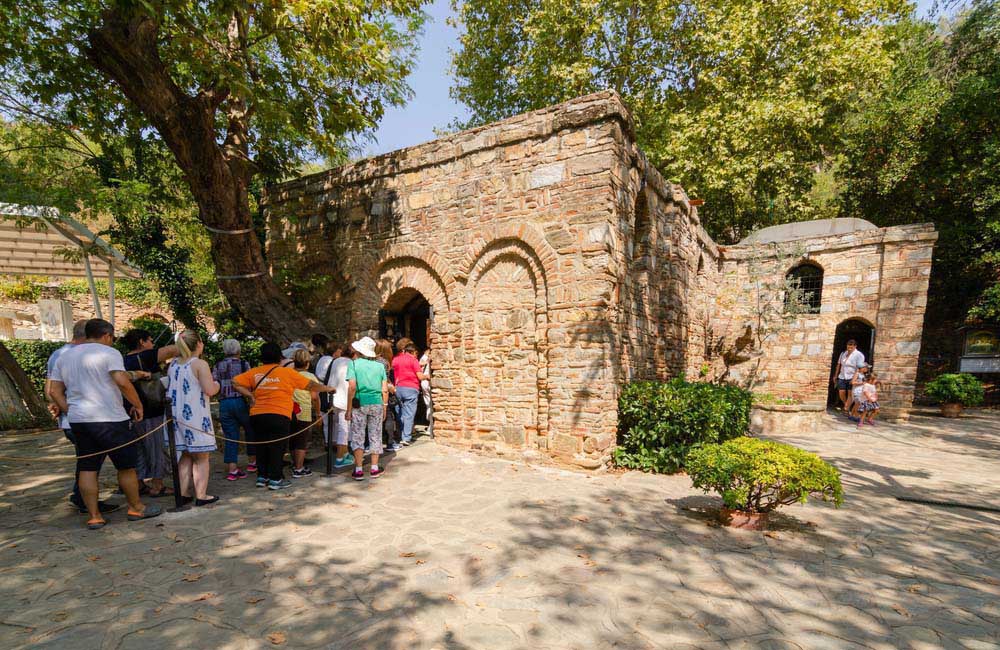
7. Visit the House of the Virgin Mary
Located on Mount Koressos near Ephesus, the House of the Virgin Mary is an important pilgrimage site associated with Mary, the mother of Jesus.
The site is peaceful and surrounded by forest, offering a very different atmosphere from the busy archaeological ruins.
What Can You See?
- The small chapel
- Prayer areas
- Water fountains
- Forested surroundings
Whether you visit for religious reasons or historical interest, it can be a meaningful addition to an Ephesus itinerary.
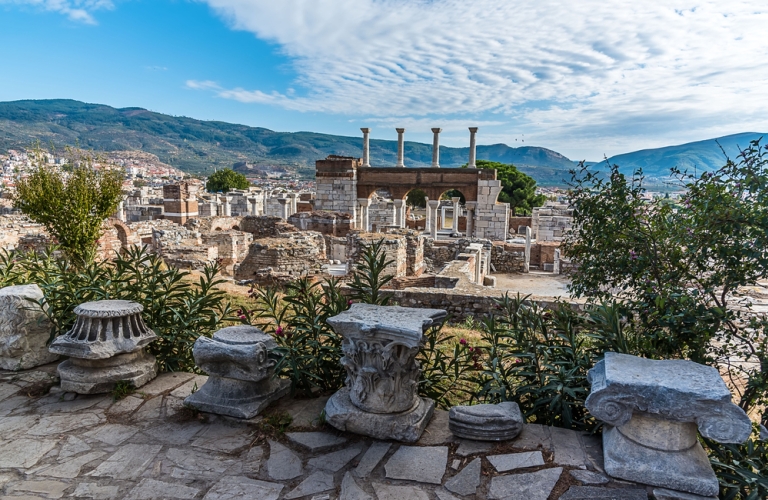
8. Discover the Basilica of St. John
The Basilica of St. John is located in Selçuk, close to Ephesus.
Built during the Byzantine period, the basilica is traditionally associated with the burial place of St. John the Apostle.
Why Visit the Basilica of St. John?
- Byzantine history
- Religious significance
- Views over Selçuk
- Remains of a major early Christian basilica
It can easily be combined with Ephesus Ancient City during a full-day visit.
9. See the Temple of Artemis
The Temple of Artemis was one of the Seven Wonders of the Ancient World.
Today, only a small number of remains survive at the archaeological site, including a reconstructed column. Even though the site is much less impressive physically than the ancient city, its historical importance makes it worthwhile for first-time visitors interested in ancient history.
Things to Know
- The original temple was enormous.
- It was rebuilt several times.
- It was dedicated to Artemis.
- Only limited remains survive today.
Allow around 15–20 minutes for a quick visit.
10. Visit the Ephesus Archaeological Museum
Located in Selçuk, the Ephesus Archaeological Museum contains artifacts discovered in and around the ancient city.
The museum is particularly useful if you want to understand the objects, art, and religious traditions associated with Ephesus rather than only seeing the architectural remains.
Museum Highlights
- Statue of Artemis of Ephesus
- Roman sculptures
- Coins
- Jewelry
- Household objects
- Artifacts from the Terrace Houses
If you have time, visiting the museum after Ephesus can add valuable context to what you saw at the archaeological site.
More Things to Do Around Ephesus
If you have extra time, there are several attractions around Ephesus worth adding to your itinerary.
Visit Isa Bey Mosque
The Isa Bey Mosque, built in 1375, is one of the notable examples of Seljuk architecture in Selçuk.
Its courtyard, stonework, and architectural details make it a worthwhile short stop when visiting the Basilica of St. John or exploring Selçuk.
Explore Selçuk Town
Selçuk is the main town near Ephesus and a convenient place to eat, relax, or explore local life.
Things to Do in Selçuk
- Have lunch at a local restaurant
- Explore local shops
- Visit cafés
- See the town's historic buildings
- Visit the local market when it is operating
Selçuk is particularly convenient if you are spending a full day in the area.
Visit Şirince Village
Şirince is a picturesque village in the hills near Selçuk, known for its traditional architecture, local food, cafés, and relaxed atmosphere.
It is best added to your itinerary if you have more than a few hours available after visiting Ephesus.
Best Time to Visit Ephesus
The best time to visit Ephesus is generally spring and autumn, when temperatures are more comfortable for walking around the largely open-air archaeological site.
| Season | Weather | Crowds | Recommendation |
|---|---|---|---|
| Spring | Mild and pleasant | Moderate | Excellent |
| Summer | Hot and sunny | High | Visit early |
| Autumn | Mild and comfortable | Moderate | Excellent |
| Winter | Cooler, possible rain | Lower | Good for fewer crowds |
What Time of Day Is Best?
Early morning is usually the most comfortable time to visit, especially during the warmer months.
The site has limited shade, so visiting early can help you avoid the strongest midday heat and some of the largest crowds.
Tips for First-Time Visitors to Ephesus
Wear Comfortable Walking Shoes
Ephesus involves considerable walking over ancient stone and marble surfaces. Comfortable shoes are essential.
Bring Water and Sun Protection
Shade is limited in many parts of the archaeological site. Bring water, sunscreen, sunglasses, and a hat, particularly during summer.
Consider Visiting With a Guide
A knowledgeable guide can explain the history behind the ruins, monuments, and archaeological discoveries, making the site much easier to understand.
For travelers who prefer an organized experience, Ephesus Tours can combine the ancient city with nearby attractions and transportation.
Allow Enough Time
Plan at least 2–4 hours for Ephesus Ancient City. Add additional time if you want to visit the Terrace Houses, museum, House of the Virgin Mary, Basilica of St. John, or other nearby attractions.
Check Ticket and Opening Information
Opening hours, admission fees, and ticket arrangements can change by season. Check the latest information before your visit, especially if you plan to visit the Terrace Houses or several nearby attractions.
How Much Time Do You Need in Ephesus?
The amount of time you need depends on whether you want to visit only the ancient city or combine it with nearby attractions.
2-Hour Ephesus Visit
If you have only two hours, focus on the highlights:
- Ephesus Ancient City
- Library of Celsus
- Curetes Street
- Great Theatre
- Temple of Hadrian
This is a fast-paced visit and works best when you have limited time.
Half-Day Ephesus Visit
With around four hours, you can explore the ancient city at a more comfortable pace.
- Ephesus Ancient City
- Library of Celsus
- Curetes Street
- Terrace Houses
- Great Theatre
- Temple of Hadrian
If time permits, you can add the House of the Virgin Mary.
Full-Day Ephesus Itinerary
A full day allows you to combine Ephesus with several nearby historical attractions.
- Ephesus Ancient City
- Terrace Houses
- House of the Virgin Mary
- Ephesus Archaeological Museum
- Basilica of St. John
- Temple of Artemis
- Selçuk or Şirince
This is the best option for travelers who want to experience both ancient Ephesus and the surrounding area.
Frequently Asked Questions About Ephesus
What are the best things to do in Ephesus for first-time visitors?
The top priorities are Ephesus Ancient City, the Library of Celsus, Curetes Street, the Great Theatre, and the Terrace Houses. If you have additional time, visit the House of the Virgin Mary, Basilica of St. John, and Ephesus Archaeological Museum.
How long do you need to visit Ephesus?
Most visitors need around 2–4 hours to explore the main archaeological site. A full day is recommended if you also want to visit nearby attractions in Selçuk.
Is Ephesus worth visiting?
Yes. Ephesus is one of the most important and best-preserved ancient cities in Turkey, with monumental Roman architecture, archaeological remains, and important connections to early Christianity.
What should I not miss in Ephesus?
Do not miss the Library of Celsus, Curetes Street, Great Theatre, and Terrace Houses. These are among the most important highlights of the ancient city.
Can you visit Ephesus in one day?
Yes. A full day is enough to visit Ephesus Ancient City and several nearby attractions, including the House of the Virgin Mary, Basilica of St. John, Ephesus Archaeological Museum, and Temple of Artemis.
What is the best time to visit Ephesus?
Spring and autumn generally offer the most comfortable conditions for exploring Ephesus. During summer, visiting early in the morning is recommended because temperatures can become very high.
Final Thoughts
Ephesus is much more than a collection of ancient ruins. Walking along Curetes Street, standing before the Library of Celsus, exploring the Terrace Houses, and seeing the Great Theatre help bring the history of the ancient city to life.
For first-time visitors, the best approach is to prioritize Ephesus Ancient City and its major monuments first, then add nearby attractions such as the House of the Virgin Mary, Basilica of St. John, and Ephesus Archaeological Museum if time allows.
With a little planning, you can experience the highlights of Ephesus in a few hours or spend a full day exploring the ancient city and the surrounding area.
Planning a wider trip through Turkey? Explore our Turkey Tour Packages for itineraries that include Ephesus alongside destinations such as Istanbul, Cappadocia, Pamukkale, and Antalya.

Erdal Serbest is a travel content writer and tourism professional with a background in Tekirdağ Tourism Vocational High School. He has extensive experience in the hospitality and travel agency sectors, where he worked for several years supporting tour operations and destination marketing.
Throughout his career, he has created travel-focused blog content and contributed to destination promotion projects for various tourism platforms. Today, he focuses on developing engaging, informative, and experience-based content for turkeytravel.com.
He believes that travel is the most authentic way to understand cultures, flavors, and human stories, and he aims to reflect this perspective in every article he writes.
Blog Categories
Turkey Tours
Visit some of the most famous and historical areas that Turkey has to offer to its visitors on one of our Turkey Travel Packages and Turkey Tours.
Ephesus Tours
Explore the wonders of Turkey with Ephesus Tours. Discover ancient history, stunning landscapes, and unforgettable travel experiences.
Gallipoli Tours
Explore Gallipoli with our ANZAC tours. Discover historic battlefields and unforgettable experiences on guided Gallipoli Tours today
CAPPADOCIA TOURS
Discover Cappadocia Tours with hot air balloons, fairy chimneys, cave hotels, underground cities, and unforgettable adventure & cultural experiences.
ISTANBUL TOURS
Explore the best Istanbul Tours with expert guides, exploring historic landmarks, vibrant markets, and unforgettable cultural experiences in Istanbul.
ANTALYA TOURS
Antalya Tours offer unforgettable experiences with crystal-clear beaches, ancient ruins, and thrilling outdoor adventures for every traveler