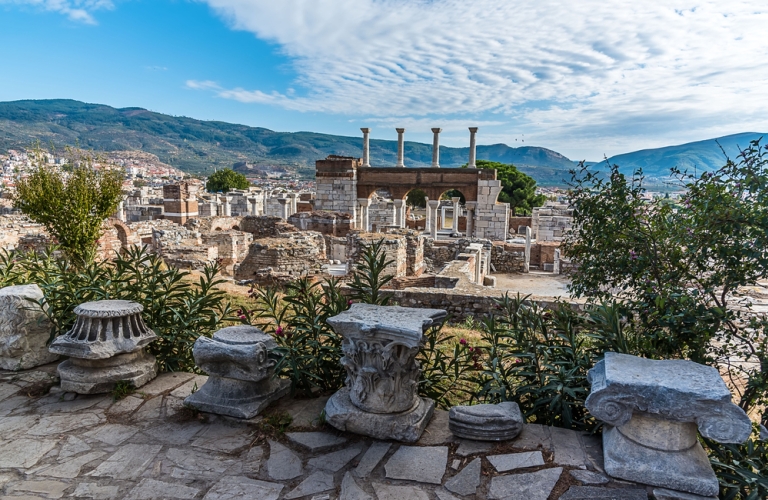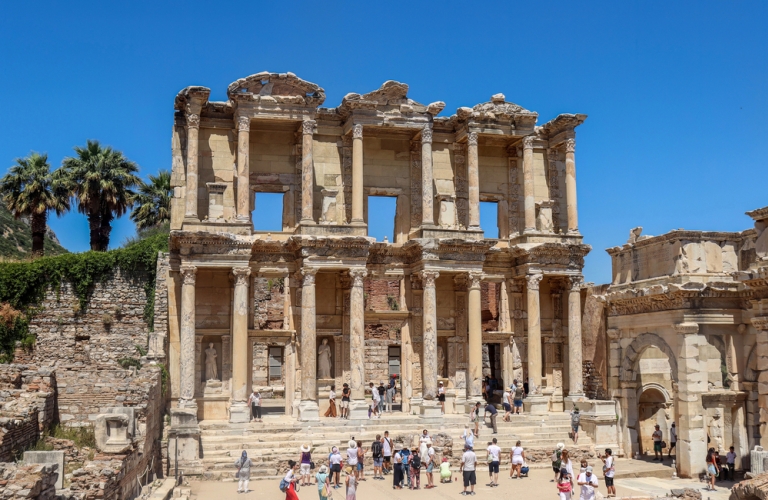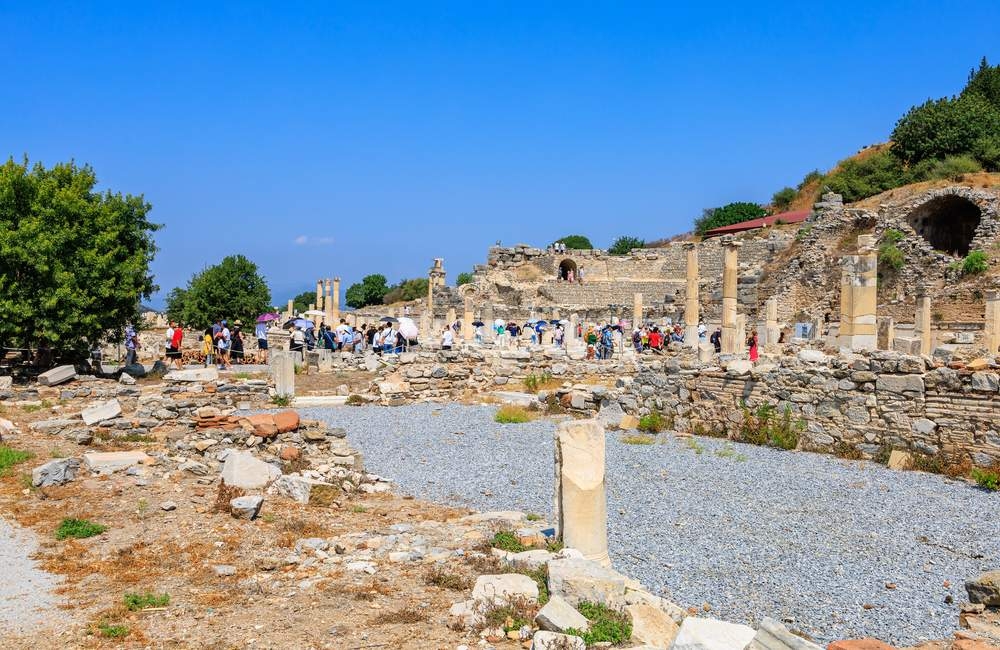
The Temple of Artemis was not only one of the Seven Wonders of the Ancient World, but also a powerful symbol of faith, politics, and prosperity in ancient Anatolia. Travelers and historians alike continue to ask the same enduring question: who built the Temple of Artemis at Ephesus and what was its purpose?
Located in the ancient city of Ephesus, this monumental sanctuary was dedicated to Artemis, the city’s patron deity. More than a religious monument, the temple functioned as a financial center, cultural hub, and political statement of Ephesian identity.
Understanding why the Temple of Artemis at Ephesus was built as a religious center, who financed and designed it, and how Artemis was worshipped in Ephesus in ancient times allows us to grasp its unmatched historical importance.
If you are planning to explore this legendary site in person, joining one of the expertly guided Ephesus Tours is the best way to experience its story where history truly happened.
Who Built the Temple of Artemis at Ephesus?
The answer to who built the Temple of Artemis at Ephesus is complex, as the sanctuary was constructed, destroyed, and rebuilt multiple times over centuries.
The Earliest Foundations
The first sanctuary dedicated to Artemis at Ephesus dates back to the 8th century BCE. This early temple was modest, reflecting the city’s initial devotion rather than imperial ambition.
The Monumental Temple We Remember
The most famous version of the temple—the one celebrated as a Wonder—was built around 550 BCE.
Architects and Designers
The temple was designed by the renowned Cretan architects Chersiphron and his son Metagenes, who pioneered innovative construction techniques suited for marshy ground.
Who Financed the Temple?
A significant portion of the funding came from Croesus, the legendary king of Lydia. His patronage demonstrated both religious devotion and political influence, making the temple a shared symbol of power between Ephesus and Lydia.
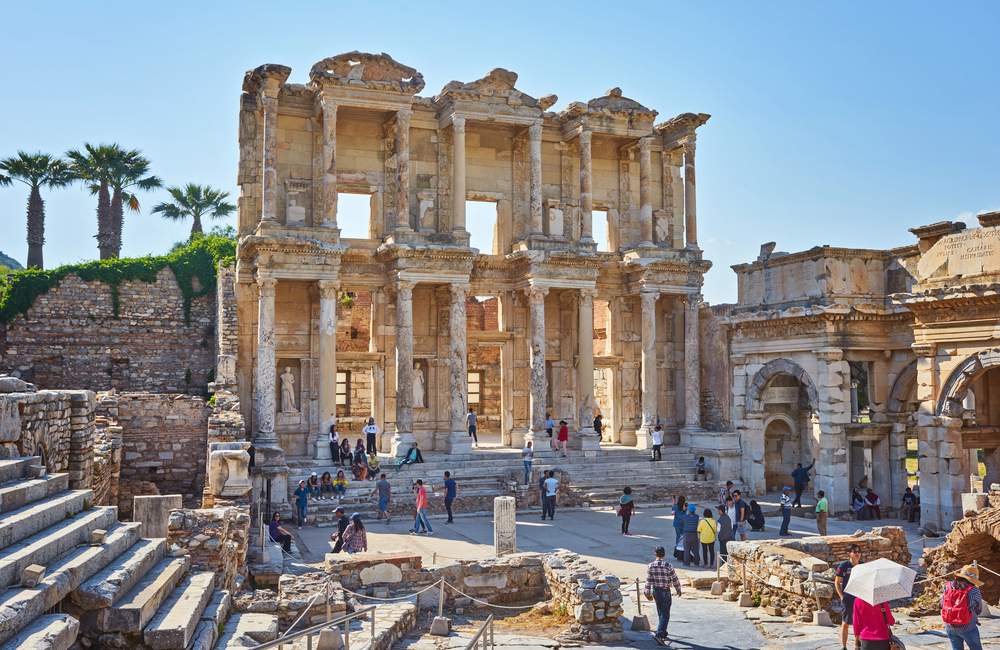
Why Was the Temple of Artemis at Ephesus Built?
A Sacred Home for the Goddess
At its core, why the Temple of Artemis at Ephesus was built lies in religious devotion. Artemis was worshipped as a protector of fertility, nature, childbirth, and prosperity.
Political and Economic Reasons
The political and economic reasons why the Temple of Artemis was built were equally significant:
-
It served as a treasury and banking center
-
It enhanced Ephesus’s prestige across the Mediterranean
-
It attracted merchants, pilgrims, and artisans
This blend of faith and finance helped Ephesus become one of the most powerful cities of the ancient world.
When Was the Temple of Artemis Built and How Long Did It Last?
Construction Timeline
Those asking when was the Temple of Artemis built and how long did it last should know it spanned nearly a millennium in various forms.
-
First temple: 8th century BCE
-
Great marble temple: circa 550 BCE
-
Rebuilt after destruction in 356 BCE
Destruction and Rebirth
The temple was famously destroyed by arson on the night Alexander the Great was born. Later, the Ephesians rebuilt it even grander, proving the enduring religious significance of the Temple of Artemis in Ephesus.
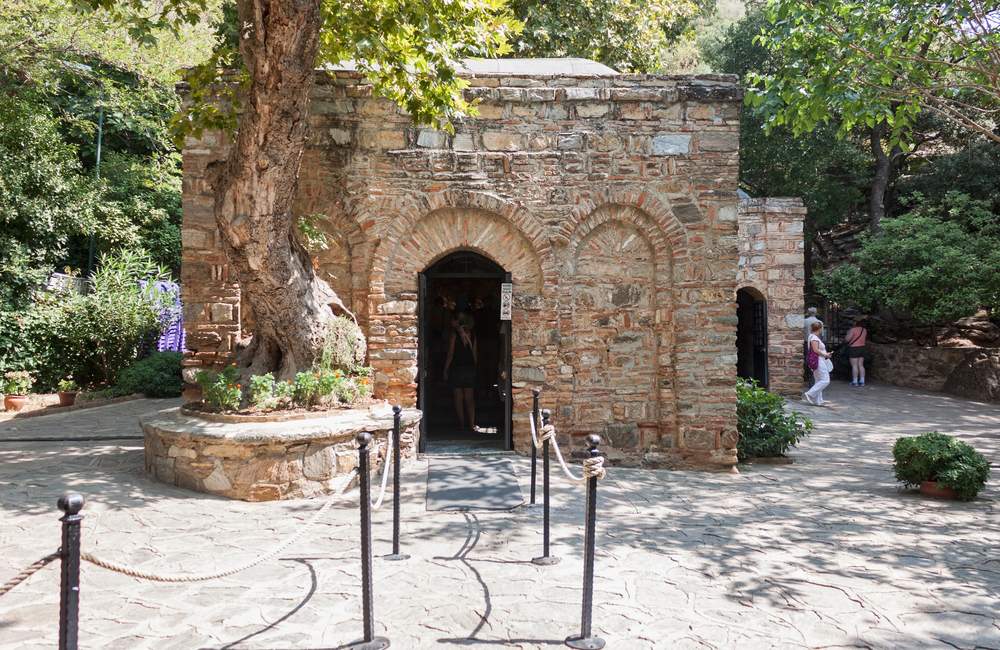
How Was Artemis Worshipped in Ephesus in Ancient Times?
Understanding how Artemis was worshipped in Ephesus in ancient times reveals a unique form of devotion unlike anywhere else in Greece.
Rituals and Festivals
-
Processions through the city
-
Animal sacrifices
-
Seasonal fertility festivals
Artemis of Ephesus
Unlike the Greek huntress, Ephesian Artemis was depicted as a fertility goddess, symbolizing abundance and life.
Role of Artemis Worship in Daily Life
The role of Artemis worship in daily life in ancient Ephesus extended to:
-
Birth rituals
-
Legal oaths
-
Trade protection
The goddess was deeply integrated into every aspect of Ephesian culture.
Construction Techniques Used When the Temple of Artemis Was Built
Engineering Innovations
The construction techniques used when the Temple of Artemis was built were revolutionary:
-
Built on marshy land to absorb earthquakes
-
Charcoal and wool layers for stability
-
Over 120 marble columns, each 18 meters high
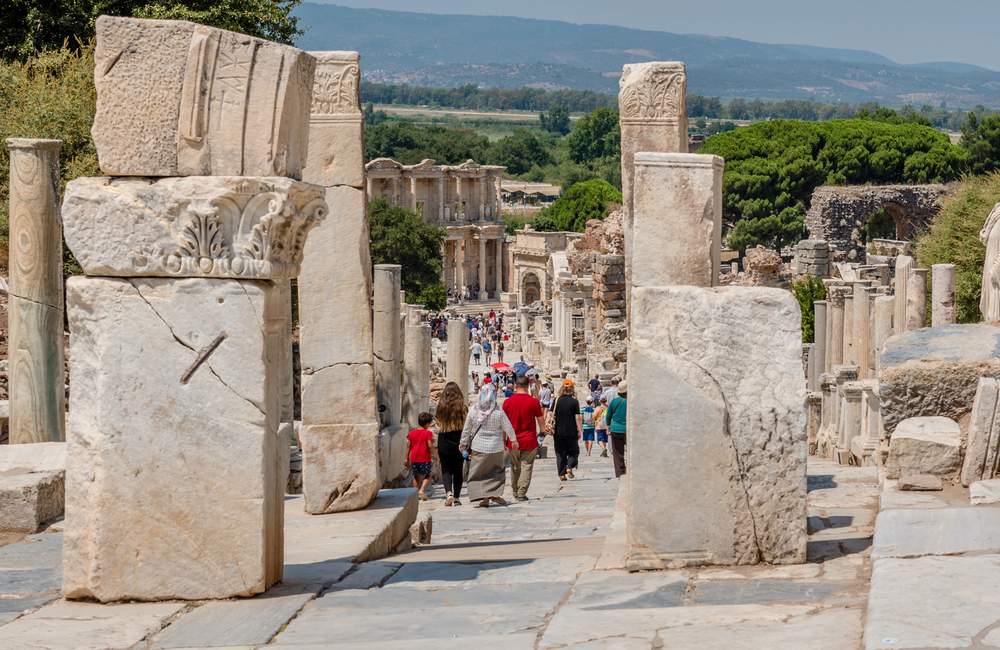
Artistic Excellence
Sculptures, reliefs, and decorative elements showcased the highest level of ancient craftsmanship.
How the Temple of Artemis Reflected Ephesian Culture and Beliefs
The temple embodied how the Temple of Artemis reflected Ephesian culture and beliefs by uniting religion, commerce, and civic pride.
-
A sanctuary for all social classes
-
A neutral space for diplomacy
-
A symbol of collective identity
Halfway through your historical journey, experiencing these stories on-site with professional guides through Ephesus Tours can transform ancient stones into living history.
Who Built the Temple of Artemis at Ephesus and What Was Its Purpose?
In summary, who built the Temple of Artemis at Ephesus and what was its purpose can be answered clearly:
-
Built by visionary architects
-
Financed by kings and citizens
-
Dedicated to religious devotion
-
Designed to project political and economic power
Its purpose went far beyond worship—it was the heartbeat of the city.
The Decline of the Temple and Its Legacy
Final Destruction
By the 3rd century CE, invasions and the rise of Christianity led to the temple’s abandonment.
Enduring Influence
Even in ruins, the Temple of Artemis remains a symbol of human ambition, spiritual devotion, and architectural brilliance.
Why the Temple of Artemis Still Matters Today
The story of who financed and designed the Temple of Artemis at Ephesus continues to inspire scholars, travelers, and history lovers.
Its legacy teaches us how sacred spaces can shape economies, politics, and daily life—lessons that still resonate today.
Experience the Legacy in Person
Reading about the Temple of Artemis is only the beginning. Walking through ancient Ephesus allows you to truly feel its power, spirituality, and cultural depth.
👉 Discover the wonders of ancient Anatolia with expertly guided Ephesus Tours and bring the story of Artemis to life.

Erdal Serbest is a travel content writer and tourism professional with a background in Tekirdağ Tourism Vocational High School. He has extensive experience in the hospitality and travel agency sectors, where he worked for several years supporting tour operations and destination marketing.
Throughout his career, he has created travel-focused blog content and contributed to destination promotion projects for various tourism platforms. Today, he focuses on developing engaging, informative, and experience-based content for turkeytravel.com.
He believes that travel is the most authentic way to understand cultures, flavors, and human stories, and he aims to reflect this perspective in every article he writes.