Galata Tower Istanbul: History, Views and Visiting Guide
Galata Tower is one of the most recognizable landmarks in Istanbul. Rising above the historic Galata neighborhood in Beyoğlu, this medieval stone tower offers panoramic views of the Golden Horn, the Bosphorus and the Historic Peninsula.
Built by the Genoese in the fourteenth century, Galata Tower has witnessed centuries of change. It has served different purposes throughout its history, from a defensive structure and observation point to a fire lookout and, today, a museum and popular visitor attraction.
Whether you are interested in medieval architecture, Istanbul's history, photography or spectacular city views, Galata Tower is an important stop during a visit to Istanbul.
This guide explains its history, architecture, observation experience, nearby attractions and how to plan your visit.
Quick Answer: What Is Galata Tower Famous For?
Galata Tower is a historic medieval tower in Istanbul's Beyoğlu district, best known for its Genoese origins and panoramic views of the city.
Its main highlights include:
-
Its origins as part of the Genoese fortifications of Galata
-
Its distinctive cylindrical stone structure
-
Panoramic views of Istanbul and the Bosphorus
-
Its historical role as an observation and fire-watch tower
-
The famous legend of Hezarfen Ahmed Çelebi
-
Its location near Galata's historic streets, cafés and cultural attractions
Most visitors combine the tower with a walk through Galata, Karaköy and İstiklal Street.
Where Is Galata Tower in Istanbul?
Galata Tower is located in the Bereketzade neighborhood of Beyoğlu, on the northern side of the Golden Horn.
It stands on elevated ground above Karaköy and the waterfront, making it visible from several parts of central Istanbul.
The surrounding neighborhood is known for its historic architecture, narrow streets, independent cafés, art spaces and traditional shops.
Its location also makes it convenient to combine a visit with other attractions, including:
-
Karaköy
-
İstiklal Street
-
Şişhane
-
Galata Mevlevi Lodge Museum
-
The Golden Horn waterfront
The History of Galata Tower
Galata Tower has a history closely connected with the Genoese trading colony that developed in Galata during the Byzantine period.
Genoese Origins in the Fourteenth Century
The tower as it is known today dates to the middle of the fourteenth century. It was built by the Genoese as part of the fortifications protecting their settlement in Galata.
The Genoese had established an important commercial presence in the area, which became a major trading center across the Golden Horn from Constantinople.
The tower was originally known as Christea Turris, meaning Tower of Christ.
Its elevated position made it strategically important for observing the surrounding settlement, waterways and approaches to the city.
Galata Tower During the Ottoman Period
After the Ottoman conquest of Constantinople in 1453, the Genoese settlement came under Ottoman control.
The tower continued to serve different purposes over the centuries. It was repaired following damage caused by earthquakes and fires, and its upper sections and appearance changed during various restoration periods.
Among its historical uses were observation, surveillance and fire detection.
The Tower as a Fire Lookout
Fires were a serious danger in Istanbul, where many buildings were constructed from timber.
Galata Tower was used as a lookout point from which fires could be detected across the city.
Its height and commanding position made it particularly useful for observing neighborhoods on both sides of the Golden Horn.
Modern Restoration and Museum Use
Galata Tower underwent several restoration projects during the twentieth and twenty-first centuries.
It was restored and opened to visitors in the 1960s. Following further restoration work, it reopened as a museum on 6 October 2020.
Today, the tower combines its historical architectural character with museum displays and a panoramic visitor experience.
The Architecture of Galata Tower
Galata Tower is an impressive example of medieval stone architecture.
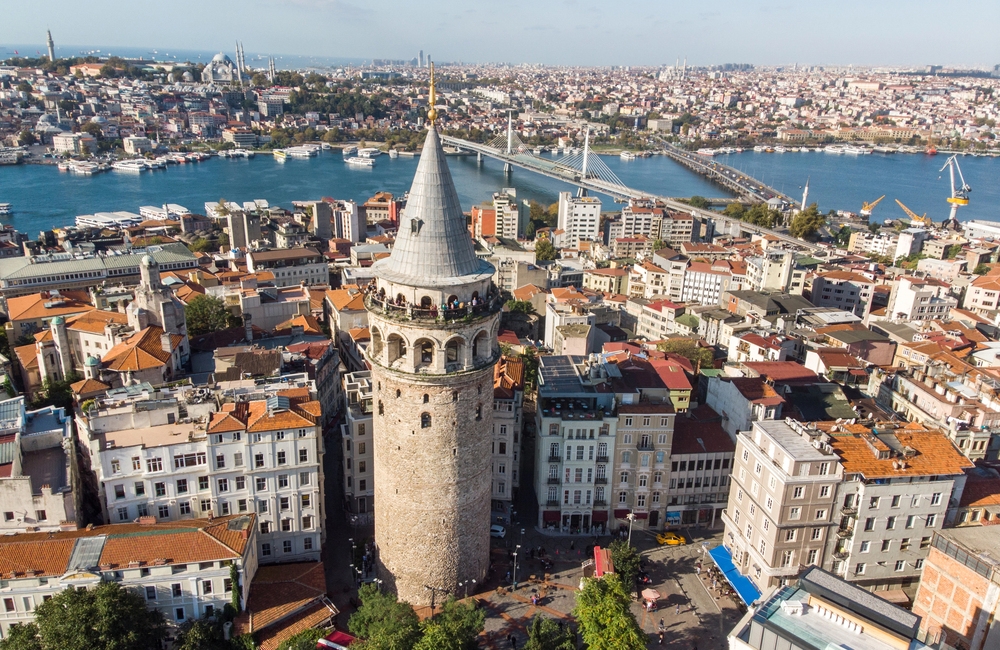
Its cylindrical body, thick masonry walls and distinctive conical roof make it one of the most recognizable elements of Istanbul's skyline.
A Medieval Stone Structure
The tower's solid stone construction reflects its original defensive purpose.
Its elevated position and commanding view were important features when Galata was a fortified Genoese settlement.
The Conical Roof
The tower's conical roof is one of its most recognizable architectural features.
Although the roof has undergone changes and restoration throughout its history, it remains an important part of the monument's silhouette.
A Landmark in Istanbul's Skyline
Galata Tower can be seen from several locations around the Golden Horn, the Bosphorus and the Historic Peninsula.
Its appearance is particularly striking when viewed from the waterfront, historic bridges and the surrounding streets of Beyoğlu.
The Legend of Hezarfen Ahmed Çelebi
One of the most famous stories associated with Galata Tower is the legend of Hezarfen Ahmed Çelebi.
According to the traditional account, Hezarfen Ahmed Çelebi attempted to fly from Galata Tower toward the Asian side of Istanbul using artificial wings.
The story is commonly associated with the seventeenth-century Ottoman period and has become part of Istanbul's popular historical imagination.
However, the account is not established as a verified historical flight. It should be understood as a famous legend rather than a documented aviation achievement.
Today, the story remains one of the most memorable elements of Galata Tower's cultural identity.
What Can You See from Galata Tower?
The observation area is the main attraction for many visitors.
From the upper levels, you can enjoy views across the historic center of Istanbul and the surrounding waterways.
The Historic Peninsula
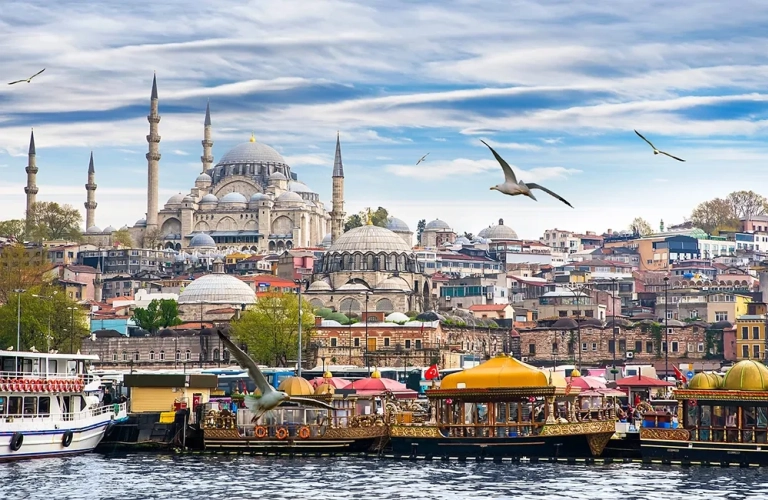
Looking south across the Golden Horn, you can see the Historic Peninsula, including the skyline of its major mosques, domes and historic buildings.
Depending on visibility, landmarks such as Hagia Sophia, the Blue Mosque and Süleymaniye Mosque can be identified in the distance.
The Golden Horn
The Golden Horn stretches below the tower, separating the Historic Peninsula from the northern districts of Istanbul.
Its waterfront, bridges and surrounding neighborhoods create one of the city's most distinctive urban landscapes.
The Bosphorus
The Bosphorus connects the Black Sea with the Sea of Marmara and separates the European and Asian sides of Istanbul.
From the tower, visitors can appreciate the waterway and the city's position between two continents.
Karaköy and the Waterfront
Looking toward Karaköy, you can see the busy waterfront, ferry activity and historic urban landscape.
The contrast between the older buildings and modern city life is part of what makes the view so interesting.
Visiting Galata Tower: Tickets and Opening Hours
Galata Tower operates as a museum under the Turkish Ministry of Culture and Tourism.
Admission arrangements, ticket prices and visiting hours may change. Daytime museum visits and evening museum experiences may also have different ticket conditions.
Before visiting, check the official information:
Should You Visit During the Day or at Night?
Both options offer different experiences.
Daytime visit
During daylight, you can more easily identify Istanbul's historic landmarks, waterfront neighborhoods and waterways.
Clear weather can provide better visibility for sightseeing and photography.
Sunset visit
Sunset is popular because the changing light creates attractive views over the Golden Horn and the Historic Peninsula.
It can also be a busy period, so allow extra time for possible queues.
Evening visit
After dark, Istanbul's illuminated skyline creates a different atmosphere.
The experience is particularly appealing to visitors interested in night photography and city views.
Check the current museum schedule before planning an evening visit.
How Long Does a Visit to Galata Tower Take?
The time required depends on visitor numbers, queues and how long you want to spend enjoying the views.
As a general planning guide, allow approximately 45–90 minutes for the tower itself.
If you also want to explore the surrounding streets, visit nearby attractions or stop at a café, allow several additional hours.
How to Get to Galata Tower
Galata Tower is accessible from several central districts of Istanbul.
From Sultanahmet
The T1 tram provides a convenient connection from Sultanahmet toward Karaköy.
From Karaköy, you can walk uphill through Galata's historic streets to reach the tower.
The uphill walk can be steep in places, so comfortable footwear is recommended.
From Taksim
From Taksim, you can walk along İstiklal Street toward Şişhane and continue downhill or through the surrounding streets to Galata Tower.
The M2 metro also provides access to Şişhane, which is within walking distance of the tower.
From Karaköy
Karaköy is one of the most convenient starting points for reaching Galata Tower.
You can walk uphill through the historic neighborhood, exploring its streets and cafés along the way.
By Taxi or Private Transfer
Taxis and private transfers can take you to nearby streets, depending on traffic and local access restrictions.
Some streets around the tower are narrow or restricted to vehicles, so you may need to complete the final part of the journey on foot.
Best Time to Visit Galata Tower
Galata Tower can be visited throughout the year, but the weather and visitor numbers influence the experience.
Spring
Spring is a pleasant season for exploring Galata and the surrounding neighborhoods.
The weather is often suitable for walking, and visibility can be good on clear days.
Summer
Summer is a busy period for tourism in Istanbul.
The tower and surrounding streets can become crowded, particularly during the afternoon and around sunset.
Consider visiting earlier in the day or checking evening access arrangements.
Autumn
Autumn is another comfortable season for exploring the neighborhood.
The cooler weather can make walking between Galata, Karaköy and İstiklal Street more enjoyable.
Winter
Winter is generally quieter, although rain, wind and fog can affect visibility.
On clear winter days, the tower still offers impressive views of the city.
For a broader seasonal overview, read our guide to the best time to visit Istanbul.
Best Places to Visit Near Galata Tower
One of the advantages of visiting Galata Tower is its location in a neighborhood with many other interesting places.
1. Galata Mevlevi Lodge Museum
The Galata Mevlevi Lodge is a historic religious and cultural site associated with the Mevlevi Sufi tradition.
Established in 1491, it is one of Istanbul's important historic Mevlevi lodges.
The complex provides insight into Mevlevi culture, music, religious practices and Ottoman-era architecture.
2. İstiklal Street
İstiklal Street is one of Istanbul's best-known pedestrian avenues.
It is lined with historic buildings, shops, cafés, restaurants, cultural institutions and passages.
Walking between Galata Tower and İstiklal Street is a natural extension of a visit to the neighborhood.
3. Şişhane
Şişhane is located close to Galata Tower and provides convenient access to the M2 metro line.
The area also has historic buildings, small cafés and streets that connect Galata with the wider Beyoğlu district.
4. Karaköy
Karaköy is a lively waterfront neighborhood below Galata Tower.
It combines historic commercial buildings, cafés, restaurants, art spaces and ferry connections.
Walking downhill from Galata Tower to Karaköy is a pleasant way to explore the area.
5. Kamondo Stairs
The Kamondo Stairs are an elegant historic staircase between Karaköy and the Galata area.
Their distinctive curved design makes them a popular photography location.
They also reflect the history of the Kamondo family, an influential Jewish banking family in nineteenth-century Istanbul.
6. Galata Bridge
Galata Bridge crosses the Golden Horn and connects Karaköy with the Historic Peninsula.
It is known for its waterfront atmosphere, fishing activity and views of Istanbul's historic skyline.
7. Museum of Modern Art in Istanbul
Istanbul Modern is a major cultural destination dedicated to modern and contemporary art.
It is located in the Karaköy waterfront area and can be combined with a visit to Galata Tower.
Check the museum's current visitor information before planning your visit.
Suggested Galata and Karaköy Walking Route
If you want to explore more than the tower itself, the following route combines several nearby attractions.
Suggested route:
-
Start at Galata Tower.
-
Explore the surrounding streets and small shops.
-
Visit the Kamondo Stairs.
-
Walk downhill toward Karaköy.
-
Explore the Karaköy waterfront.
-
Continue toward Galata Bridge.
-
Finish with a walk along the Golden Horn or a ferry journey.
You can also begin at Taksim and walk down İstiklal Street toward Galata Tower.
This route is particularly suitable for visitors who want to combine history, architecture, shopping and local cafés.
Is Galata Tower Worth Visiting?
Galata Tower is worth considering if you are interested in Istanbul's history, medieval architecture and panoramic city views.
The experience offers two main attractions:
-
The historical character of the tower itself
-
The opportunity to see Istanbul from an elevated viewpoint
However, the visit may be less appealing if you dislike heights, narrow observation areas or queues during busy periods.
Visitors who prefer to enjoy the neighborhood without entering the tower can also explore nearby streets, rooftop cafés and waterfront viewpoints.
Practical Tips for Visiting Galata Tower
A little preparation can make your visit more comfortable.
Wear Comfortable Shoes
The streets around Galata Tower include steep slopes, steps and uneven surfaces.
Comfortable walking shoes are particularly useful if you plan to continue toward Karaköy or İstiklal Street.
Check Visibility Before Visiting
The panoramic view is weather-dependent.
Fog, rain and low cloud can reduce visibility, so check the weather if photography is a priority.
Allow for Queues
The tower is a popular attraction.
Visitor numbers can increase around sunset and during busy tourism periods.
Check Current Admission Conditions
Review the official museum information before departure, especially if you plan to visit in the evening or use a museum pass.
Explore the Surrounding Neighborhood
Do not limit your visit to the tower.
Galata's historic streets, Karaköy waterfront and nearby cultural attractions are important parts of the experience.
Frequently Asked Questions About Galata Tower Istanbul
Where is Galata Tower located?
Galata Tower is located in the Bereketzade neighborhood of Beyoğlu, Istanbul, on the northern side of the Golden Horn.
When was Galata Tower built?
The tower in its present historical form dates to the middle of the fourteenth century and was built by the Genoese as part of the fortifications of Galata.
Why is Galata Tower famous?
It is famous for its medieval Genoese origins, distinctive architecture, panoramic views of Istanbul and the legend of Hezarfen Ahmed Çelebi.
Can you see the Bosphorus from Galata Tower?
Yes. The upper observation area offers views of the Bosphorus, the Golden Horn and the Historic Peninsula, depending on weather and visibility.
How long should I spend at Galata Tower?
Allow approximately 45–90 minutes for the tower itself. More time is useful if you want to explore the surrounding neighborhood.
Is Galata Tower open every day?
The official museum information lists the tower as open throughout the week, but visitor arrangements can change. Check the current schedule before your visit.
Is Galata Tower close to Istiklal Street?
Yes. İstiklal Street is within walking distance, making it easy to combine both attractions.
Can I walk from Sultanahmet to Galata Tower?
Yes, but it is a relatively long walk involving the historic center, Galata Bridge and uphill streets. Many visitors prefer to take the tram toward Karaköy and walk from there.
Is Galata Tower suitable for children?
Families can visit, but parents should consider the tower's height, stairs, observation areas and visitor conditions. The official museum guidance requires visitors under 18 to be accompanied by a parent or legal guardian.
Is the Hezarfen Ahmed Çelebi flight story true?
The story is a famous Ottoman-era legend associated with Galata Tower. It is not established as a verified historical flight.
Discover Galata Tower with TurkeyTravel.com
Galata Tower is one of the most memorable landmarks in Istanbul.
Its Genoese origins, Ottoman-era history, distinctive architecture and panoramic views make it an important part of the city's cultural heritage.
A visit also provides an excellent opportunity to explore the surrounding streets of Galata, the lively Karaköy waterfront and the historic attractions of Beyoğlu.
Whether you are visiting Istanbul for the first time or returning to discover more of the city, Galata Tower deserves a place in your sightseeing plans.
Explore our Istanbul tour packages and discover more of the city's historic neighborhoods with TurkeyTravel.com.

Erdal Serbest is a travel content writer and tourism professional with a background in Tekirdağ Tourism Vocational High School. He has extensive experience in the hospitality and travel agency sectors, where he worked for several years supporting tour operations and destination marketing.
Throughout his career, he has created travel-focused blog content and contributed to destination promotion projects for various tourism platforms. Today, he focuses on developing engaging, informative, and experience-based content for turkeytravel.com.
He believes that travel is the most authentic way to understand cultures, flavors, and human stories, and he aims to reflect this perspective in every article he writes.