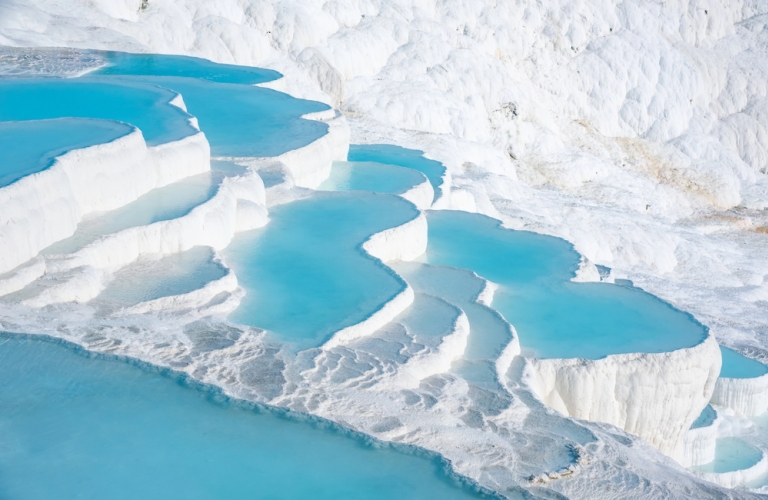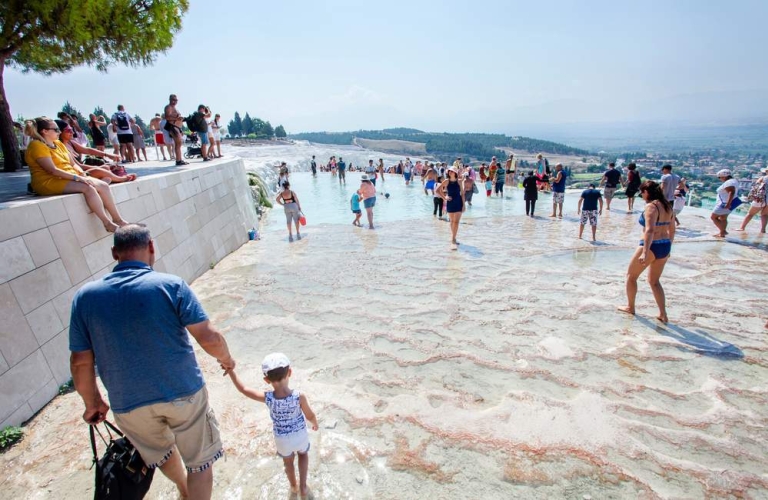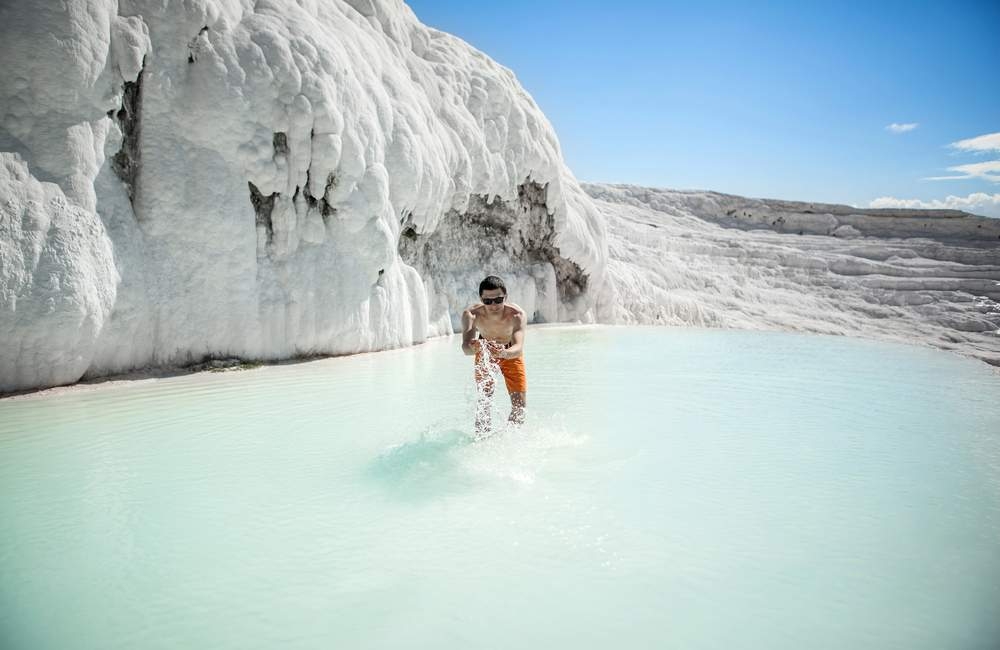
Few places in the world look as surreal as the dazzling white terraces of Pamukkale in southwestern Turkey. Known as the “Cotton Castle,” this natural wonder attracts millions of visitors each year who come to admire the cascading white formations and crystal-clear thermal waters.
But one question travelers constantly ask is: Can you swim in Pamukkale’s thermal pools?
The short answer is yes—but not everywhere.
Understanding where swimming is allowed, the rules that protect this UNESCO treasure, and how to enjoy the famous thermal waters responsibly will help you get the best possible experience during your visit.
If you’re planning a trip and want a complete experience, guided Pamukkale Tours can help you explore the terraces, ancient ruins, and thermal pools without missing the highlights.
In this guide, we’ll explain everything you need to know about Pamukkale thermal pools swimming, including where you can swim, the famous Cleopatra Pool, the health benefits of the thermal waters, and practical tips for visitors.
What Are the Pamukkale Thermal Pools?
The Pamukkale thermal pools are natural terraces made of travertine, a type of limestone deposited by mineral-rich thermal water flowing down the hillside for thousands of years.
How the Travertines Formed
The unique formations of Pamukkale travertines are created when hot spring water rich in calcium carbonate flows down the slope. As the water cools, it leaves behind bright white mineral deposits that gradually build natural basins and terraces.
These terraces hold warm water, creating the famous Pamukkale natural pools that give the site its dreamlike appearance.
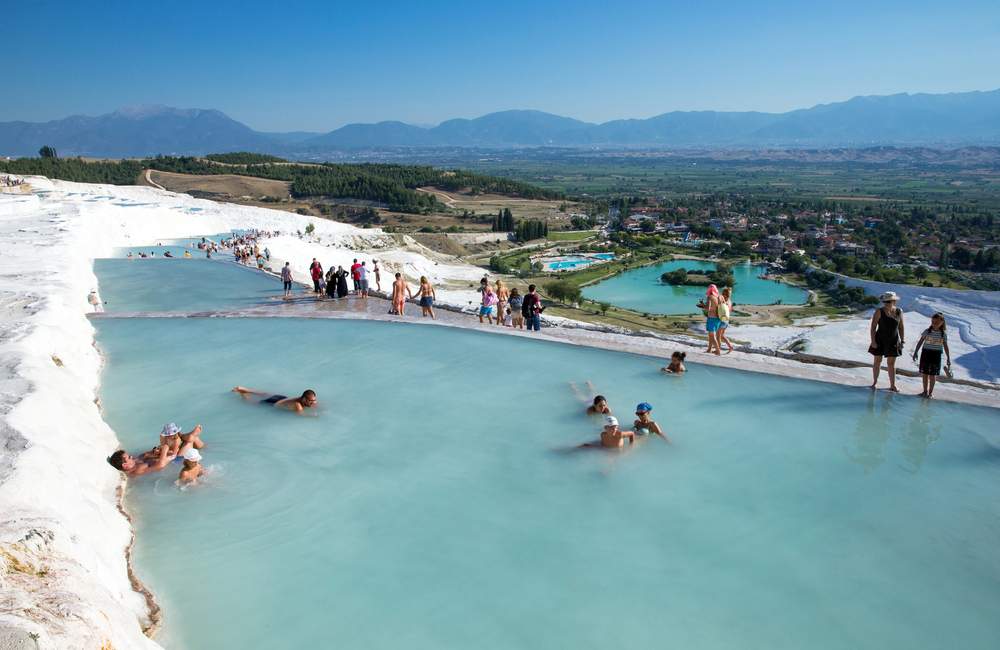
A UNESCO World Heritage Site
Pamukkale is not just beautiful—it’s also historically and culturally significant. The site is part of the Pamukkale UNESCO site, together with the ancient Greco-Roman city of Hierapolis, located just above the terraces.
Because of its global importance, strict rules are in place to preserve the fragile structures.
Can You Swim in Pamukkale Thermal Pools?
The most common question visitors ask is:
Can you swim in Pamukkale thermal pools?
The Short Answer
Yes, swimming in Pamukkale is possible, but only in designated areas.
Many of the iconic white terraces are protected and wading only is allowed, while others are closed to swimming to prevent damage.
Why Swimming Is Restricted
The travertine formations are extremely delicate. In the past, uncontrolled tourism caused discoloration and damage to the terraces.
Today, conservation rules protect the area by limiting where visitors can enter the water.
Key rules include:
-
Visitors must remove their shoes before walking on the terraces
-
Only specific pools allow wading or shallow immersion
-
Sunscreen and oils are discouraged in the water
-
Climbing on fragile formations is prohibited
These regulations help maintain the brilliant white appearance of the Pamukkale hot springs.
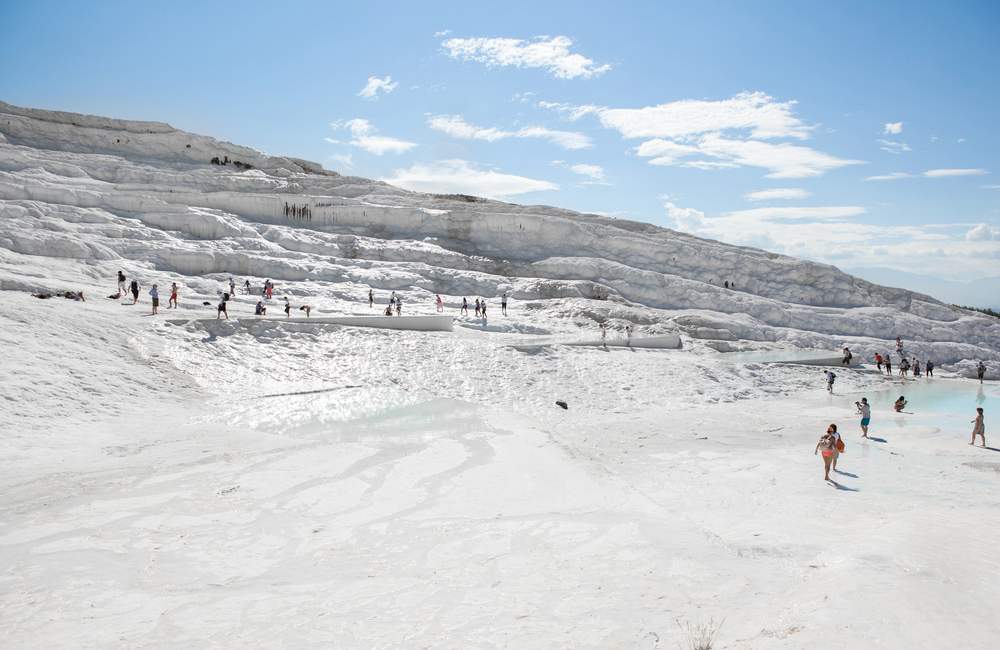
Where Can You Swim in Pamukkale?
Although many terraces are protected, there are still excellent places where visitors can enjoy the warm thermal waters.
1. The Shallow Travertine Pools
Some sections of the Pamukkale natural pools allow visitors to walk barefoot and wade in ankle-deep water.
These pools offer stunning views across the valley and are perfect for relaxing while enjoying the scenery.
However, they are not deep enough for full swimming.
2. Cleopatra Pool (The Best Place to Swim)
The most famous swimming spot is the legendary Pamukkale Cleopatra Pool, also called the Antique Pool.
What Makes Cleopatra Pool Unique
This pool is filled with warm thermal water and scattered with ancient Roman columns that fell during an earthquake centuries ago.
Swimming here feels like floating through history.
Visitors often ask:
Is Cleopatra Pool in Pamukkale worth swimming?
The answer for most travelers is absolutely yes.
Cleopatra Pool Details
-
Water temperature: about 35°C (95°F)
-
Depth: up to 3 meters (10 feet)
-
Filled with natural mineral water
-
Surrounded by palm trees and ruins
It’s easily the most memorable Pamukkale hot spring experience available.
Are Pamukkale Hot Springs Safe for Swimming?
Many visitors also wonder: Are Pamukkale hot springs safe for swimming?
Generally, the answer is yes.
Mineral Content and Safety
The water in Pamukkale thermal pools contains minerals such as:
-
Calcium carbonate
-
Magnesium
-
Bicarbonate
-
Sulfur
These minerals are considered safe and even beneficial for most people.
However, visitors should take precautions.
Who Should Be Careful
People with the following conditions should consult a doctor before entering thermal pools:
-
Heart conditions
-
Low blood pressure
-
Pregnancy
-
Severe skin sensitivities
For most healthy travelers, the pools are perfectly safe and relaxing.
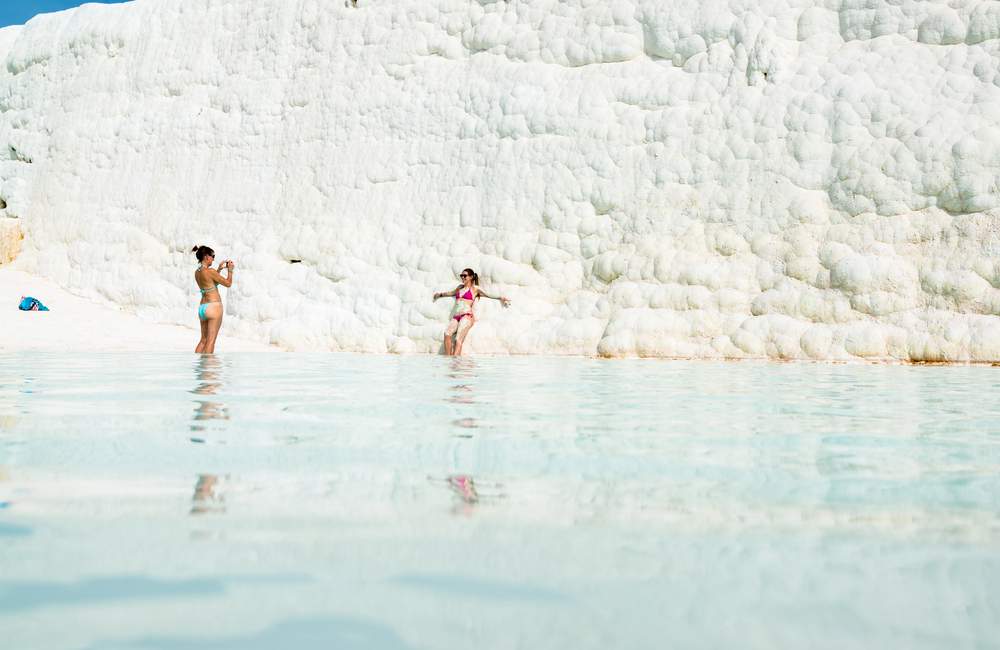
Pamukkale Thermal Water Benefits
For centuries, people have traveled to Pamukkale for the healing qualities of its mineral waters.
Potential Health Benefits
Many visitors report benefits such as:
-
Improved circulation
-
Muscle relaxation
-
Skin rejuvenation
-
Relief from joint pain
-
Stress reduction
While scientific evidence varies, the relaxing nature of thermal bathing is widely recognized.
Enjoying the Pamukkale hot spring experience is as much about relaxation as it is about wellness.
Best Pools to Swim in Pamukkale
If you want the best experience, focus on these locations.
Cleopatra Pool (Antique Pool)
Best for:
-
Full swimming
-
Historical atmosphere
-
Warm mineral water
Designated Travertine Pools
Best for:
-
Photos
-
Gentle soaking
-
Scenic views
Many visitors combine both experiences for the ultimate things to do in Pamukkale itinerary.
If you’d like to visit the most beautiful areas efficiently, organized Pamukkale Tours often include entrance arrangements, transportation, and expert guides.
Pamukkale Thermal Pools Rules for Swimming
Because the travertines are fragile, visitors must follow specific rules.
Important Visitor Guidelines
Remove Your Shoes
Shoes are not allowed on the terraces to prevent erosion and staining.
Stay in Designated Areas
Not all pools are open to visitors.
Avoid Sunscreen in the Water
Chemicals can damage the mineral formations.
Respect the Environment
Climbing or damaging the terraces can result in fines.
Following these guidelines helps preserve the beauty of Pamukkale travertines for future generations.
What to Know Before Swimming in Pamukkale
Planning ahead will make your visit smoother and more enjoyable.
Bring the Right Items
Recommended items include:
-
Swimsuit
-
Towel
-
Waterproof bag
-
Sunglasses
-
Water bottle
Visit Early or Late
The terraces can become crowded during midday. Early morning and sunset are the best times for photos and fewer crowds.
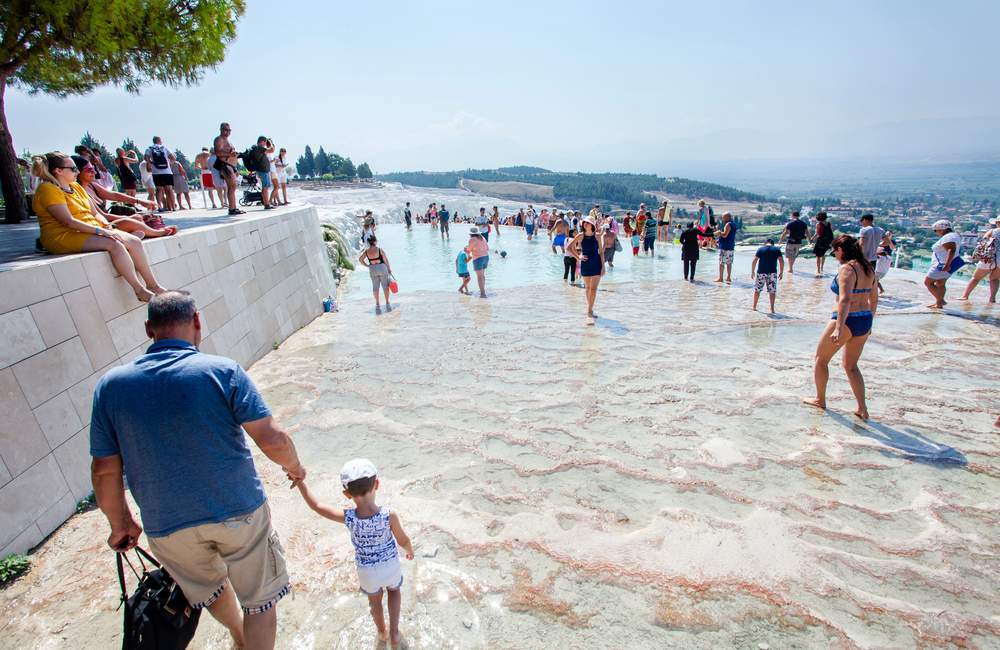
Walk Carefully
The travertines can be slippery, so take slow steps.
Pamukkale Thermal Pools Entrance and Swimming Areas
Understanding the site layout helps maximize your visit.
Main Entrance Options
Pamukkale has three entrances:
-
North Gate – near Hierapolis ruins
-
South Gate – close to the village
-
Town Entrance – direct access to terraces
Entry Fees
Entrance generally includes access to:
-
Pamukkale terraces
-
Hierapolis ruins
-
Walking areas
However, Cleopatra Pool requires an additional swimming fee.
Prices may vary seasonally.
Other Things to Do in Pamukkale
While swimming is a highlight, there are many other things to do in Pamukkale.
Explore the Ancient City of Hierapolis
Founded in the 2nd century BC, Hierapolis includes:
-
A massive Roman theater
-
Ancient bath complexes
-
Necropolis with hundreds of tombs
-
Temple ruins
Watch the Sunset Over the Travertines
The terraces glow pink and orange during sunset—one of the most magical moments in Turkey.
Paragliding Over Pamukkale
For adventure seekers, paragliding offers an unforgettable aerial view of the white terraces.
Pamukkale Thermal Pools Visitor Guide: Tips for the Best Experience
To truly enjoy your trip, consider these travel tips.
Best Time to Visit
The best seasons are:
-
Spring (April–June)
-
Autumn (September–October)
The weather is pleasant and crowds are smaller.
How Long to Stay
Most visitors spend 3–5 hours exploring the terraces and Hierapolis.
Adding Cleopatra Pool swimming may extend your visit.
Combine with Nearby Destinations
Pamukkale is often paired with trips to:
-
Ephesus
-
Aphrodisias
-
Denizli
Guided tours simplify transportation between these sites.
Final Answer: Can You Swim in Pamukkale Thermal Pools?
So, can you swim in Pamukkale thermal pools?
Yes—but with limitations.
Visitors can enjoy the water in:
-
Designated shallow travertine pools
-
The famous Pamukkale Cleopatra Pool
Swimming everywhere on the terraces is not allowed because the formations must be preserved.
By respecting the rules and choosing the right areas, you can still enjoy an unforgettable Pamukkale thermal pools swimming experience.
If you want a stress-free way to explore the terraces, ancient ruins, and thermal baths, joining one of the expertly organized Pamukkale Tours is an excellent option.
With the right planning, Pamukkale offers one of the most unique and relaxing travel experiences in Turkey—where nature, history, and wellness come together in spectacular fashion.

Erdal Serbest is a travel content writer and tourism professional with a background in Tekirdağ Tourism Vocational High School. He has extensive experience in the hospitality and travel agency sectors, where he worked for several years supporting tour operations and destination marketing.
Throughout his career, he has created travel-focused blog content and contributed to destination promotion projects for various tourism platforms. Today, he focuses on developing engaging, informative, and experience-based content for turkeytravel.com.
He believes that travel is the most authentic way to understand cultures, flavors, and human stories, and he aims to reflect this perspective in every article he writes.