Turkey is home to some of the most spectacular landscapes and historical sites in the world, but few are as unique as Pamukkale. Known as the “Cotton Castle,” this breathtaking natural wonder attracts millions of travelers every year. With its dazzling white terraces, mineral-rich thermal waters, and the ancient ruins of Hierapolis nearby, many travelers wonder: is Pamukkale worth visiting in Turkey?
The short answer is yes—Pamukkale is one of the most extraordinary destinations in the country. This Pamukkale Turkey travel guide explores why the site is so famous, what to expect when visiting, and whether it truly lives up to the hype. From soaking in the famous Pamukkale thermal pools to exploring the Hierapolis ancient city, there are many unforgettable experiences waiting here.
If you are planning your journey and want a seamless experience, exploring professionally organized Pamukkale Tours can help you see the highlights comfortably. Learn more about available tours here:
In this guide, we’ll cover everything from things to do in Pamukkale, the best time to visit Pamukkale, and practical Pamukkale travel tips for first-time visitors.
What Makes Pamukkale So Famous?
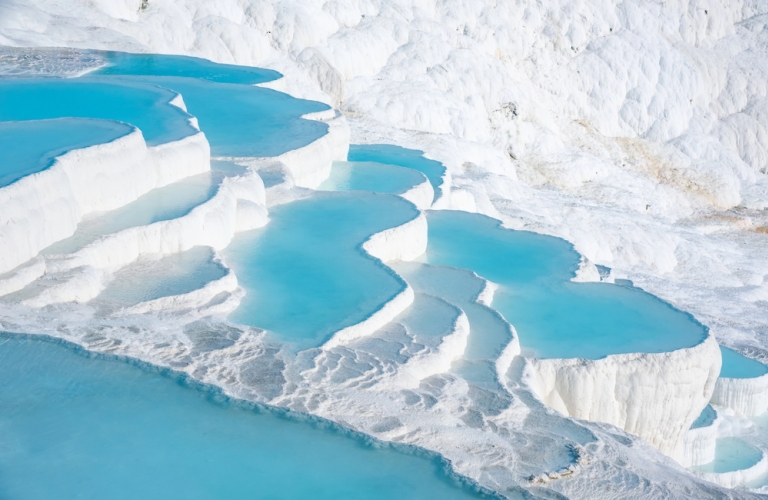
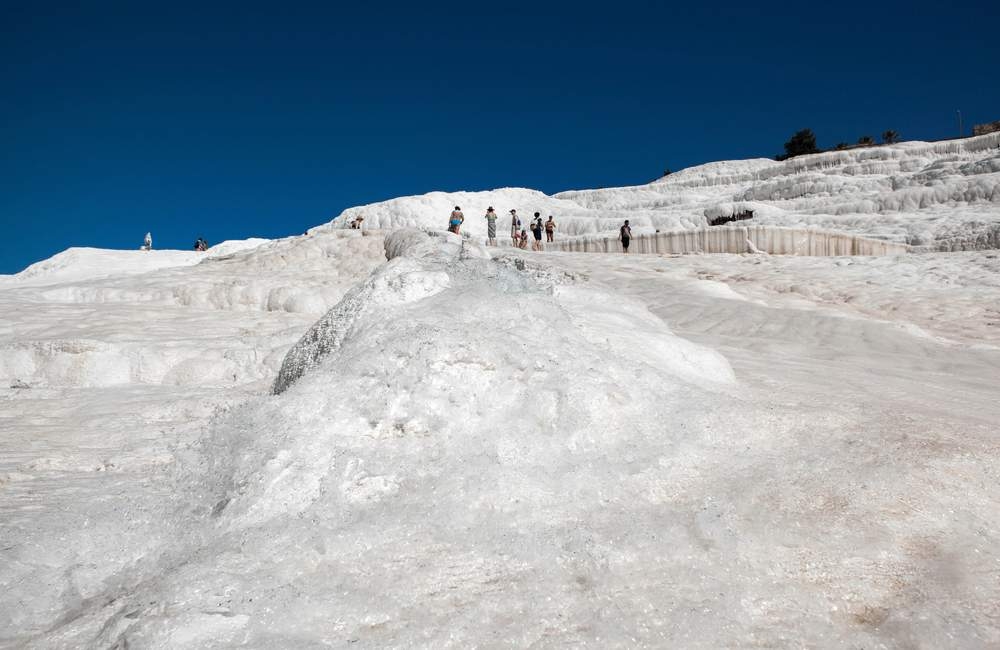
Pamukkale is one of Turkey’s most iconic landscapes. The name “Pamukkale” translates to “Cotton Castle” in Turkish, referring to the cascading white terraces formed by mineral deposits from hot springs.
The Unique Pamukkale Travertines Turkey
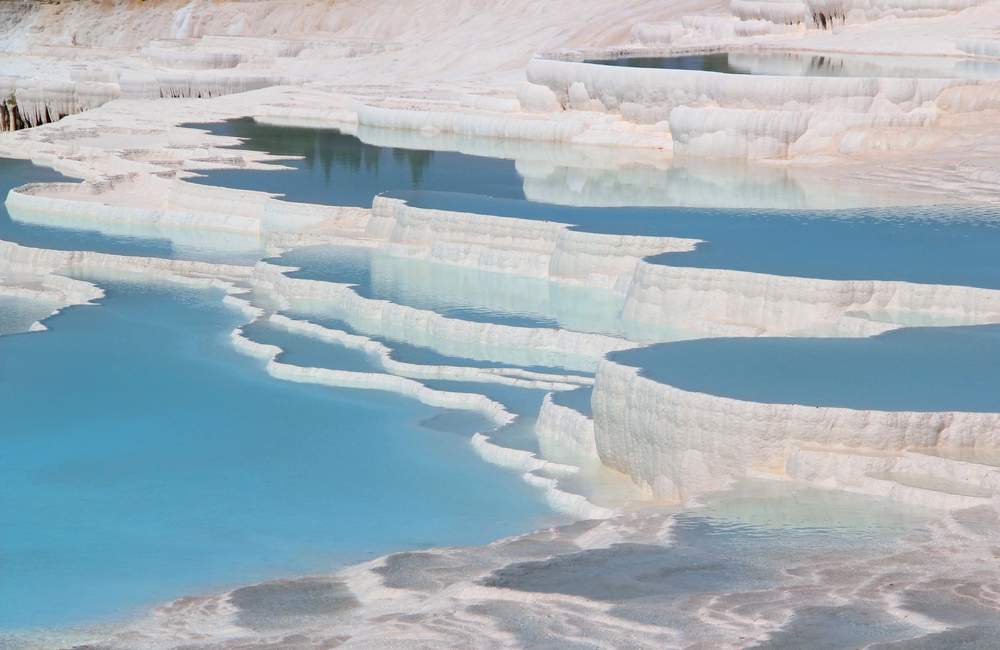
The star attraction of the region is the Pamukkale travertines Turkey, a natural formation created by calcium-rich thermal waters flowing down the hillside. Over thousands of years, these waters have formed stunning white pools that look like frozen waterfalls.
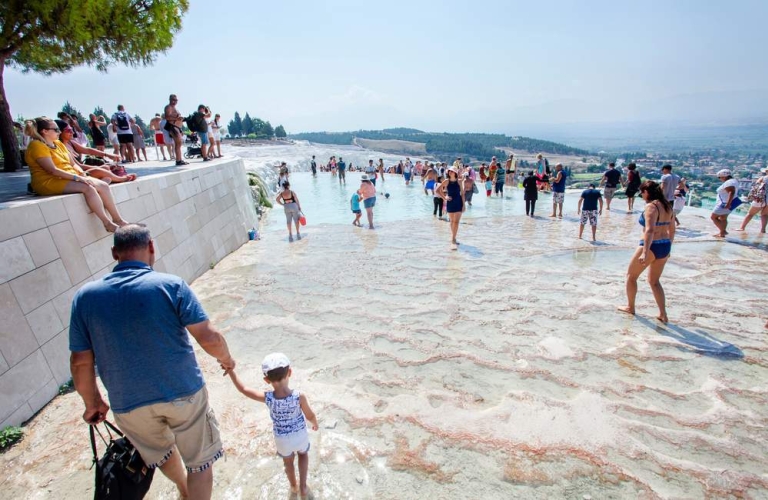
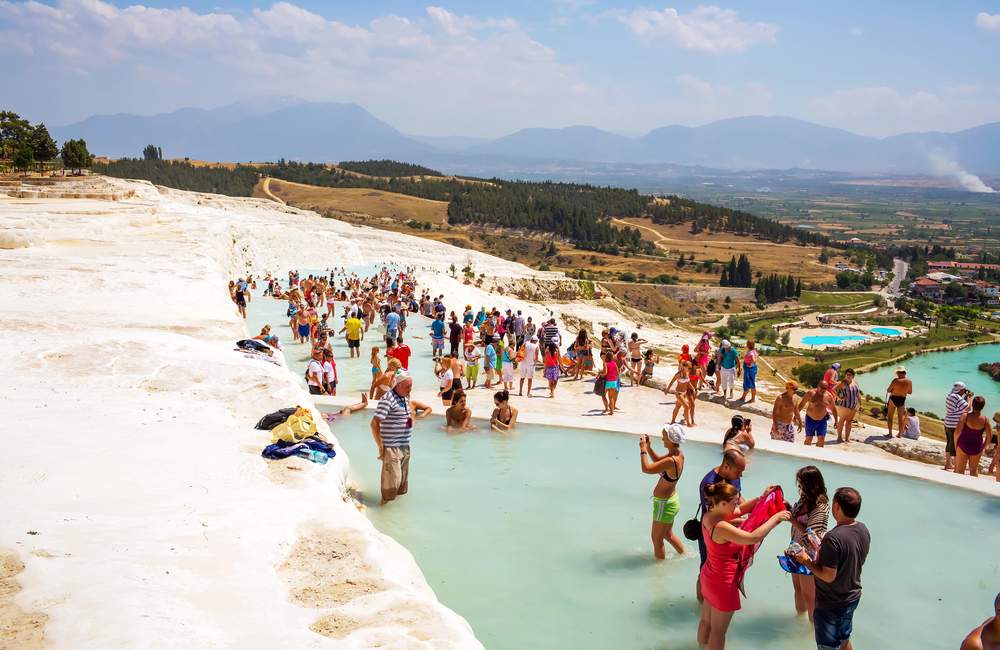
Visitors walk barefoot across the terraces while enjoying the warm mineral water flowing through the shallow basins. The result is a surreal experience unlike anywhere else in the world.
A UNESCO World Heritage Site
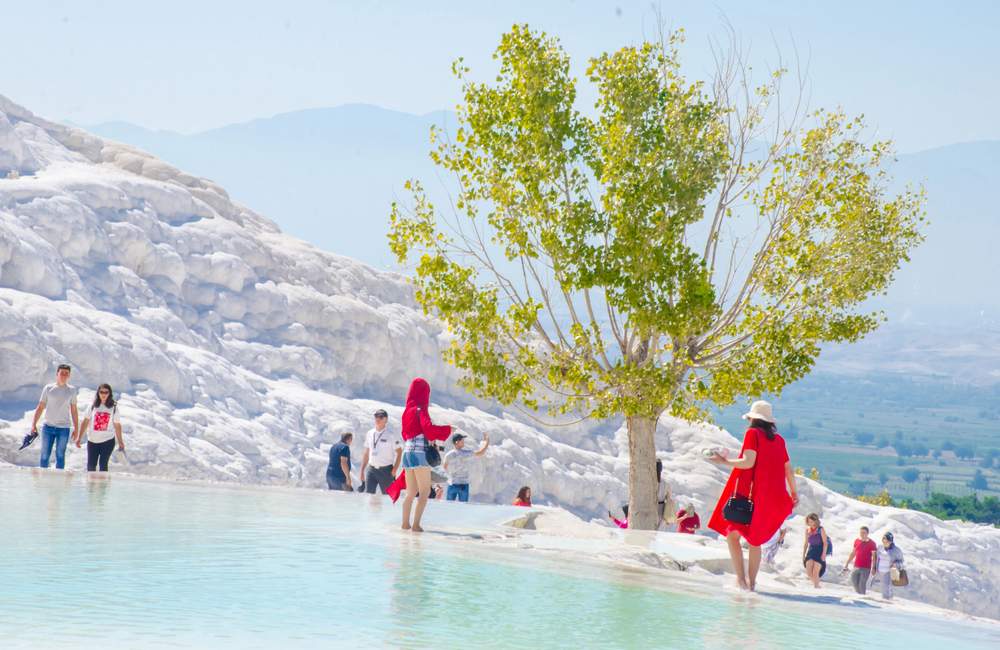
Pamukkale is recognized as a Pamukkale UNESCO World Heritage Site, not only for its geological beauty but also for its historical importance. The travertines sit directly beside the ancient city of Hierapolis, making the destination both a natural and archaeological treasure.
Pamukkale Hot Springs and Healing Waters
The Pamukkale hot springs have been used for their healing properties since ancient Roman times. Rich in minerals such as calcium carbonate, these waters were believed to have therapeutic benefits for skin and joint conditions.
Today, visitors can still enjoy the warm waters in certain areas, making the experience both relaxing and memorable.
What to Expect When Visiting Pamukkale
If you are planning to visit Pamukkale Turkey, knowing what to expect can help you make the most of your trip.
Walking on the White Terraces
One of the most iconic experiences is walking barefoot along the travertine terraces. Shoes are not allowed in order to protect the delicate mineral formations.
You’ll walk along shallow pools filled with warm water while enjoying breathtaking views across the valley.
Swimming in Pamukkale Pools
A common question travelers ask is: can you swim in Pamukkale pools?
While swimming in the travertines themselves is restricted in many areas for preservation reasons, visitors can still swim in designated locations like Cleopatra’s Pool in Hierapolis.
Cleopatra’s Antique Pool
Located within the Hierapolis complex, Cleopatra’s Pool is a unique thermal pool filled with ancient Roman columns that fell during an earthquake. Swimming here feels like stepping into a living museum.
Things to Do in Pamukkale
Beyond the famous white terraces, there are plenty of things to do in Pamukkale that make the destination worth spending time exploring.
Explore the Hierapolis Ancient City
The Hierapolis ancient city sits directly above the travertines and dates back to the 2nd century BC.
Highlights include:
-
The massive Roman Theater
-
The Temple of Apollo
-
The Necropolis (ancient cemetery)
-
Ancient Roman baths
-
Cleopatra’s Pool
The theater alone is one of the best-preserved Roman theaters in Turkey and offers spectacular views of the surrounding countryside.
Visit the Pamukkale Thermal Pools
The Pamukkale thermal pools provide a relaxing way to enjoy the landscape. Many visitors sit in the warm water while watching the sunset over the valley.
Watch the Sunset Over the Travertines
Sunset is one of the most magical times in Pamukkale. The white terraces turn golden as the sun dips below the mountains, creating an unforgettable scene.
Many photographers consider this the best time to capture the beauty of the Pamukkale travertines Turkey.
If you'd like to explore these highlights without the stress of planning logistics, organized Pamukkale Tours are a convenient option for travelers.
Pamukkale Travel Guide for First-Time Visitors
For travelers visiting for the first time, having a few practical Pamukkale travel tips can greatly improve the experience.
How Long Should You Spend in Pamukkale?
A common question is how long should you spend in Pamukkale.
Most visitors spend:
-
Half day exploring the terraces
-
Half day visiting Hierapolis
-
Optional evening enjoying sunset
If you enjoy history and photography, spending a full day is ideal.
Tips for Visiting Pamukkale Travertines
Here are some helpful tips for visiting Pamukkale travertines:
-
Arrive early in the morning to avoid crowds
-
Bring a swimsuit if you plan to enter the thermal pools
-
Wear comfortable walking clothes
-
Bring water and sun protection
-
Stay for sunset if possible
These simple steps can significantly improve your visit.
Best Time to Visit Pamukkale
Choosing the best time to visit Pamukkale depends on your travel preferences.
Spring and Autumn
The best seasons to visit are April–June and September–October when temperatures are pleasant and crowds are moderate.
Summer
Summer offers bright blue skies and beautiful photos, but temperatures can exceed 35°C (95°F).
Arriving early morning or late afternoon helps avoid the heat.
Is Pamukkale Worth Visiting in Winter?
Many travelers ask: is Pamukkale worth visiting in winter?
Yes, winter offers:
-
Fewer tourists
-
Dramatic misty scenery
-
Warm thermal waters contrasting with cool air
The experience can feel peaceful and almost magical.
Pamukkale vs Cappadocia – Which Is Better?
Travelers often debate Pamukkale vs Cappadocia which is better.
The truth is that both destinations offer completely different experiences.
Pamukkale offers:
-
Unique white terraces
-
Ancient Roman ruins
-
Thermal spa experiences
Cappadocia offers:
-
Fairy chimneys
-
Hot air balloon rides
-
Cave hotels
If possible, visiting both provides a more complete picture of Turkey’s diverse landscapes.
Is Pamukkale Touristy or Worth It?
Because Pamukkale is one of Turkey’s most famous attractions, it can be busy during peak travel seasons. This leads many travelers to ask: is Pamukkale touristy or worth it?
Despite the crowds, the answer is still yes.
The reason is simple: there is no other place in the world quite like Pamukkale. The combination of natural travertine terraces, ancient Roman ruins, and thermal spa waters makes it a truly unique destination.
Even with visitors around, the landscape still feels surreal and unforgettable.
Final Verdict – Is Pamukkale Worth Visiting?
So, is Pamukkale worth visiting in Turkey?
Absolutely.
Pamukkale offers a rare combination of natural beauty, history, and relaxation. Walking across the white terraces, soaking in thermal waters, and exploring the ancient city of Hierapolis creates an experience unlike anywhere else in the world.
For travelers interested in history, photography, geology, or simply unique landscapes, Pamukkale deserves a place on your Turkey itinerary.
If you want to experience the destination comfortably and make the most of your time, professionally organized Pamukkale Tours provide guided access to the region’s highlights.
Whether you visit for a few hours or stay for a full day, Pamukkale will likely remain one of the most memorable stops on your journey through Turkey.

Erdal Serbest is a travel content writer and tourism professional with a background in Tekirdağ Tourism Vocational High School. He has extensive experience in the hospitality and travel agency sectors, where he worked for several years supporting tour operations and destination marketing.
Throughout his career, he has created travel-focused blog content and contributed to destination promotion projects for various tourism platforms. Today, he focuses on developing engaging, informative, and experience-based content for turkeytravel.com.
He believes that travel is the most authentic way to understand cultures, flavors, and human stories, and he aims to reflect this perspective in every article he writes.