Quick Answer
For a first visit to Pamukkale, prioritize the Pamukkale travertine terraces, Hierapolis Ancient City, Cleopatra’s Pool, and the Hierapolis Theatre. If you have additional time, visit the Hierapolis Archaeology Museum, Karahayit Red Springs, and nearby viewpoints.
Most visitors can see the main highlights of Pamukkale and Hierapolis in 3–5 hours. A full day gives you more time to explore the ancient city, enjoy the thermal attractions, and visit nearby sites without rushing.
Pamukkale at a Glance for First-Time Visitors
| Experience | Priority | Time Needed | Best For |
|---|---|---|---|
| Pamukkale Travertine Terraces | Essential | 1–1.5 hours | Nature, photography |
| Hierapolis Ancient City | Essential | 2–3 hours | History, archaeology |
| Hierapolis Theatre | Essential | 20–30 min | Ancient architecture |
| Cleopatra’s Pool | Recommended | 1–1.5 hours | Swimming, relaxation |
| Hierapolis Archaeology Museum | Recommended | 30–60 min | History, archaeology |
| Pamukkale Viewpoints | Recommended | 20–30 min | Photography, sunset |
| Karahayit Red Springs | Optional | 1–2 hours | Thermal experiences |
| Pamukkale Town | Optional | 30–60 min | Food, relaxation |
| Paragliding | Optional | 1–2 hours | Adventure |
| Hot Air Balloon Ride | Optional | 1–2 hours | Views, sunrise |
Why Visit Pamukkale?
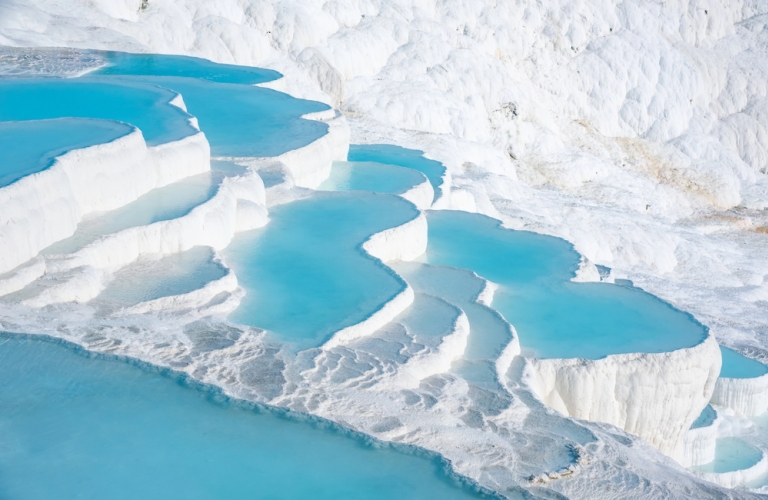
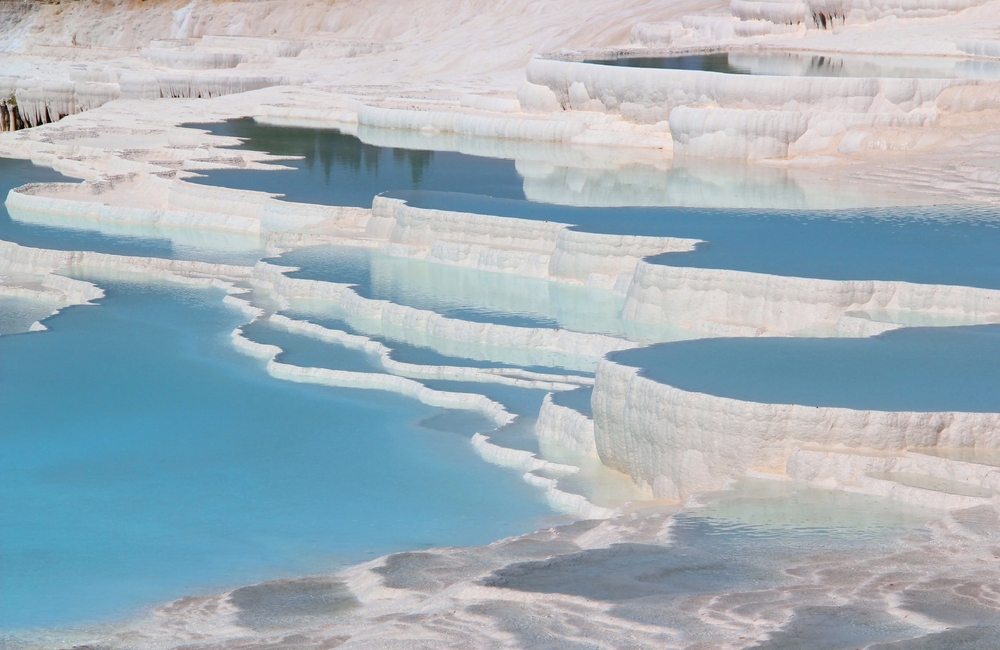
Pamukkale is one of Turkey’s most distinctive natural and archaeological destinations. Its white travertine terraces were formed by mineral-rich thermal water flowing down the hillside over thousands of years.
Above the terraces stands Hierapolis, an ancient Greco-Roman city that developed around the area's thermal springs. Together, the natural terraces and ancient ruins form a UNESCO World Heritage Site.
What Makes Pamukkale Special?
-
Walking across the famous white travertine terraces
-
Exploring the ancient city of Hierapolis
-
Seeing the impressive Hierapolis Theatre
-
Swimming in the historic Cleopatra’s Pool
-
Visiting the Hierapolis Archaeology Museum
-
Enjoying panoramic views over the valley
-
Exploring the thermal springs around Karahayit
Pamukkale is especially appealing to travelers who want to combine nature, ancient history, and thermal experiences in one destination.
What Should First-Time Visitors Prioritize?
Pamukkale can be visited in a few hours, but your priorities should depend on how much time you have.
If You Have 2–3 Hours
Focus on the main highlights:
-
Pamukkale Travertine Terraces
-
Hierapolis Ancient City
-
Hierapolis Theatre
-
Cleopatra’s Pool, if time allows
This gives you a good introduction to the destination without trying to see everything.
If You Have 4–5 Hours
Add:
-
Hierapolis Archaeology Museum
-
Necropolis
-
Additional ruins in Hierapolis
-
More time at Cleopatra’s Pool
-
Viewpoints around the terraces
This is a more comfortable option for first-time visitors.
If You Have a Full Day
You can combine Pamukkale and Hierapolis with nearby experiences such as:
-
Karahayit Red Springs
-
Pamukkale town
-
Additional thermal facilities
-
Paragliding
-
A hot air balloon flight, if available
The 10 Must-See Things to Do in Pamukkale
1. Walk on the Pamukkale Travertine Terraces
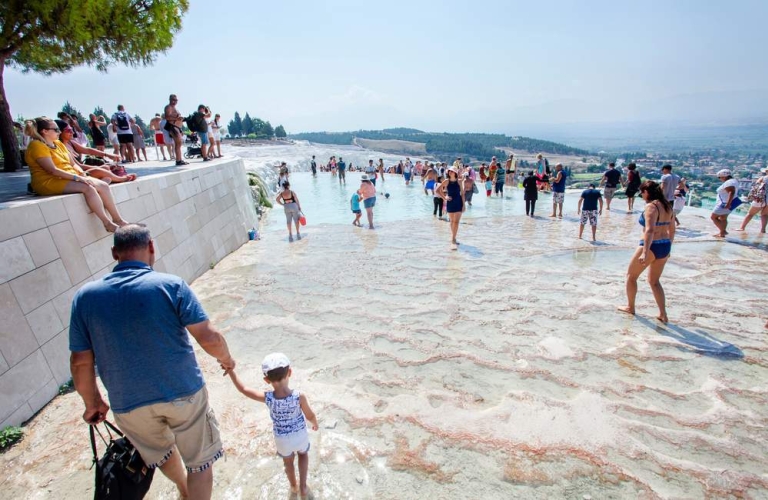
The Pamukkale travertine terraces are the destination's defining attraction.
Created by mineral-rich thermal water, the white terraces form a striking landscape of pools and cascading formations. Visitors can walk barefoot in designated areas to help protect the fragile surface.
What to Expect
-
Barefoot walking is required in designated areas.
-
Water levels can vary between pools.
-
Some surfaces can be slippery.
-
Shade is limited.
-
Comfortable conditions are usually found earlier or later in the day.
The terraces are the first priority for anyone visiting Pamukkale for the first time.
2. Explore the Ancient City of Hierapolis
Located above the travertines, Hierapolis is an ancient Greco-Roman city that developed around Pamukkale's thermal springs.
The ruins include streets, temples, public buildings, baths, a large necropolis, and a well-preserved theatre.
Highlights of Hierapolis
-
Hierapolis Theatre
-
Temple of Apollo
-
Plutonium
-
Necropolis
-
Frontinus Gate
-
Ancient baths
-
Main streets and public buildings
Allow around 2–3 hours if you want to explore Hierapolis at a comfortable pace.
3. See the Hierapolis Theatre
The Hierapolis Theatre is one of the most impressive monuments in the ancient city.
Built into the hillside, the theatre is notable for its monumental scale, decorative details, and views across the surrounding landscape.
Why Visit the Theatre?
-
Impressive ancient architecture
-
Preserved decorative elements
-
Panoramic views
-
Easy to combine with the rest of Hierapolis
Even if you are not particularly interested in archaeology, the theatre is one of the highlights you should not miss.
4. Swim in Cleopatra’s Pool
Cleopatra’s Pool, also known as the Antique Pool, is a historic thermal pool within the Pamukkale archaeological area.
The pool is known for its warm mineral water and submerged ancient architectural remains.
The connection with Cleopatra is part of the site's traditional story, rather than a historically confirmed fact.
Why Visit Cleopatra’s Pool?
-
Experience a historic thermal pool
-
Swim in warm mineral water
-
See submerged ancient remains
-
Relax after walking through Hierapolis
Swimming requires a separate admission fee, so check the current arrangements before your visit.
5. Explore the Hierapolis Archaeology Museum
The Hierapolis Archaeology Museum is housed in the ancient city's former Roman Bath complex.
It displays archaeological discoveries from Hierapolis and nearby ancient sites, providing useful context for the ruins you see outdoors.
Museum Highlights
-
Roman sculptures
-
Sarcophagi
-
Architectural fragments
-
Statues
-
Archaeological artifacts from Hierapolis and the surrounding region
If you enjoy history and archaeology, the museum is a worthwhile addition to your visit.
6. Discover the Necropolis of Hierapolis
The Necropolis of Hierapolis is one of the most extensive and impressive parts of the ancient city.
It stretches beyond the main urban area and contains numerous tombs and funerary monuments from different periods.
Why Is the Necropolis Important?
-
Shows how ancient Hierapolis buried its dead
-
Contains different types of tombs
-
Demonstrates the importance and size of the ancient city
-
Provides a different perspective on Roman life and culture
If you have enough time, include the Necropolis when exploring Hierapolis.
7. Enjoy the Views Over Pamukkale
The white terraces and surrounding valley create excellent opportunities for photography.
Best Times for Photography
-
Early morning
-
Late afternoon
-
Around sunset
Light conditions change throughout the day, so photographers may want to visit the terraces more than once if their schedule allows.
8. Visit Karahayit Red Springs
Located near Pamukkale, Karahayit is known for its mineral-rich thermal springs and distinctive red-colored deposits.
The thermal water and mineral formations give the area a different appearance from the white travertines of Pamukkale.
What Can You Do in Karahayit?
-
See the thermal springs
-
Visit local thermal facilities
-
Experience thermal pools
-
Explore the surrounding area
Karahayit is best treated as an optional addition rather than a replacement for Pamukkale and Hierapolis.
9. Try Paragliding Over Pamukkale
For adventure travelers, paragliding can provide a different perspective of the Pamukkale landscape.
Flights depend on weather conditions, operator availability, and safety requirements.
Why Try Paragliding?
-
Aerial views of the landscape
-
Adventure experience
-
Photography opportunities
-
Different perspective of the travertines and surrounding valley
Because conditions can change, check availability and weather conditions before planning your flight.
10. Take a Hot Air Balloon Ride
Hot air balloon flights are also available in the Pamukkale area on selected days and under suitable weather conditions.
A sunrise flight offers an elevated view of the travertines and surrounding landscape.
What to Know Before Booking
-
Flights depend on weather conditions.
-
Availability varies by season and operator.
-
Sunrise departures are typical.
-
Advance booking is recommended during busy periods.
If you are primarily interested in hot air balloons, check the current availability before making it a fixed part of your itinerary.
More Things to Do in Pamukkale
If you have extra time after visiting the main attractions, you can explore the surrounding area at a slower pace.
Explore Pamukkale Town
The small town near the travertines has restaurants, cafés, hotels, and shops serving visitors to the site.
What to Try
-
Turkish gözleme
-
Fresh fruit juice
-
Turkish coffee
-
Local restaurants
The town is convenient for a meal or a short break before continuing your journey.
Explore More of the Hierapolis Ruins
If you are interested in ancient history, spend additional time exploring areas beyond the main highlights.
Look for:
-
Frontinus Gate
-
Ancient streets
-
Roman baths
-
Temple remains
-
Public buildings
-
Necropolis
A guide can be particularly useful here because many of the ruins are easier to understand when their original function and historical context are explained.
Best Time to Visit Pamukkale
Spring and autumn are generally the most comfortable seasons for exploring Pamukkale because temperatures are usually more suitable for walking outdoors.
| Season | Weather | Crowds | Recommendation |
|---|---|---|---|
| Spring | Mild to warm | Moderate | Excellent |
| Summer | Hot and sunny | High | Visit early or late |
| Autumn | Mild to warm | Moderate | Excellent |
| Winter | Cooler, possible rain | Lower | Good for fewer crowds |
What Time of Day Is Best?
Early morning is a good choice during the warmer months because temperatures are more comfortable and the site may be less crowded.
Late afternoon can also be attractive for photography and cooler temperatures.
Tips for First-Time Visitors to Pamukkale
Wear Comfortable Shoes
You will walk considerable distances around the terraces and Hierapolis. Wear comfortable footwear for the parts of the visit where shoes are permitted.
Remember that footwear must be removed when walking on designated travertine areas.
Bring Water and Sun Protection
There is limited shade around many parts of Pamukkale.
Bring:
-
Water
-
Sunscreen
-
Sunglasses
-
Hat
-
Light clothing during summer
Bring Swimwear
If you plan to swim in Cleopatra’s Pool, bring appropriate swimwear and a towel.
Allow Enough Time
Plan at least 3–5 hours if you want to see the main highlights without rushing.
A full day is better if you want to combine Pamukkale and Hierapolis with nearby attractions.
Consider Visiting With a Guide
A guide can help explain the history of Hierapolis, the function of its monuments, and the relationship between the ancient city and its thermal springs.
Travelers who prefer an organized experience can also consider Pamukkale Tours.
Check Current Opening and Ticket Information
Opening hours, admission fees, swimming arrangements, and access conditions can change.
Check the latest information before your visit, especially if you plan to visit Cleopatra’s Pool or travel during a seasonal period.
How Much Time Do You Need in Pamukkale?
The ideal amount of time depends on whether you want to see only the main highlights or explore the wider area.
2–3 Hour Pamukkale Visit
Focus on:
-
Pamukkale Travertine Terraces
-
Hierapolis
-
Hierapolis Theatre
-
Main archaeological highlights
This is a relatively fast-paced visit.
Half-Day Pamukkale Visit
With around 4–5 hours, you can comfortably combine:
-
Travertine terraces
-
Hierapolis
-
Hierapolis Theatre
-
Necropolis
-
Cleopatra’s Pool
-
Archaeology Museum
This is a good option for most first-time visitors.
Full-Day Pamukkale Itinerary
A full day allows you to explore the main attractions without rushing and add nearby experiences.
-
Pamukkale Travertine Terraces
-
Hierapolis Ancient City
-
Hierapolis Theatre
-
Cleopatra’s Pool
-
Hierapolis Archaeology Museum
-
Karahayit Red Springs
-
Pamukkale town
If you are interested in adventure activities, you can also consider paragliding or a hot air balloon flight, subject to availability and weather conditions.
Frequently Asked Questions About Pamukkale
What are the best things to do in Pamukkale?
The main highlights are the Pamukkale travertine terraces, Hierapolis Ancient City, Hierapolis Theatre, Cleopatra’s Pool, and the Hierapolis Archaeology Museum.
How long do you need in Pamukkale?
Most first-time visitors should allow around 3–5 hours to see the main attractions. A full day is better if you want to explore nearby sites as well.
Can you swim in the Pamukkale terraces?
Visitors can walk barefoot through designated areas of the travertines, but swimming is restricted to designated pools. Cleopatra’s Pool is the main dedicated swimming experience in the area.
Is Cleopatra’s Pool worth visiting?
Yes, especially if you enjoy thermal experiences and want to swim among ancient architectural remains. It requires a separate admission fee.
Can you visit Pamukkale in one day?
Yes. One day is enough to explore Pamukkale, Hierapolis, Cleopatra’s Pool, and several nearby attractions without needing to rush.
What is the best time to visit Pamukkale?
Spring and autumn generally offer the most comfortable conditions for exploring the site. During summer, early morning or late afternoon is preferable because of the heat.
Is Pamukkale worth visiting?
Yes. The combination of white travertine terraces, thermal springs, and the ancient city of Hierapolis makes Pamukkale one of Turkey's most distinctive destinations.
Final Thoughts
Pamukkale offers a rare combination of natural beauty and ancient history. The white travertine terraces are the destination's defining attraction, while Hierapolis adds an impressive archaeological dimension to the experience.
For first-time visitors, the best approach is to start with the travertines and Hierapolis, then add Cleopatra’s Pool, the Archaeology Museum, and nearby attractions according to the time available.
Whether you have only a few hours or a full day, a little planning will help you experience the best of Pamukkale without rushing.
Planning a wider trip through Turkey? Explore our Turkey Tour Packages to combine Pamukkale with destinations such as Istanbul, Cappadocia, Ephesus, and Antalya.

Erdal Serbest is a travel content writer and tourism professional with a background in Tekirdağ Tourism Vocational High School. He has extensive experience in the hospitality and travel agency sectors, where he worked for several years supporting tour operations and destination marketing.
Throughout his career, he has created travel-focused blog content and contributed to destination promotion projects for various tourism platforms. Today, he focuses on developing engaging, informative, and experience-based content for turkeytravel.com.
He believes that travel is the most authentic way to understand cultures, flavors, and human stories, and he aims to reflect this perspective in every article he writes.