Hagia Sophia Istanbul: History, Architecture and Visiting Guide
Hagia Sophia is one of the most extraordinary historical landmarks in Istanbul and an essential destination for anyone interested in Byzantine architecture, Ottoman history and religious heritage.
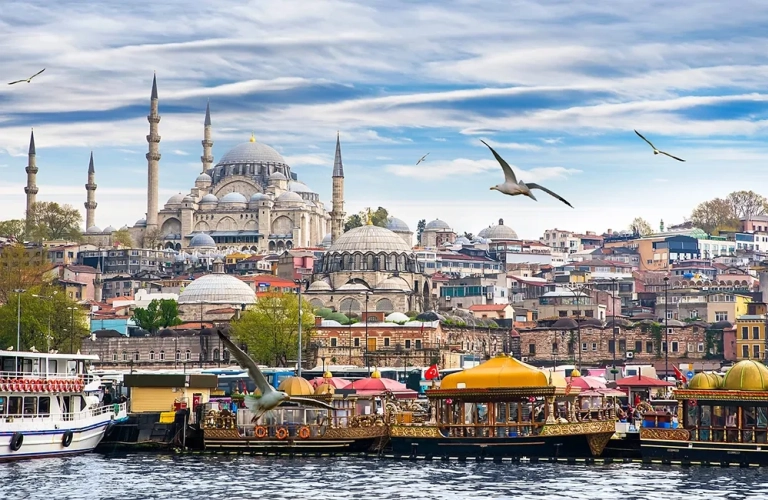
Located in the historic Sultanahmet district, this remarkable building has served as a Byzantine cathedral, an Ottoman mosque, a museum and, once again, an active mosque. Its enormous dome, historic mosaics, marble columns and centuries of architectural transformations make it one of the most significant monuments in the world.
Originally completed in 537 AD during the reign of Byzantine Emperor Justinian I, Hagia Sophia has witnessed some of the most important events in the history of Constantinople and Istanbul.
Today, visitors can explore its architectural heritage while respecting its continuing religious function.
This guide explains the history of Hagia Sophia, its most important architectural features, what to see inside, current visitor arrangements and how to include it in your Istanbul itinerary.
Quick Answer: What Is Hagia Sophia Famous For?
Hagia Sophia is famous for its extraordinary Byzantine architecture, monumental dome, historic Christian mosaics and Ottoman Islamic additions.
Its most important features include:
-
Its monumental central dome
-
Byzantine mosaics and religious artwork
-
Ottoman calligraphy and architectural additions
-
Marble columns and decorative stonework
-
Its long history as a cathedral, mosque and museum
-
Its importance as part of Istanbul's UNESCO World Heritage historic areas
Hagia Sophia is located in Sultanahmet, close to the Blue Mosque, Topkapi Palace and Basilica Cistern.
It remains an active mosque, and tourist access is organized separately from the main prayer area. Visitors should check current entry arrangements before their visit.
The History of Hagia Sophia
The history of Hagia Sophia spans almost fifteen centuries. Its different periods reflect the political, religious and cultural transformations of Istanbul.
1. The Byzantine Origins: Hagia Sophia in 537 AD
The present building was commissioned by Emperor Justinian I after an earlier church was destroyed during the Nika Revolt of 532 AD.
Construction began in the same year, and the new Hagia Sophia was inaugurated in 537 AD.
The architects were Anthemius of Tralles and Isidore of Miletus, who created a monumental structure combining a vast central dome, semi-domes, columns and large interior spaces.
At the time of its completion, Hagia Sophia was one of the greatest architectural achievements of the Byzantine Empire.
It became the principal church of Constantinople and an important center of Eastern Orthodox Christianity.
Why Was Hagia Sophia So Important to the Byzantine Empire?
Hagia Sophia represented the religious and political power of the Byzantine emperors.
Its monumental scale and elaborate interior reflected the wealth, artistic achievements and religious traditions of Constantinople.
For centuries, it remained one of the most important Christian churches in the Eastern Mediterranean.
2. Hagia Sophia During the Byzantine Period
Throughout the Byzantine era, Hagia Sophia underwent repairs, restorations and artistic changes.
Its central dome was damaged by earthquakes and structural problems, leading to major reconstruction work during the building's history.
After the Fourth Crusade captured Constantinople in 1204, the building was used as a Roman Catholic cathedral during the Latin Empire.
Following the Byzantine restoration of Constantinople in 1261, it returned to Orthodox Christian use.
These events contributed to the complex religious and architectural history visible in the building today.
3. The Ottoman Conquest and Conversion into a Mosque in 1453
In 1453, Ottoman forces under Sultan Mehmed II conquered Constantinople.
Following the conquest, Hagia Sophia was converted into a mosque.
This transformation introduced new architectural and religious elements, including:
-
A mihrab indicating the direction of prayer
-
A minbar used for sermons
-
Minarets added during the Ottoman period
-
Large calligraphic panels
-
Additional structural reinforcement and restoration work
The Ottoman period also saw important contributions from architect Mimar Sinan, whose structural interventions helped preserve the building.
Hagia Sophia became one of the most important mosques in the Ottoman capital.
4. Hagia Sophia as a Museum in 1935
In 1935, during the early years of the Republic of Turkey, Hagia Sophia was opened as a museum.
This period allowed visitors from different countries and religious backgrounds to explore its architectural and artistic heritage.
The building became particularly important for the study of Byzantine mosaics and the relationship between Christian and Islamic artistic traditions.
5. Hagia Sophia's Return to Mosque Status in 2020
In 2020, Hagia Sophia was reconverted into a mosque.
It continues to serve as an active place of Muslim worship while remaining one of Istanbul's most important international tourist attractions.
In 2024, a separate visitor arrangement was introduced for foreign tourists, with access to a designated upper gallery and cultural visitor route.
This distinction is important when planning a visit because the tourist route and the main prayer area do not have identical access arrangements.
Why Is Hagia Sophia Important?
Hagia Sophia is important for several reasons.
It is not simply a historic building or an architectural attraction. It represents different periods of Istanbul's history and the interaction of several religious and cultural traditions.
A Monument of Byzantine Architecture
Hagia Sophia is one of the most influential examples of Byzantine architecture.
Its dome, interior proportions and engineering solutions influenced the development of religious architecture for centuries.
A Symbol of Ottoman Architectural Heritage
The Ottoman additions demonstrate how an existing monumental structure was adapted to a different religious and architectural tradition.
The minarets, mihrab, minbar and calligraphic elements are important parts of its present appearance.
A Meeting Point of Christian and Islamic Heritage
Hagia Sophia preserves elements associated with both Byzantine Christianity and Ottoman Islam.
The coexistence of mosaics, calligraphy and architectural additions makes it particularly significant for understanding the history of Istanbul.
A UNESCO World Heritage Landmark
Hagia Sophia is part of the Historic Areas of Istanbul, which were inscribed on the UNESCO World Heritage List in 1985.
The wider historic area includes several monuments and urban districts that illustrate the city's importance across different historical periods.
Hagia Sophia Architecture: What Makes It Extraordinary?
The architecture of Hagia Sophia is one of the main reasons it attracts visitors from around the world.
Its design combines an enormous central dome with semi-domes, arches, columns and large interior spaces.
1. The Magnificent Central Dome
The central dome is the most recognizable architectural feature of Hagia Sophia.
It rises above the main interior space and creates an impressive sense of scale.
The dome is supported by an architectural system of arches, pendentives and massive structural elements.
Its design was particularly innovative for the sixth century.
Natural light entering through the windows around the dome contributes to the building's distinctive interior atmosphere.
2. Semi-Domes and Supporting Structures
The main dome is visually connected to surrounding semi-domes and smaller architectural spaces.
This arrangement creates a broad interior volume while distributing structural forces across the building.
The combination of domes and arches is an important part of Hagia Sophia's architectural character.
3. Byzantine Mosaics
Hagia Sophia contains some of the most important surviving examples of Byzantine religious mosaics.
These artworks depict religious figures and scenes created during different periods.
Important mosaics include:
-
The Deesis mosaic
-
The Virgin and Child
-
Christ Pantocrator imagery
-
Imperial portraits
-
Images associated with Byzantine rulers and religious figures
The Deesis mosaic is particularly well known for its expressive representation of Christ, the Virgin Mary and John the Baptist.
The visibility and accessibility of individual mosaics may vary according to the current visitor route, conservation work and religious arrangements.
4. Ottoman Calligraphy
Large circular calligraphic panels are among the most recognizable Ottoman additions to Hagia Sophia.
They feature the names of important Islamic figures and are an important part of the building's interior appearance.
Their scale and placement create a striking visual contrast with the Byzantine mosaics.
5. The Mihrab and Minbar
The mihrab indicates the direction of prayer toward Mecca.
The minbar is the raised structure used by the imam for sermons.
Both are important elements of the building's current function as a mosque.
6. Marble Columns and Decorative Surfaces
Hagia Sophia features marble columns, decorative stonework and large architectural surfaces.
Different materials and decorative techniques were used throughout the building's history.
These details help visitors understand the craftsmanship involved in constructing and maintaining such a monumental structure.
What to See Inside Hagia Sophia
If you are visiting Hagia Sophia for the first time, take time to appreciate its architectural details rather than focusing only on the central dome.
The following features are particularly important.
The Central Dome
Look upward to appreciate the scale of the dome and the way natural light enters the building.
The Byzantine Mosaics
Observe the surviving mosaics and their historical significance. Their location and visibility depend on the visitor route operating on the day.
The Ottoman Calligraphic Panels
The large circular panels are among the most recognizable elements of the mosque's interior.
The Mihrab
The mihrab is an important feature of the building's present religious function.
The Marble Interior
Look at the columns, marble surfaces and decorative details that contribute to the building's monumental character.
The Upper Visitor Gallery
The designated visitor gallery provides a different perspective on the interior and allows visitors to appreciate the dome and the scale of the main prayer hall from above.
Access to this area is subject to current visitor arrangements.
Visiting Hagia Sophia Today: Tickets and Entry Rules
Hagia Sophia remains an active mosque, so tourist visits operate according to arrangements that respect daily worship.
One of the most important things to understand before visiting is the distinction between the main prayer area and the designated cultural visitor route.
Is Hagia Sophia Free to Enter?
Access depends on which area you intend to visit.
The main prayer area has different access arrangements from the designated visitor gallery used by foreign tourists.
Foreign visitors should check the current ticket requirements and entrance instructions before their visit.
Do not assume that the tourist gallery is free simply because Hagia Sophia is an active mosque.
Where Is the Tourist Entrance?
The visitor entrance is separate from the main prayer access.
Follow the current signs and instructions provided at the site or on your ticket.
Entrance arrangements can change during restoration work or operational adjustments.
Are Opening Hours Fixed?
Visitor access is organized around worship and operational requirements.
Opening arrangements may be adjusted during prayer times, religious events, security procedures or restoration work.
Check the current visitor information before planning your visit.
Should You Book in Advance?
Advance booking may help you plan your visit and reduce uncertainty about ticket purchasing.
However, all visitors remain subject to security procedures and operational restrictions.
Arriving early and following the instructions on your ticket is advisable.
Hagia Sophia Dress Code and Visitor Etiquette
Because Hagia Sophia is an active mosque, visitors are expected to dress modestly and behave respectfully.
What Should Women Wear?
Women should be prepared to cover their hair according to current mosque visitor rules.
Shoulders and knees should also be covered.
Carrying a lightweight scarf can be useful.
What Should Men Wear?
Men should wear clothing that covers their shoulders and knees.
Avoid entering in clothing that is unsuitable for a place of worship.
Should You Remove Your Shoes?
Follow the instructions provided by staff for the visitor route operating on the day.
The requirements may differ depending on the areas visitors are permitted to access.
Photography Rules
Personal photography may be permitted where current signs and staff allow it.
Visitors should:
-
Avoid flash where prohibited.
-
Not use tripods or professional equipment without permission.
-
Avoid blocking visitor routes.
-
Never photograph people praying without permission.
-
Follow instructions from staff.
Respect Religious Activities
Keep your phone silent and your voice low.
Do not interrupt worshippers or enter areas restricted to prayer.
Food, drinks and smoking are not permitted inside the mosque.
Best Time to Visit Hagia Sophia
Hagia Sophia can be visited throughout the year, but the experience may vary according to visitor numbers, prayer schedules and seasonal tourism demand.
Early Morning
Early visits can be useful for travelers who want to begin their Sultanahmet sightseeing day before the busiest periods.
Late Afternoon
Late afternoon can also be a practical option, provided the visitor route is still operating.
Check the current last-entry arrangements before choosing your time.
Avoiding Busy Periods
Weekends, public holidays and the main summer tourism season can bring higher visitor numbers.
If you prefer a quieter experience, consider visiting on a weekday and avoiding the busiest sightseeing hours.
How to Get to Hagia Sophia
Hagia Sophia is located in Sultanahmet Square in the Fatih district of Istanbul.
It is within walking distance of several major historical attractions.
By Tram
The T1 tram line is one of the most convenient ways to reach Sultanahmet.
Get off at the Sultanahmet stop and walk toward the square.
By Metro and Tram Connections
Depending on your starting point, you can use the Istanbul metro network and transfer to the T1 tram or another suitable public transportation service.
By Taxi
Taxis can take you to the surrounding Sultanahmet area.
However, traffic restrictions and pedestrian areas may mean that the final part of your journey must be completed on foot.
On Foot
If you are staying in Sultanahmet, Sirkeci or nearby historic neighborhoods, walking may be the easiest way to reach Hagia Sophia.
What to Visit Near Hagia Sophia
One of the advantages of visiting Hagia Sophia is its location in the historic heart of Istanbul.
Several major attractions are within walking distance.
Blue Mosque
The Blue Mosque, officially known as Sultan Ahmed Mosque, is located directly across Sultanahmet Square.
Its elegant domes, courtyards and İznik tiles make it one of Istanbul's most recognizable Ottoman landmarks.
Topkapi Palace
Topkapi Palace was the principal residence and administrative center of Ottoman sultans for centuries.
Visitors can explore its courtyards, historic buildings and imperial collections.
Basilica Cistern
The Basilica Cistern is a remarkable underground Byzantine water reservoir.
Its columns, atmospheric lighting and historic atmosphere make it one of the most distinctive attractions in Istanbul.
Istanbul Archaeological Museums
Located near Topkapi Palace, the Istanbul Archaeological Museums contain collections associated with ancient civilizations and the history of the region.
Grand Bazaar
The Grand Bazaar is one of the world's best-known historic covered markets.
Visitors can browse traditional textiles, ceramics, carpets, jewelry and souvenirs.
Explore our Grand Bazaar shopping guide before visiting.
Suggested Sultanahmet Walking Itinerary
If you have one day to explore Istanbul's historic center, you can combine Hagia Sophia with several nearby attractions.
A practical sightseeing route is:
-
Hagia Sophia
-
Blue Mosque
-
Sultanahmet Square
-
Basilica Cistern
-
Topkapi Palace
-
Istanbul Archaeological Museums, if time allows
The exact time required depends on your interests, ticket arrangements and the visitor conditions at each attraction.
Allow enough time for security checks, queues and breaks rather than trying to rush through every site.
Is Hagia Sophia Worth Visiting?
Yes, Hagia Sophia is an important destination for visitors interested in history, architecture and the cultural heritage of Istanbul.
Its significance comes from the way different historical periods are represented within one building.
Even visitors who are not particularly interested in religious architecture can appreciate its engineering, scale and artistic details.
It is especially rewarding when combined with a visit to the Blue Mosque, Topkapi Palace and Basilica Cistern.
Frequently Asked Questions About Hagia Sophia Istanbul
Where is Hagia Sophia located?
Hagia Sophia is located in Sultanahmet Square in the Fatih district of Istanbul, Türkiye.
When was Hagia Sophia built?
The present building was commissioned by Byzantine Emperor Justinian I and inaugurated in 537 AD.
Who built Hagia Sophia?
The building was designed by Anthemius of Tralles and Isidore of Miletus under the reign of Emperor Justinian I.
Was Hagia Sophia originally a church?
Yes. Hagia Sophia was originally built as a Byzantine Christian cathedral and served as the principal church of Constantinople.
When did Hagia Sophia become a mosque?
It was converted into a mosque following the Ottoman conquest of Constantinople in 1453.
When did Hagia Sophia become a museum?
Hagia Sophia opened as a museum in 1935.
Is Hagia Sophia a mosque today?
Yes. Hagia Sophia returned to mosque status in 2020 and continues to function as an active place of worship.
Can tourists visit Hagia Sophia?
Yes. Foreign visitors can access the designated visitor area according to current ticketing and entry arrangements.
Is Hagia Sophia free for tourists?
The main prayer area and the designated tourist visitor gallery have different access arrangements. Foreign visitors should check the current ticket requirements before visiting.
What is the most famous feature of Hagia Sophia?
The monumental central dome is its most recognizable architectural feature. The Byzantine mosaics and Ottoman calligraphy are also important highlights.
How long does it take to visit Hagia Sophia?
Allow approximately 45–75 minutes for the designated visitor gallery, plus additional time for security and waiting. Your visit may take longer depending on visitor conditions and your interest in the building.
Can you visit Hagia Sophia during prayer times?
Visitor access may be restricted or adjusted around worship. Check the current schedule and follow staff instructions.
What should I wear when visiting Hagia Sophia?
Wear modest clothing that covers your shoulders and knees. Women should be prepared to cover their hair according to current mosque rules.
Can you take photographs inside Hagia Sophia?
Personal photography may be permitted where current signs and staff allow it. Follow all restrictions and avoid disturbing worshippers.
Is Hagia Sophia close to the Blue Mosque?
Yes. The Blue Mosque is directly across Sultanahmet Square and can easily be included in the same visit.
Is Hagia Sophia part of UNESCO World Heritage?
Yes. It is included within the Historic Areas of Istanbul, which were inscribed on the UNESCO World Heritage List in 1985.
Discover Hagia Sophia with TurkeyTravel.com
Hagia Sophia is one of the most important historical landmarks in Istanbul.
From its Byzantine origins and monumental dome to its Ottoman additions and present role as a mosque, the building reflects nearly fifteen centuries of architectural and cultural history.
A visit to Hagia Sophia is also an opportunity to explore the historic Sultanahmet district, including the Blue Mosque, Topkapi Palace and Basilica Cistern.
If you would like to discover these landmarks with professional local guidance, explore our Istanbul tours and plan your visit to the city's most important historical attractions.

Erdal Serbest is a travel content writer and tourism professional with a background in Tekirdağ Tourism Vocational High School. He has extensive experience in the hospitality and travel agency sectors, where he worked for several years supporting tour operations and destination marketing.
Throughout his career, he has created travel-focused blog content and contributed to destination promotion projects for various tourism platforms. Today, he focuses on developing engaging, informative, and experience-based content for turkeytravel.com.
He believes that travel is the most authentic way to understand cultures, flavors, and human stories, and he aims to reflect this perspective in every article he writes.