How to Get Around Istanbul: A Complete Public Transport Guide
Getting around Istanbul can seem complicated at first. The city stretches across two continents, has busy roads and covers a large geographical area. However, with a little planning, visitors can explore Istanbul comfortably using its extensive public transportation network.
The main options include the metro, tram, buses, ferries, Marmaray, funiculars and taxis. For most visitors, a combination of public transport and walking is the easiest way to reach the city's main attractions.
This guide explains how to get around Istanbul, how to use Istanbulkart, which transport options are best for tourists and how to travel between popular districts and the airports.
Understanding Istanbul's Public Transportation System
Istanbul has an extensive public transportation network connecting the European and Asian sides of the city.
Each transport option has a different purpose:
| Transport | Best for |
|---|---|
| Metro | Longer journeys and connections across the city |
| Tram | Historic districts and central sightseeing areas |
| Ferry | Crossing the Bosphorus and reaching the Asian side |
| Marmaray | Fast rail travel between Europe and Asia |
| Bus | Reaching neighborhoods outside metro and tram coverage |
| Funicular | Connecting areas at different elevations |
| Taxi | Direct journeys, luggage and destinations away from public transport |
For most tourists, the metro, T1 tram and ferries are the most useful options.
Istanbulkart: The Easiest Way to Pay for Public Transport
İstanbulkart is a rechargeable transportation card used across much of Istanbul's public transport network.
It can be used on buses, metro lines, trams, Marmaray, Metrobus, funiculars and many ferry services. Visitors can purchase a card and add credit at designated ticket machines and sales points.
Where Can You Buy Istanbulkart?
You can find Istanbulkart sales and top-up machines at many metro and tram stations, transport hubs and other designated locations.
The machines generally allow you to select a language, purchase a card and add credit.
Can Tourists Use Contactless Bank Cards?
Yes. Contactless bank and credit cards are accepted on many public transport services. However, payment conditions and fares may differ from using an Istanbulkart.
Is Istanbulkart Worth Buying?
If you plan to use public transportation several times during your stay, a rechargeable Istanbulkart is a practical option.
Visitors can also consider the Istanbul City Card and limited-use tickets, depending on the length of their visit and expected journeys.
Check the official Istanbul Card information for current card options, purchasing locations and payment details.
1. Istanbul Metro: The Fastest Way to Travel Longer Distances
The metro is one of the most efficient ways to travel around Istanbul, particularly when covering longer distances or avoiding road traffic.
Several metro lines serve the European and Asian sides, connecting residential districts, business areas, transport hubs and tourist destinations.
Useful Metro Lines for Tourists
M2 Metro: One of the most useful lines for visitors. It connects Yenikapı, the Golden Horn area, Şişhane, Taksim and several northern districts.
M11 Metro: Connects Istanbul Airport with the city rail network. Passengers can transfer to other lines to reach central districts.
M4 Metro: Runs on the Asian side between Kadıköy and Sabiha Gökçen Airport.
M1 Metro: Connects central transport areas with districts including the main intercity bus terminal.
Metro lines and connections may change as the network expands. Check the current route map before travelling.
When Should You Use the Metro?
The metro is particularly useful when:
-
Travelling between distant neighborhoods.
-
Going to or from an airport.
-
Avoiding heavy road traffic.
-
Connecting with Marmaray, trams or other metro lines.
2. Istanbul Tram: The Best Transport for the Historic Peninsula
The tram is especially convenient for visitors exploring Istanbul's historic center.
The most useful line for sightseeing is T1, which connects Kabataş and Bağcılar and passes through several important tourist areas.
Important T1 Tram Stops
-
Kabataş: Connections to the funicular and Bosphorus transport.
-
Tophane: Access to the Karaköy and Galataport area.
-
Karaköy: Close to Galata and waterfront ferry connections.
-
Eminönü: Near the Spice Bazaar and ferry piers.
-
Sirkeci: Connections with other rail services.
-
Gülhane: Convenient for the historic palace and park area.
-
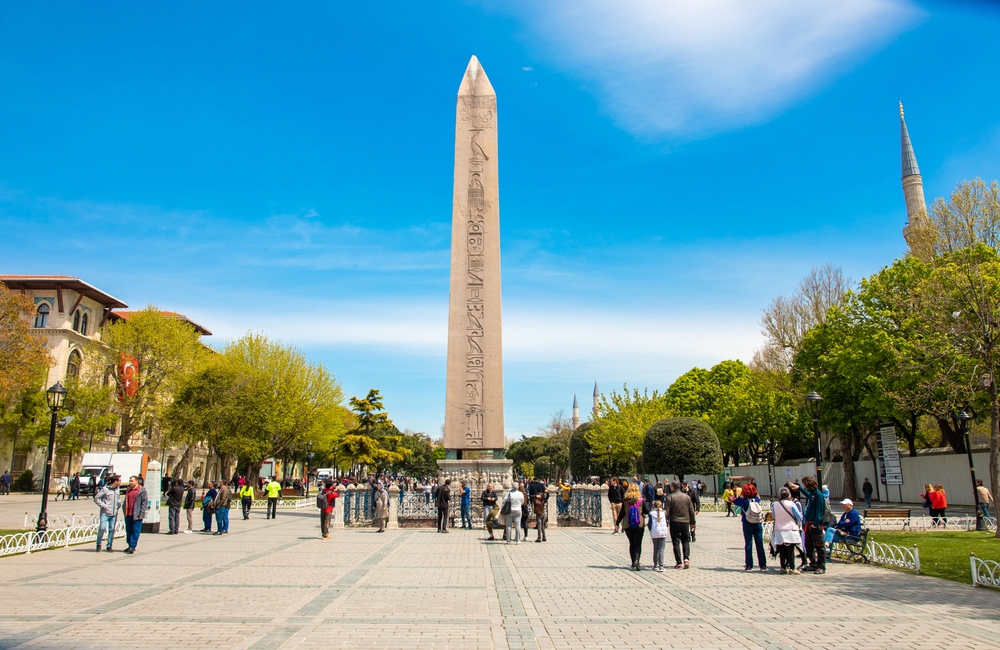
Sultanahmet: Close to Hagia Sophia, the Blue Mosque and Basilica Cistern.
-
Beyazıt-Kapalıçarşı: Access to the Grand Bazaar.
For travelers staying in Sultanahmet, the T1 tram is one of the most practical ways to reach other central districts.
Other Historic Tram Experiences
Istanbul also has nostalgic tram services.
The red tram along İstiklal Avenue is a familiar city landmark, while the Kadıköy-Moda tram offers a pleasant way to explore part of the Asian side.
These services are useful for shorter journeys and sightseeing experiences.
3. Istanbul Ferries: Travel Between Europe and Asia
Ferries are among the most enjoyable ways to travel around Istanbul.
The Bosphorus separates the European and Asian sides, and regular ferry services connect many waterfront districts.
Popular connections include:
-
Eminönü–Kadıköy
-
Beşiktaş–Kadıköy
-
Eminönü–Üsküdar
-
Karaköy–Kadıköy
Routes and timetables vary, so check the relevant ferry operator before travelling.
Why Should You Take a Ferry in Istanbul?
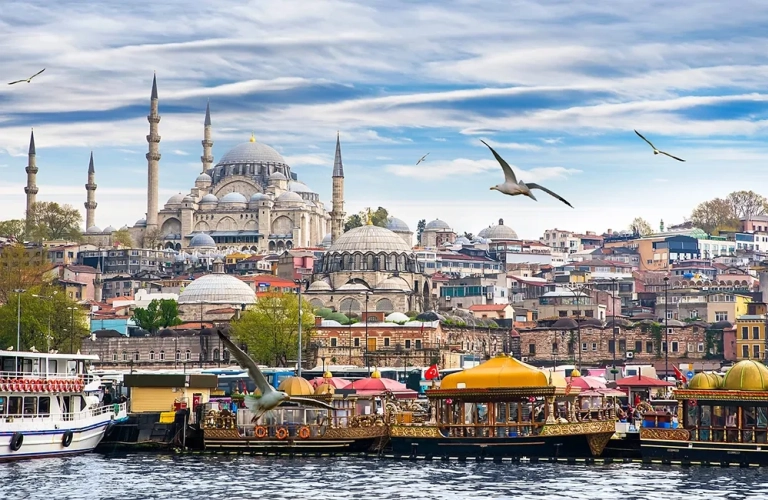
A ferry journey is more than just transportation. It offers views of historic mosques, palaces, waterfront mansions, bridges and the city's skyline.
If you are visiting Istanbul for the first time, a public ferry ride is an excellent way to experience the Bosphorus without booking a dedicated sightseeing cruise.
For longer journeys, the sea bus network may also be useful.
4. Marmaray: Travel Under the Bosphorus
Marmaray is a railway system that connects the European and Asian sides of Istanbul through an underwater tunnel beneath the Bosphorus.
It is particularly useful when you want to cross between continents quickly without relying on road traffic or waiting for a ferry.
Marmaray connects with several important transport hubs, including Yenikapı, Sirkeci, Üsküdar and Kadıköy-area connections.
Ferry or Marmaray: Which Should You Choose?
Choose the ferry if you want to enjoy the scenery and experience Istanbul from the water.
Choose Marmaray if you want a direct rail connection and prefer to avoid traffic or weather conditions.
Both are useful for visitors exploring the two sides of the city.
5. Buses and Minibuses
Istanbul's bus network reaches neighborhoods that are not directly served by the metro or tram.
Buses can be useful for reaching residential areas, waterfront districts and attractions outside the main tourist center.
However, road traffic can make journey times unpredictable, especially during busy periods.
What Are Dolmuş Minibuses?
Dolmuş vehicles are shared minibuses that operate along established routes.
They can be convenient for certain local journeys, but their routes and payment arrangements may be unfamiliar to first-time visitors.
Check the route and payment method before boarding rather than assuming that every service works exactly like a regular city bus.
6. Taxis and Ride-Hailing Services
Taxis are widely available in Istanbul and can be useful when public transport does not reach your destination conveniently.
They are particularly practical:
-
When travelling with large luggage.
-
For late-night journeys.
-
When travelling with young children or people with limited mobility.
-
When your destination is far from a metro or tram station.
Tips for Taking a Taxi in Istanbul
-
Make sure the taximeter is switched on.
-
Check that the destination is understood before departure.
-
Use a reputable taxi-booking service when possible.
-
Keep an eye on the route using a navigation app.
-
Be aware that road traffic can significantly increase journey time.
Ride-hailing and taxi-booking services can help you arrange a journey, but availability and fare arrangements may vary.
7. How to Get from Istanbul Airport to the City Center
Istanbul has two major international airports: Istanbul Airport (IST) on the European side and Sabiha Gökçen Airport (SAW) on the Asian side.
The best transfer option depends on your arrival airport, hotel location, luggage and budget.
From Istanbul Airport (IST)
Istanbul Airport is connected to the city by metro and airport bus services.
The M11 metro provides a rail connection to the city network, while Havaist airport buses serve various destinations.
Taxis and private airport transfers are also available.
If your hotel is in Sultanahmet, Taksim, Karaköy or another central district, check the complete route before choosing your transport. You may need to change lines or use a short taxi journey for the final part.
From Sabiha Gökçen Airport (SAW)
Sabiha Gökçen Airport is located on the Asian side of Istanbul.
The M4 metro connects the airport with Kadıköy and the wider rail network. Airport bus services and taxis are additional options.
If your accommodation is on the European side, allow extra time for the journey and check whether a metro, ferry or bus connection is most convenient.
Should You Book a Private Airport Transfer?
A private transfer may be a convenient choice if:
-
You are travelling with several suitcases.
-
You arrive late at night.
-
You are travelling as a family or group.
-
You prefer to go directly to your hotel without changing transport.
For a private arrival arrangement, you can contact TurkeyTravel.com.
8. Walking Around Istanbul
Walking is one of the best ways to discover Istanbul's historic neighborhoods.
Many attractions in Sultanahmet are within walking distance of one another. You can also explore Galata, Karaköy, Balat, Fener, Kadıköy and Moda on foot.
However, Istanbul is a hilly city. Some streets are steep, and distances between districts can be longer than they appear on a map.
A practical approach is to use public transport for longer journeys and walk when exploring individual neighborhoods.
Best Ways to Travel Between Popular Istanbul Attractions
Here are some useful transport suggestions for common tourist journeys.
| Journey | Recommended transport |
|---|---|
| Sultanahmet to Eminönü | T1 tram or walking |
| Sultanahmet to Taksim | T1 tram and funicular or metro connections |
| Eminönü to Kadıköy | Public ferry |
| Karaköy to Kadıköy | Public ferry |
| Taksim to Galata | Walking or metro, depending on the destination |
| Sultanahmet to Grand Bazaar | T1 tram or walking |
| European side to Üsküdar | Ferry or Marmaray |
| Kadıköy to Sabiha Gökçen Airport | M4 metro |
Always check the exact station, ferry pier and direction before starting your journey.
A Three-Day Istanbul Sightseeing Plan Using Public Transport
You can visit many of Istanbul's most important attractions in three days by combining walking, trams, metro and ferries.
Day 1: Sultanahmet and the Historic Peninsula
Start your day in Sultanahmet.
-
Visit Hagia Sophia.
-
Explore the Blue Mosque.
-
Discover Topkapi Palace.
-
Visit the Basilica Cistern.
-
Walk through the surrounding historic streets.
The T1 tram is useful for reaching the area from other central districts.
Day 2: Galata, Karaköy and the Bosphorus
-
Take the T1 tram to Karaköy or Eminönü.
-
Explore the Spice Bazaar.
-
Walk around Karaköy.
-
Visit Galata Tower.
-
Take a ferry or Bosphorus cruise.
-
Enjoy the waterfront in the evening.
Day 3: Kadıköy and the Asian Side
-
Take a ferry to Kadıköy.
-
Explore the local market.
-
Walk through Moda.
-
Enjoy the waterfront.
-
Return by ferry or Marmaray.
This itinerary combines Istanbul's major historical areas with its modern neighborhoods and waterfront experiences.
Practical Tips for Using Public Transport in Istanbul
Plan your route before leaving: Use a navigation app or the official transport network information to check connections and service changes.
Avoid peak commuting times when possible: Morning and evening rush hours can make public transport crowded.
Keep your Istanbulkart topped up: Check your balance before entering stations or boarding transport.
Check ferry timetables: Not every route operates at the same frequency or until the same time.
Allow extra time for transfers: Some metro and rail interchanges involve considerable walking.
Keep your belongings secure: As in any large city, be aware of your bags and valuables in crowded vehicles.
Wear comfortable shoes: Even when using public transport, you will probably walk a lot while exploring Istanbul.
Frequently Asked Questions About Getting Around Istanbul
What is the best way to get around Istanbul?
For most visitors, a combination of the T1 tram, metro, ferries and walking is the most convenient option. The best choice depends on your hotel location and the attractions you plan to visit.
Is public transportation easy to use in Istanbul?
Yes. The network is extensive, and Istanbulkart makes paying for many transport services convenient. However, the size of the city means that planning connections in advance can save time.
Can I use Istanbulkart on all public transportation?
Istanbulkart is accepted on many major public transport services, including metro, tram, buses, Marmaray and ferries. Check the relevant operator for any exceptions or special services.
Can I travel between Europe and Asia by public transport?
Yes. Ferries and Marmaray connect the two sides of Istanbul. Both are convenient options, depending on whether you prefer a scenic journey or a direct rail connection.
Is it better to use a taxi or public transport in Istanbul?
Public transport is usually more predictable during heavy traffic and is generally a practical choice for sightseeing. Taxis can be more convenient for luggage, late-night journeys and destinations away from public transport.
How do I get from Istanbul Airport to Sultanahmet?
You can use metro and other public transport connections, airport buses or a taxi/private transfer. The most suitable route depends on your arrival time and luggage. Check current connections before travelling.
Do I need to rent a car in Istanbul?
Most tourists do not need a rental car for visiting central Istanbul. Metro, tram, ferry and walking are usually more practical. A rental car may be useful if you plan to travel outside the city.
Explore Istanbul with TurkeyTravel
Getting around Istanbul becomes much easier when you understand how the metro, tram, ferries and other transport services connect the city.
Whether you are visiting the historic streets of Sultanahmet, exploring the cafés of Kadıköy or enjoying a Bosphorus ferry ride, public transportation gives you the flexibility to experience different parts of Istanbul.
If you prefer to discover the city with a professional local guide and organized transportation, explore our Istanbul Tours.
For a longer journey, discover our Turkey Tour Packages and combine Istanbul with destinations such as Cappadocia, Ephesus and Pamukkale.
You can also read our Istanbul Travel Guide for more information about planning your visit.

Erdal Serbest is a travel content writer and tourism professional with a background in Tekirdağ Tourism Vocational High School. He has extensive experience in the hospitality and travel agency sectors, where he worked for several years supporting tour operations and destination marketing.
Throughout his career, he has created travel-focused blog content and contributed to destination promotion projects for various tourism platforms. Today, he focuses on developing engaging, informative, and experience-based content for turkeytravel.com.
He believes that travel is the most authentic way to understand cultures, flavors, and human stories, and he aims to reflect this perspective in every article he writes.