Seven Churches of Revelation Tour in Turkey: A Complete Biblical Travel Guide
Turkey is one of the most important destinations in the world for travelers interested in biblical history and early Christianity. In western Turkey, seven ancient cities preserve the geographical and archaeological setting of the Christian communities addressed in the Book of Revelation.
Known as the Seven Churches of Revelation, these communities were located in Ephesus, Smyrna, Pergamon, Thyatira, Sardis, Philadelphia, and Laodicea.
Today, visitors can explore the remains of these ancient cities, discover their early Christian heritage, and better understand the messages recorded in Revelation chapters 2 and 3.
A Seven Churches of Revelation tour in Turkey is particularly meaningful for Christian pilgrims, Bible study groups, church communities, historians, and travelers interested in the origins of Christianity.
This guide explains where the Seven Churches are located, what you can see at each destination, how to plan the route, and how much time to allow for a biblical journey through western Turkey.
Quick Answer: Where Are the Seven Churches of Revelation?
All seven churches are located in western Turkey, in the ancient Roman province of Asia.
Their modern locations are:
| Biblical Church | Modern Location | Province |
|---|---|---|
| Ephesus | Selçuk | İzmir |
| Smyrna | İzmir | İzmir |
| Pergamon | Bergama | İzmir |
| Thyatira | Akhisar | Manisa |
| Sardis | Sart, near Salihli | Manisa |
| Philadelphia | Alaşehir | Manisa |
| Laodicea | Near Denizli | Denizli |
These were early Christian communities rather than seven identical church buildings. Their archaeological remains vary considerably, from extensive ancient cities to locations incorporated into modern urban areas.
The official Go Türkiye guide to the Seven Churches of Revelation also provides an overview of their locations and biblical significance.
What Are the Seven Churches of Revelation?
The Seven Churches are the seven Christian communities addressed in the Book of Revelation, traditionally associated with the Apostle John.
The messages appear in Revelation chapters 2 and 3. Each letter addresses the circumstances, strengths, weaknesses, and spiritual challenges of a particular community.
The seven cities were important centers of ancient Asia Minor. Their locations were connected by regional roads and trade routes, making western Turkey an especially significant area for understanding early Christian history.
For modern visitors, following this route offers an opportunity to connect biblical passages with the actual landscapes and archaeological remains of the ancient world.
The Seven Churches of Revelation: A City-by-City Guide
1. Ephesus – The Church That Had Lost Its First Love
Modern location: Selçuk, İzmir Province
Biblical reference: Revelation 2:1–7
Ephesus was one of the most important cities of the ancient Mediterranean world. It developed into a major commercial, cultural, and religious center during the Greek and Roman periods.
The message to the Church of Ephesus praised its perseverance and resistance to wrongdoing but warned that it had abandoned its first love.
Today, Ephesus is one of the most impressive archaeological destinations in Turkey.
Major attractions include:
-
Library of Celsus
-
Great Theatre
-
Curetes Street
-
Temple of Hadrian
-
Terrace Houses
-
Basilica of St. John
-
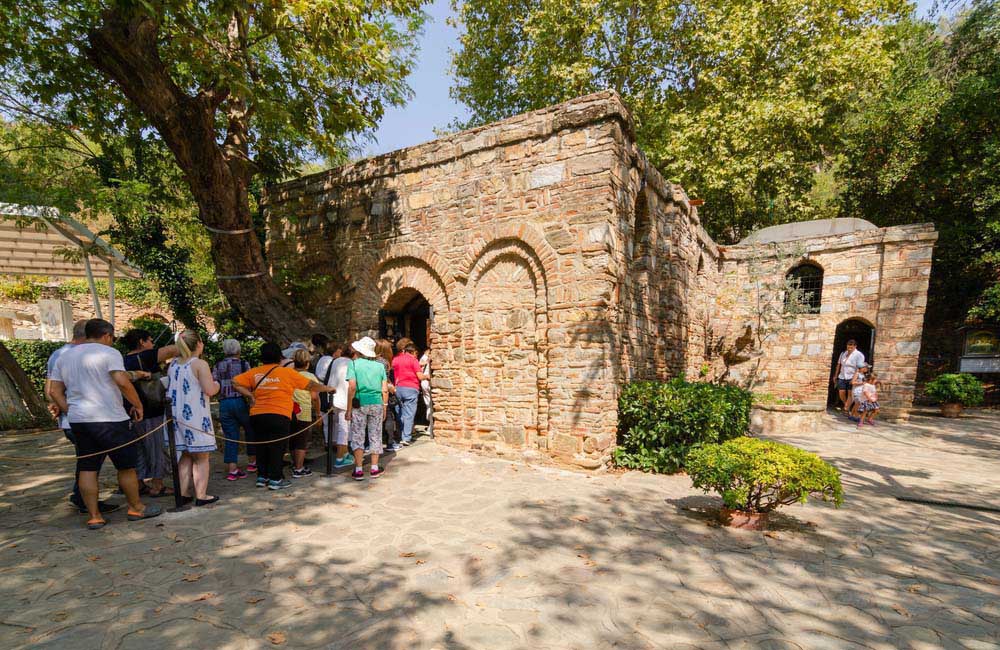
House of the Virgin Mary
The ancient city provides an extraordinary setting for understanding the historical environment of the early Christian community.
Recommended experience: Allow several hours to explore the archaeological site with a knowledgeable guide.
You can also explore our Ephesus Tours for guided visits to this important biblical destination.
2. Smyrna – The Church That Remained Faithful
Modern location: İzmir
Biblical reference: Revelation 2:8–11
Ancient Smyrna was an important port city on the Aegean coast. Today, it lies beneath and around modern İzmir, one of Turkey's largest and most vibrant cities.
The message to Smyrna recognized the community's suffering and encouraged its members to remain faithful despite persecution.
Unlike several of the other churches, Smyrna received no direct criticism in its letter.
Visitors interested in its history can explore:
-
Agora of Smyrna
-
Kadifekale, the ancient acropolis area
-
Historic districts of central İzmir
-
Archaeological remains associated with ancient Smyrna
The Agora is particularly important for understanding the city's Roman-period development.
Because ancient Smyrna is integrated into modern İzmir, its archaeological experience differs from visiting a large, separately preserved ancient city such as Ephesus.
3. Pergamon – The Church Facing Difficult Spiritual Challenges
Modern location: Bergama, İzmir Province
Biblical reference: Revelation 2:12–17
Pergamon was a powerful ancient city known for its monumental architecture, intellectual traditions, and religious significance.
In Revelation, the Church of Pergamon is associated with the phrase "where Satan's throne is." The message warns the community about compromising its beliefs.
Today, Pergamon is one of the most important archaeological sites in western Turkey.
Highlights include:
-
Pergamon Acropolis
-
Temple of Trajan
-
Ancient Theatre
-
Altar of Zeus site
-
Asklepion medical center
-
Red Basilica
The Red Basilica is especially interesting for Christian heritage travelers. This monumental Roman-period structure was later adapted for Christian use and is associated with the ancient religious landscape of Pergamon.
Pergamon's steep hillside setting also offers remarkable views over the surrounding countryside.
For additional information, visit our Pergamon destination guide.
4. Thyatira – The Church Known for Love and Service
Modern location: Akhisar, Manisa Province
Biblical reference: Revelation 2:18–29
Ancient Thyatira was an important commercial and manufacturing center, particularly known for its trade associations and craft industries.
The message to Thyatira praised the community's love, faith, service, and perseverance but warned against tolerating false teaching.
The city is also connected with Lydia, the seller of purple cloth mentioned in Acts 16. The New Testament identifies Lydia as being from Thyatira, although her conversion takes place in Philippi.
Today, archaeological remains of Thyatira are located within modern Akhisar.
Visitors can explore the excavated area, including remains associated with the ancient city's streets and buildings.
Unlike Ephesus or Pergamon, Thyatira does not have an extensive archaeological landscape open to visitors. It is best understood as one stop within a broader Seven Churches itinerary.
5. Sardis – The Church with a Reputation for Being Alive
Modern location: Sart, near Salihli, Manisa Province
Biblical reference: Revelation 3:1–6
Sardis was once the capital of the ancient Lydian Kingdom and later became an important city during the Persian, Hellenistic, and Roman periods.
The message to the Church of Sardis warned that although it had a reputation for being alive, it was spiritually asleep.
The archaeological site contains several remarkable structures:
-
Temple of Artemis
-
Roman bath-gymnasium complex
-
Ancient synagogue
-
Byzantine and early Christian remains
-
Sections of the ancient settlement
The synagogue at Sardis is particularly notable for its size and preservation.
Sardis is an essential destination for travelers interested in the relationship between ancient Judaism, early Christianity, and the wider religious history of Asia Minor.
6. Philadelphia – The Church That Kept Its Faith
Modern location: Alaşehir, Manisa Province
Biblical reference: Revelation 3:7–13
Ancient Philadelphia was founded during the Hellenistic period and developed into an important regional settlement.
The message to this church praised its perseverance and faithfulness despite having limited strength.
One of the most recognizable remains associated with ancient Philadelphia is the structure commonly known as the Church of St. John, with its monumental surviving columns.
The ancient remains are located within modern Alaşehir, and the archaeological experience is more limited than at some of the larger sites on the route.
For Christian pilgrims, however, Philadelphia remains an important stop because of its message in Revelation.
7. Laodicea – The Church That Was Neither Hot nor Cold
Modern location: Near Denizli
Biblical reference: Revelation 3:14–22
Laodicea was a prosperous ancient city known for commerce, banking, textiles, and medical traditions.
The message to the Church of Laodicea is particularly famous for describing the community as neither cold nor hot, but lukewarm.
This image is often discussed in connection with the region's ancient water supply and the wider geographical setting.
Today, Laodicea is an extensive archaeological site with important remains, including:
-
Ancient theatres
-
Stadium
-
Colonnaded streets
-
Monumental buildings
-
Water distribution systems
-
Early Christian church remains
Laodicea is a rewarding destination for visitors interested in biblical interpretation and archaeology.
It is also conveniently located near Pamukkale and Hierapolis, making it possible to combine biblical heritage with one of Turkey's best-known natural and historical attractions.
Explore our Pamukkale Tours to discover available itineraries in the region.
How to Plan a Seven Churches of Revelation Tour in Turkey
The Seven Churches are spread across western Turkey, mainly in İzmir, Manisa, and Denizli provinces.
Although the route is geographically concentrated in comparison with a countrywide tour, visiting all seven requires careful transportation and accommodation planning.
A private vehicle with an experienced guide is a practical option for travelers who want to visit the archaeological sites comfortably and spend time understanding their biblical significance.
A suggested route can begin in İzmir, continue to Ephesus and Pergamon, and then cover the inland locations of Thyatira, Sardis, Philadelphia, and Laodicea.
The exact order may be adjusted according to arrival and departure airports, hotel arrangements, opening hours, and the amount of time available.
Suggested 4-Day Seven Churches Itinerary
A four-day itinerary can provide an introduction to the seven locations, although the sightseeing schedule will be relatively full.
| Day | Suggested Route | Main Highlights |
|---|---|---|
| Day 1 | İzmir – Smyrna – Pergamon | Agora of Smyrna, Pergamon Acropolis |
| Day 2 | Pergamon – Thyatira – Sardis | Ancient Thyatira, Sardis archaeological site |
| Day 3 | Sardis – Philadelphia – Laodicea | Alaşehir, Laodicea |
| Day 4 | Laodicea – Ephesus – İzmir | Laodicea, Ephesus |
This is an outline rather than a fixed tour schedule. Actual driving times, archaeological site visits, and overnight stops should be planned carefully.
Travelers who prefer a slower pace may benefit from a five- to seven-day itinerary.
For a broader regional journey, you may also include Pamukkale, Hierapolis, and the House of the Virgin Mary.
How Many Days Do You Need?
The ideal duration depends on your interests and how much time you want to spend at each archaeological site.
-
3–4 days: A relatively intensive visit covering all seven locations.
-
5 days: More time for archaeological visits and overnight stops.
-
6–7 days: A more relaxed pilgrimage with additional historical and cultural experiences.
Bible study groups and church communities may prefer a longer itinerary to allow time for readings, discussions, and reflection at selected locations.
What Is the Best Time to Visit the Seven Churches?
Spring and autumn are generally comfortable seasons for exploring the archaeological sites of western Turkey.
Spring (April–May)
Spring offers pleasant conditions for walking through ancient cities and visiting outdoor archaeological sites.
Autumn (September–October)
Autumn is another attractive period, with generally comfortable temperatures and opportunities to explore the region after the summer peak.
Summer (June–August)
Summer visits are possible, but temperatures can be high, particularly at exposed archaeological sites. Early morning visits, sun protection, and sufficient water are advisable.
Winter (November–March)
Winter can be quieter, although weather conditions may affect outdoor sightseeing and travel schedules.
Always check current site opening hours before your visit.
Who Should Visit the Seven Churches of Revelation?
A Seven Churches tour is particularly suitable for:
-
Christian pilgrims
-
Church groups
-
Bible study groups
-
Religious history students
-
Theologians and researchers
-
Archaeology enthusiasts
-
Travelers interested in the history of early Christianity
The route is not exclusively for religious travelers. Visitors interested in ancient Greek, Roman, and Byzantine history can also appreciate the archaeological importance of these cities.
Why Choose a Guided Seven Churches Tour?
Visiting the Seven Churches independently is possible, but the locations are spread across several provinces and vary considerably in their archaeological character.
A guided journey can make the experience more meaningful and convenient.
A well-planned tour may provide:
-
Private transportation between the ancient cities
-
Professional English-speaking guiding
-
Historical and biblical explanations
-
Assistance with hotel arrangements
-
Organized visits to archaeological sites
-
A flexible schedule for individuals and groups
For church groups and pilgrims, a customized itinerary can also include time for Bible readings, prayer, and reflection where appropriate.
If you are planning a wider journey through Turkey, you can compare our Turkey Tour Packages and discuss a customized route with our travel team.
Frequently Asked Questions About the Seven Churches of Revelation
Where are the Seven Churches of Revelation located?
All seven are located in western Turkey. Ephesus is near Selçuk, Smyrna is modern İzmir, Pergamon is Bergama, Thyatira is Akhisar, Sardis is near Sart and Salihli, Philadelphia is Alaşehir, and Laodicea is near Denizli.
Can you still visit all Seven Churches of Revelation?
Yes. All seven ancient locations can be visited today. However, their archaeological remains differ. Some are extensive ancient cities, while others are smaller excavated areas within modern towns.
Are the Seven Churches still functioning churches?
The original Christian communities addressed in Revelation do not survive as seven continuously functioning first-century churches. Visitors explore their ancient urban settings, archaeological remains, and later Christian structures.
How long does it take to visit the Seven Churches?
A focused visit can take approximately four days, while five to seven days allows a more relaxed itinerary and additional time for nearby historical attractions.
What is the best starting point for a Seven Churches tour?
İzmir is a practical starting point because it is close to Smyrna, Ephesus, and Pergamon and provides access to the wider western Turkey region.
Can I combine the Seven Churches with Pamukkale?
Yes. Laodicea is near Denizli and Pamukkale, so the two destinations can be included in the same itinerary. Hierapolis is another worthwhile archaeological site in the area.
Is the Seven Churches tour suitable for church groups?
Yes. A customized itinerary can be arranged for church groups, Bible study groups, and Christian organizations. Group size, accommodation, guiding, and sightseeing schedules should be planned in advance.
Do I need a licensed guide to visit the Seven Churches?
You can visit archaeological sites independently, but a knowledgeable professional guide can explain their biblical, historical, and archaeological context. Guided visits are especially useful for groups interested in the details of Revelation.
Plan Your Seven Churches of Revelation Journey
Following the Seven Churches of Revelation through western Turkey is a remarkable journey into the history of early Christianity.
From Ephesus and Smyrna to Pergamon, Thyatira, Sardis, Philadelphia, and Laodicea, each ancient city offers a different perspective on the communities addressed in the Book of Revelation.
Whether you are planning a personal pilgrimage, a church group journey, or a historical exploration, a carefully designed itinerary can help you experience these important locations at a comfortable pace.
TurkeyTravel.com, operated by Istanbul-based Kontes Travel, can help you plan a private or customized journey through the biblical sites of western Turkey.
Contact our travel team with your preferred travel dates, group size, and itinerary requirements to discuss your Seven Churches of Revelation tour.

Erdal Serbest is a travel content writer and tourism professional with a background in Tekirdağ Tourism Vocational High School. He has extensive experience in the hospitality and travel agency sectors, where he worked for several years supporting tour operations and destination marketing.
Throughout his career, he has created travel-focused blog content and contributed to destination promotion projects for various tourism platforms. Today, he focuses on developing engaging, informative, and experience-based content for turkeytravel.com.
He believes that travel is the most authentic way to understand cultures, flavors, and human stories, and he aims to reflect this perspective in every article he writes.