Where Is Turkey Located? A Complete Geographic Guide to Turkey
Turkey, officially known internationally as Türkiye, is located at the crossroads of Europe and Asia. Its unique geographical position has shaped its history, culture, trade routes and regional importance for thousands of years.
The country occupies part of southeastern Europe and a much larger area of western Asia. It is surrounded by the Black Sea, the Aegean Sea and the Mediterranean Sea, while the Sea of Marmara lies between its European and Asian territories.
Whether you are researching world geography or planning a visit, understanding where Turkey is located helps explain its diverse landscapes, climates, cultures and travel experiences.
Where Is Turkey Located on the World Map?
Turkey is situated between southeastern Europe and western Asia.
Its territory consists of two main geographical areas:
-
Thrace (Eastern Thrace): The European part of Turkey, located west of the Bosphorus and the Sea of Marmara.
-
Anatolia (Asia Minor): The Asian part of the country, covering most of Turkey's land area.
Approximately 97% of Turkey's territory is in Asia, while around 3% is in Europe.
The two parts are connected by the Bosphorus and Dardanelles straits, with the Sea of Marmara between them.
Turkey's approximate geographical coordinates are:
-
Latitude: 36°–42° North
-
Longitude: 26°–45° East
This position places the country in the Northern Hemisphere, at the meeting point of several important geographical and cultural regions.
Is Turkey in Europe or Asia?
Turkey is in both Europe and Asia, making it a transcontinental country.
Most of its land is in Asia, within the region known as Anatolia. Its smaller European territory is located in Eastern Thrace, in southeastern Europe.
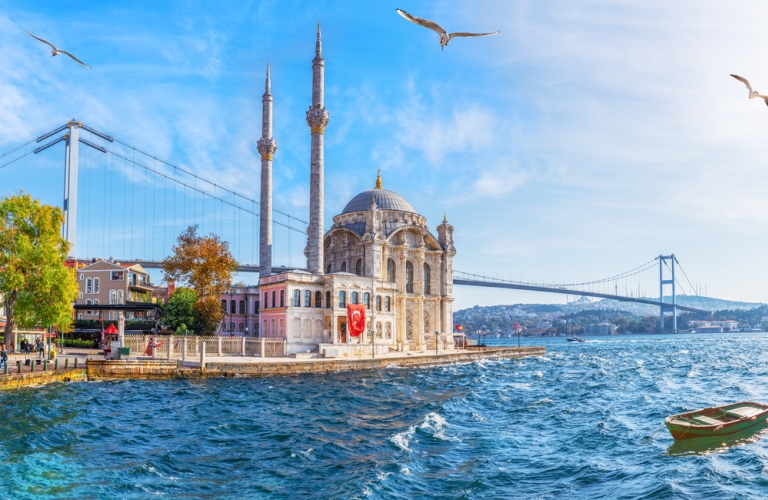
The Bosphorus Strait separates the European and Asian sides of Istanbul, while the Sea of Marmara and Dardanelles form part of the wider geographical boundary between the two continents.
This position has influenced Turkey's development as a meeting point for European, Asian and Middle Eastern cultures.
For travelers, this geographical connection is particularly visible in Istanbul, where it is possible to experience both continents within the same city.
You can learn more in our dedicated guide: Where Is Istanbul Located? Map, Geography & Region Guide.
Which Countries Border Turkey?
Turkey shares land borders with eight countries. These neighboring countries connect it to southeastern Europe, the Caucasus and the Middle East.
| Neighboring country | Direction |
|---|---|
| Greece | West |
| Bulgaria | Northwest |
| Georgia | Northeast |
| Armenia | East |
| Azerbaijan (Nakhchivan) | East |
| Iran | East |
| Iraq | Southeast |
| Syria | South |
Turkey's European Neighbors
Greece and Bulgaria are Turkey's two land neighbors in Europe.
The border with Greece connects Turkey to the Balkans, while Bulgaria provides an important land connection to southeastern and central Europe.
Turkey's Asian Neighbors
Turkey's eastern and southeastern borders connect it with Georgia, Armenia, Azerbaijan's Nakhchivan Autonomous Republic, Iran, Iraq and Syria.
These geographical connections have influenced centuries of trade, migration, cultural exchange and regional history.
Which Seas Surround Turkey?
Turkey has coastlines along three major seas: the Black Sea, the Aegean Sea and the Mediterranean Sea. The Sea of Marmara is an important inland sea within the country.
Each coastline has its own geographical characteristics and offers different experiences for visitors.
The Black Sea
The Black Sea lies north of Turkey.
Its coastline is known for green mountains, forests, traditional villages and a relatively rainy climate.
Popular destinations include:
-
Trabzon
-
Rize
-
Amasra
-
Sinop
-
Samsun
The eastern Black Sea region is particularly famous for its tea plantations, mountain scenery and traditional highland settlements.
The Aegean Sea
The Aegean Sea lies west of Turkey, separating the country's western coastline from Greece and its islands.
The region is known for ancient cities, coastal towns, beaches and archaeological heritage.
Popular destinations include:
-
İzmir
-
Kuşadası
-
Çeşme
-
Bodrum
-
Didim
-
Ayvalık
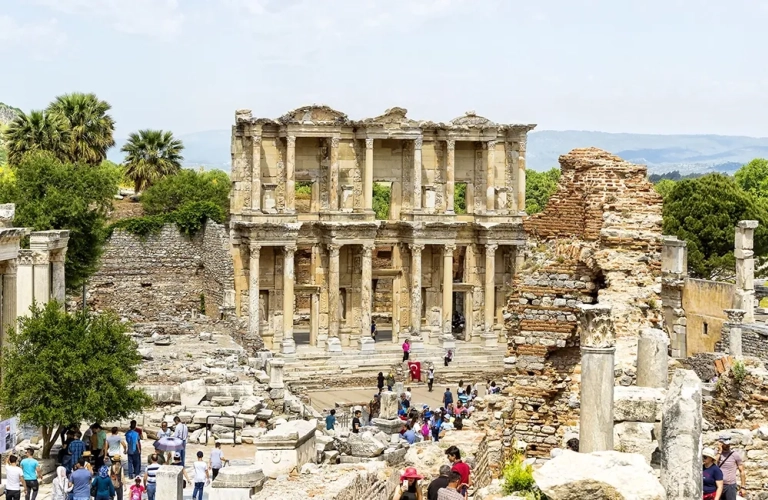
The Aegean region is also home to important historical sites such as Ephesus and Pergamon.
The Mediterranean Sea
The Mediterranean Sea borders southern Turkey.
This coastline is famous for its beaches, warm climate, ancient cities and holiday resorts.
Popular destinations include:
-
Antalya
-
Alanya
-
Side
-
Kaş
-
Kalkan
-
Fethiye
The Mediterranean region is one of Turkey's most popular areas for summer holidays and coastal travel.
The Sea of Marmara
The Sea of Marmara lies between the Black Sea and the Aegean Sea.
It is connected to the Black Sea by the Bosphorus and to the Aegean Sea through the Dardanelles.
The Sea of Marmara is particularly important because it separates Turkey's European and Asian territories.
What Are the Main Geographical Regions of Turkey?
Turkey is commonly divided into seven geographical regions. Each has different landscapes, weather patterns, agricultural products and cultural characteristics.
It is the country's most economically developed and densely populated region. Istanbul is its largest city and an important center for international travel, business and culture.
Major attractions include Istanbul's historic districts, Bursa's Ottoman heritage and the Gallipoli Peninsula.
2. Aegean Region
The Aegean Region covers much of western Turkey.
It is known for its coastline, fertile agricultural land, olive groves and ancient archaeological sites.
Important destinations include İzmir, Ephesus, Pamukkale's surrounding region and Bodrum.
3. Mediterranean Region
The Mediterranean Region extends along southern Turkey.
It features a warm coastal climate, beaches, mountains and historical attractions.
Antalya is the region's best-known tourism center, while destinations such as Kaş, Side and Alanya attract visitors from around the world.
4. Central Anatolia Region
Central Anatolia occupies the central part of the country.
It has extensive plateaus, steppe landscapes and a generally continental climate.
Ankara, Turkey's capital, is located in this region. Cappadocia, with its distinctive rock formations and underground settlements, is another major attraction.
5. Black Sea Region
The Black Sea Region stretches along the northern coast.
Its landscape is characterized by green mountains, forests, rivers and tea plantations, especially in the eastern part.
Trabzon, Rize and Amasra are among its well-known destinations.
6. Eastern Anatolia Region
Eastern Anatolia is the country's largest geographical region by area and is known for its high mountains, plateaus and cold winters.
Mount Ararat, Turkey's highest mountain, is located here.
The region also includes Lake Van, historic settlements and important examples of eastern Anatolian cultural heritage.
7. Southeastern Anatolia Region
Southeastern Anatolia lies in the southeastern part of Turkey, close to Syria and Iraq.
The region has a rich historical heritage and is particularly important for understanding the early development of human settlements.
Major destinations include Gaziantep, Şanlıurfa, Mardin and Diyarbakır. Göbeklitepe, near Şanlıurfa, is one of the world's most significant archaeological sites.
Why Is Turkey's Geographical Location Historically Important?
Turkey's position between Europe and Asia has made it an important crossroads throughout history.
The region has been home to many civilizations, including:
-
Hittites
-
Phrygians
-
Greeks
-
Romans
-
Byzantines
-
Seljuks
-
Ottomans
Its location also connected important commercial routes between Europe, Asia and the Middle East.
The Bosphorus and Dardanelles have played a particularly important role in maritime trade and military history because they connect major seas and provide passage between different geographical regions.
Cities such as Istanbul, İzmir, Ephesus and Troy developed through their connections with trade, migration and cultural exchange.
Today, visitors can explore the remains of these civilizations across the country, from ancient Roman cities to Byzantine monuments and Ottoman architecture.
What Is Turkey's Climate Like?
Turkey's geographical size and varied landscape create several different climate conditions.
A traveler visiting the Mediterranean coast may experience warm, sunny weather while eastern parts of the country are much colder, particularly during winter.
Mediterranean Climate
The southern and western coastal areas generally have hot, dry summers and mild, wetter winters.
Antalya, Fethiye and Bodrum are examples of destinations with Mediterranean climate characteristics.
Black Sea Climate
The Black Sea coastline receives more rainfall than many other parts of Turkey.
The region has humid conditions, green landscapes and relatively mild coastal temperatures.
Continental Climate
Central and eastern Anatolia generally experience more pronounced seasonal differences.
Summers can be hot and dry, while winters may be very cold, with snowfall in many areas.
Why Does Climate Matter for Travelers?
Because Turkey has several climate zones, the best time to visit depends on your destination and planned activities.
For example:
-
Spring and autumn are often comfortable for cultural sightseeing.
-
Summer is popular for Mediterranean and Aegean beach holidays.
-
Winter offers opportunities for skiing and snow-related activities in suitable mountain regions.
For a month-by-month overview, read our Best Time to Visit Turkey in 2027.
Where Is Turkey's Capital and What Is Its Largest City?
Turkey's capital city is Ankara, located in Central Anatolia.
Istanbul is the country's largest city and its most internationally recognized cultural and commercial center.
Although Istanbul was the capital of the Byzantine and Ottoman empires, Ankara became the capital of the Republic of Turkey in 1923.
Other major cities include:
-
İzmir – A major Aegean port and commercial center.
-
Antalya – A leading Mediterranean tourism destination.
-
Bursa – An important industrial and historical city.
-
Gaziantep – Famous for its cuisine and cultural heritage.
-
Trabzon – A major city on the eastern Black Sea coast.
How Does Turkey's Location Affect Travel?
Turkey's geographical position makes it accessible from Europe, Asia, the Middle East and other parts of the world.
Istanbul is the country's main international aviation hub, while Antalya and İzmir also receive substantial international air traffic.
Because the country's major attractions are spread across different regions, visitors often combine domestic flights, road journeys and guided sightseeing.
For example, a cultural itinerary may connect:
-
Istanbul in northwestern Turkey
-
Cappadocia in Central Anatolia
-
Ephesus in western Turkey
-
Pamukkale in southwestern Turkey
-
Antalya on the Mediterranean coast
These destinations are geographically spread out, so planning the route carefully can make a significant difference to travel time.
If you are considering visiting several regions, explore our Turkey tour packages for possible routes and travel durations.
Frequently Asked Questions About Turkey's Location
Is Turkey part of Europe or the Middle East?
Turkey is a transcontinental country located in both southeastern Europe and western Asia. It is also commonly associated with the Middle East because of its geographical proximity and historical connections to the region.
Is Turkey in the Northern or Southern Hemisphere?
Turkey is entirely in the Northern Hemisphere. Its approximate latitude extends from 36° to 42° north.
How many countries share a border with Turkey?
Turkey shares land borders with eight countries: Greece, Bulgaria, Georgia, Armenia, Azerbaijan's Nakhchivan Autonomous Republic, Iran, Iraq and Syria.
What seas surround Turkey?
Turkey has coastlines along the Black Sea, Aegean Sea and Mediterranean Sea. The Sea of Marmara is an inland sea located between its European and Asian territories.
Is Istanbul in Europe or Asia?
Istanbul is located on both continents. The Bosphorus Strait separates its European and Asian sides.
What is the capital of Turkey?
Ankara is the capital of Turkey. Istanbul is the country's largest city.
Is Turkey close to Greece?
Yes. Turkey shares a land border with Greece in the west. The two countries are also separated by the Aegean Sea in several areas.
Why is Turkey considered geographically important?
Turkey connects Europe and Asia and controls the strategic Bosphorus and Dardanelles waterways. Its location has made it important for trade, transportation, history and cultural exchange.
Final Thoughts: Turkey's Unique Position Between Two Continents
Turkey's geographical location is one of the country's most distinctive characteristics.
Stretching across Europe and Asia, bordered by eight countries and connected to three major seas, Türkiye offers a remarkable variety of landscapes, climates and cultural influences.
From Istanbul and the Marmara region to the ancient cities of the Aegean coast, the mountains of eastern Anatolia and the Mediterranean beaches, every part of the country offers a different perspective.
Understanding where Turkey is located is also the beginning of understanding why it has become such a fascinating destination for travelers from around the world.
Explore our Turkey destinations and discover the regions you would like to visit.

Erdal Serbest is a travel content writer and tourism professional with a background in Tekirdağ Tourism Vocational High School. He has extensive experience in the hospitality and travel agency sectors, where he worked for several years supporting tour operations and destination marketing.
Throughout his career, he has created travel-focused blog content and contributed to destination promotion projects for various tourism platforms. Today, he focuses on developing engaging, informative, and experience-based content for turkeytravel.com.
He believes that travel is the most authentic way to understand cultures, flavors, and human stories, and he aims to reflect this perspective in every article he writes.