Best Time to Visit Ephesus: A Month-by-Month Guide
The best time to visit Ephesus is generally spring (April and May) and autumn (September and October). During these months, temperatures are usually more comfortable for exploring the ancient ruins, and visitors can enjoy the archaeological site without the intense summer heat.
Ephesus, near Selçuk in western Türkiye, has a Mediterranean climate with hot, dry summers and mild, wetter winters. Because much of the ancient city is exposed to the sun, the season you choose can make a significant difference to your experience.
However, the ideal time depends on your priorities. Spring offers pleasant sightseeing conditions, autumn combines comfortable temperatures with the quieter atmosphere after the summer peak, summer provides long daylight hours but can be very hot, and winter is suitable for travelers who prefer fewer visitors.
This guide explains the best months to visit Ephesus, what to expect in each season and how to choose the right time for your trip.
When Is the Best Time to Visit Ephesus?
For most travelers, April, May, September and October are the best months to explore Ephesus.
These months generally offer a good balance of temperature, daylight and sightseeing conditions.
| Month | Weather and visitor experience |
|---|---|
| January | Cool and relatively quiet; rain is possible |
| February | Cool, with fewer visitors |
| March | Spring begins; conditions become milder |
| April | Pleasant for walking and sightseeing |
| May | Warm, generally comfortable for exploring |
| June | Hotter weather and increasing visitor numbers |
| July | Very hot, with peak-season crowds |
| August | Hot and busy, especially around midday |
| September | Warm conditions, often more comfortable than midsummer |
| October | Pleasant temperatures and a quieter atmosphere |
| November | Cooler weather and fewer visitors |
| December | Mild to cool, with a greater chance of rain |
Weather conditions vary from year to year, so check the forecast before your visit.
Spring in Ephesus: March to May
Spring is one of the best seasons to visit Ephesus. Temperatures gradually rise, the surrounding countryside becomes greener and the ancient city is generally more comfortable to explore than during midsummer.
March
March marks the transition from winter to spring. Days gradually become milder, although rain and cooler periods are still possible.
It is a good month for travelers who prefer a quieter visit and do not mind changeable weather.
April
April is one of the most attractive months for sightseeing in Ephesus. The weather is generally pleasant for walking along the ancient marble streets and exploring the open archaeological areas.
The surrounding landscape is also greener after the winter rains, creating attractive conditions for photography.
May
May is another excellent month. Temperatures are usually warmer than in April, but the intense summer heat has generally not arrived.
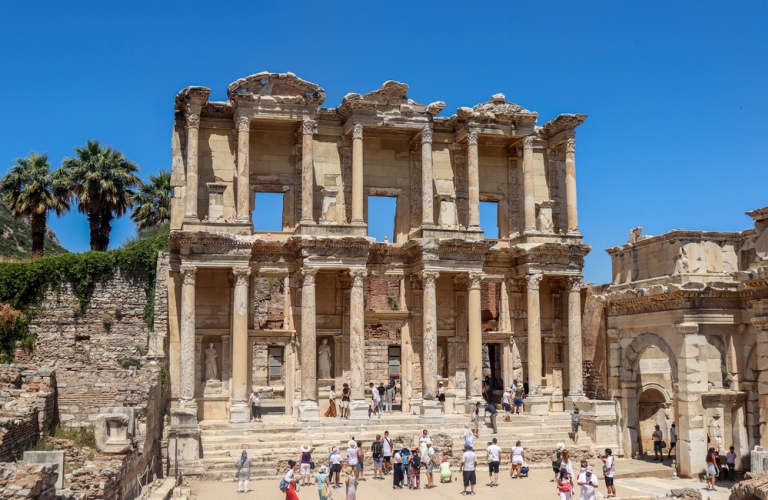
It is a particularly good time for exploring the Library of Celsus, Great Theatre, Terrace Houses and other monuments at a comfortable pace.
Why visit in spring?
-
Generally pleasant temperatures for walking
-
Green landscapes and seasonal flowers
-
Good conditions for photography
-
More comfortable sightseeing than during peak summer heat
Spring is a particularly good choice for first-time visitors who want to spend several hours exploring the archaeological site.
Summer in Ephesus: June to August
Summer is the busiest travel season in the Ephesus region. Long daylight hours make it possible to spend more time outdoors, but temperatures can become very high.
July and August are usually the hottest months. Temperatures can reach or exceed 35°C on particularly hot days, and the lack of shade across large sections of the archaeological site can make walking tiring.
June
June marks the beginning of the summer season. Temperatures are rising, but early mornings and later afternoons can still offer manageable conditions for sightseeing.
Visitor numbers also increase as the summer holiday and cruise seasons develop.
July
July is generally one of the hottest months in Ephesus. Walking through the exposed archaeological areas during the middle of the day can be uncomfortable.
If you visit in July, consider starting early and taking breaks in shaded areas where available.
August
August is similarly hot and is a popular month for holidays along the Aegean coast.
The ancient city can be busy, particularly when cruise ships are scheduled to arrive in nearby Kuşadası.
Why visit in summer?
-
Long daylight hours
-
Convenient for travelers on summer holidays
-
Easy to combine Ephesus with an Aegean coastal trip
What to consider: Heat, strong sunshine and higher visitor numbers can make summer less comfortable for extended archaeological visits.
If you travel during July or August, bring water, wear a hat, use sunscreen and avoid the hottest part of the day as much as possible.
Autumn in Ephesus: September to November
Autumn is another excellent season to visit Ephesus. September and October are particularly attractive because temperatures generally become more comfortable while the region still enjoys plenty of pleasant days.
September
September is often one of the best months for exploring Ephesus.
The intense summer heat begins to ease, although early September can still be hot. The Aegean region remains a good destination for combining cultural sightseeing with coastal travel.
October
October offers a comfortable balance for many visitors. Days are generally milder, making it easier to explore the ancient city on foot.
It is also a good time to combine Ephesus with nearby destinations such as Şirince, Selçuk and the Aegean coast.
November
November is quieter and cooler. Rain becomes more likely as winter approaches, but there can still be pleasant days for visiting archaeological sites.
It is a good option for travelers who prioritize a quieter atmosphere over consistently warm weather.
Why visit in autumn?
-
More comfortable temperatures than midsummer
-
Good conditions for walking and photography
-
A quieter atmosphere as the peak summer season ends
-
An opportunity to combine history with coastal destinations
For many travelers, September and October are the best overall months to visit Ephesus.
Winter in Ephesus: December to February
Winter is the quietest season in Ephesus. Temperatures are generally mild compared with many European destinations, although rainy and chilly days are possible.
The ancient city can still be visited during winter, but visitors should be prepared for changing weather and shorter daylight hours.
December
December is usually cool and wetter than the summer months. It can be a pleasant time to explore on a dry day, particularly if you prefer fewer visitors.
January
January is generally one of the quietest months. Rain and cool temperatures are possible, so waterproof clothing and comfortable shoes are useful.
February
February remains part of the winter season, although conditions gradually begin to improve as spring approaches.
Why visit in winter?
-
Fewer visitors than during peak season
-
A quieter atmosphere at major monuments
-
Potentially better value for accommodation
-
More time to explore without the summer crowds
Winter is a reasonable option for travelers who are flexible with their plans and do not mind cooler or rainy weather.
Best Time of Day to Visit Ephesus
Choosing the right time of day is almost as important as choosing the right season.
Because much of Ephesus is an open-air archaeological site, sunlight and temperature can strongly affect the experience.
Early Morning
Early morning is generally the best time to begin exploring, especially during the warmer months.
The temperature is usually more comfortable, and arriving early can help you avoid some of the busiest periods.
It is also a good time for photography, as the light can be softer than around midday.
Late Afternoon
Late afternoon can also be pleasant, particularly in spring and autumn.
The lower angle of the sun creates attractive lighting around the ancient monuments. However, check the site's current closing time before planning a late visit.
Avoid the Hottest Hours in Summer
During July and August, the middle of the day is often the least comfortable time to explore Ephesus.
If possible, plan your visit around the cooler morning hours and take breaks when the sun is strongest.
When Is Ephesus Least Crowded?
Ephesus receives visitors throughout the year, but visitor numbers generally increase during the main summer travel season.
The busiest periods often coincide with summer holidays and cruise ship arrivals at Kuşadası.
For a quieter experience, consider:
-
Visiting in November, December, January or February
-
Choosing April, early May or October
-
Arriving early in the morning
-
Checking cruise ship schedules if you are visiting from Kuşadası
Crowds can vary significantly from one day to another. Even during spring and autumn, some days can be busy because of organized tour groups and cruise excursions.
Best Time to Visit Ephesus for Different Types of Travelers
The ideal season depends on what matters most during your trip.
| Your travel priority | Recommended period |
|---|---|
| Best overall sightseeing conditions | April, May, September, October |
| Comfortable walking weather | April, May, October |
| Warm weather and coastal holidays | June and September |
| Fewer visitors | November to February |
| Photography and pleasant daylight | Spring and autumn |
| Avoiding extreme heat | March, April, May, October and November |
| Combining Ephesus with the Aegean coast | May, June, September and October |
If you are visiting Ephesus for the first time, April, May, September and October are the safest choices for a comfortable sightseeing experience.
What to Wear and Bring When Visiting Ephesus
The ancient city covers a large area, and visitors spend much of their time walking outdoors.
Your clothing and equipment should match the season.
In spring and autumn:
-
Comfortable walking shoes
-
Light layers for cooler mornings
-
Sunglasses and sunscreen
-
A light jacket for changeable weather
In summer:
-
Lightweight, breathable clothing
-
A hat or cap
-
Sunscreen
-
Sufficient drinking water
-
Comfortable shoes suitable for uneven ancient surfaces
In winter:
-
A waterproof jacket
-
Comfortable walking shoes with good grip
-
Warm layers
-
An umbrella if rain is forecast
Some ancient streets are uneven and made of stone, so comfortable footwear is important throughout the year.
Is Ephesus Worth Visiting in Summer or Winter?
Yes. Ephesus is worth visiting in every season, but the experience changes depending on the weather and visitor numbers.
Summer is suitable for travelers who are already spending time on the Aegean coast or visiting during a cruise. The main disadvantage is the heat, especially around midday.
Winter offers a quieter experience and can be rewarding for visitors interested in history and archaeology. However, rainy weather and shorter daylight hours may affect your plans.
If you have flexibility, spring and autumn usually provide the most comfortable conditions.
Planning Your Visit to Ephesus
Once you have chosen the right season, it is worth planning how to explore the archaeological site and nearby attractions.
Most visitors spend around two to four hours at the main ancient city, depending on their interests and whether they visit the Terrace Houses.
You can also combine Ephesus with nearby attractions such as:
-
Temple of Artemis
-
House of the Virgin Mary
-
Basilica of St. John
-
Ephesus Archaeological Museum
-
Şirince Village
For a complete overview of the region, read our Ephesus Travel Guide.
If you want to discover the main monuments and understand their historical significance, explore our Ephesus Tours.
You can also read our guide to the best places to visit in Ephesus and Selçuk.
Frequently Asked Questions About the Best Time to Visit Ephesus
What is the best month to visit Ephesus?
April, May, September and October are generally the best months. They usually offer more comfortable temperatures for walking around the ancient city than the hottest summer months.
Is April a good time to visit Ephesus?
Yes. April is an excellent month for sightseeing, with generally mild temperatures and greener surroundings. Occasional rain is still possible.
Is May too hot to visit Ephesus?
Usually not. May is generally warm and comfortable for exploring the archaeological site, although temperatures can vary and warmer days are possible.
Is September a good month to visit Ephesus?
Yes. September is one of the best months for visiting Ephesus. Summer heat gradually eases, while the Aegean region often remains warm and suitable for sightseeing.
Is Ephesus too hot in July and August?
It can be very hot, with temperatures sometimes reaching or exceeding 35°C. Early morning visits, sun protection and sufficient water are especially important during these months.
Can you visit Ephesus in winter?
Yes. Ephesus can be visited throughout the winter season. Expect cooler temperatures and a greater chance of rain, but generally fewer visitors than during summer.
What is the quietest time to visit Ephesus?
The winter months, particularly January and February, are generally quieter. November and early March can also offer a more peaceful experience than the main summer season.
What is the best time of day to visit Ephesus?
Early morning is usually the most comfortable time, particularly in summer. Late afternoon can also be pleasant, but always check the current closing time before your visit.
How many hours should I spend in Ephesus?
Most visitors spend approximately two to four hours exploring the main archaeological site. Allow additional time if you want to visit the Terrace Houses or nearby attractions.
Final Thoughts: Choosing the Best Time to Visit Ephesus
Ephesus is an extraordinary historical destination in every season, but spring and autumn generally provide the best conditions for exploring its ancient streets and monuments.
April, May, September and October offer a comfortable balance of weather and sightseeing opportunities. Summer is hotter and busier, while winter provides a quieter experience for travelers who are prepared for cooler and wetter conditions.
Whatever time of year you choose, planning around the weather and arriving early can make your visit to Ephesus much more enjoyable.

Erdal Serbest is a travel content writer and tourism professional with a background in Tekirdağ Tourism Vocational High School. He has extensive experience in the hospitality and travel agency sectors, where he worked for several years supporting tour operations and destination marketing.
Throughout his career, he has created travel-focused blog content and contributed to destination promotion projects for various tourism platforms. Today, he focuses on developing engaging, informative, and experience-based content for turkeytravel.com.
He believes that travel is the most authentic way to understand cultures, flavors, and human stories, and he aims to reflect this perspective in every article he writes.