Best Places to Visit in Ephesus and Selçuk
Ephesus is one of the most remarkable archaeological destinations in Türkiye, offering much more than the remains of a single ancient city. The wider Selçuk area is home to Roman monuments, ancient religious sanctuaries, Byzantine landmarks, museums and traditional villages.
The most famous attraction is the ancient city of Ephesus, where visitors can walk along marble streets and explore monuments such as the Library of Celsus, the Great Theatre and the Terrace Houses. Beyond the main archaeological site, nearby landmarks include the Temple of Artemis, the Basilica of St. John, the House of the Virgin Mary and the Ephesus Archaeological Museum.
Whether you are interested in ancient history, architecture, religion or local culture, these are the best places to visit in Ephesus and the surrounding Selçuk area.
1. Ancient City of Ephesus
The ancient city of Ephesus is the main attraction in the region and a highlight of any visit to western Türkiye.
Ephesus developed into an important city during the Hellenistic and Roman periods. It became a major commercial, political and religious center, leaving behind an extraordinary collection of archaeological remains.
Walking through the ancient city, you can explore marble streets, public buildings, temples, fountains, residential areas and monumental structures.
Some of the most important landmarks inside Ephesus include:
-
Library of Celsus
-
Great Theatre
-
Curetes Street
-
Temple of Hadrian
-
Terrace Houses
-
Ancient Agora
-
Odeon
The archaeological site is extensive, so allow several hours if you want to explore it comfortably.
For a closer look at the city's history and monuments, read our Ephesus Ancient City guide.
2. Library of Celsus
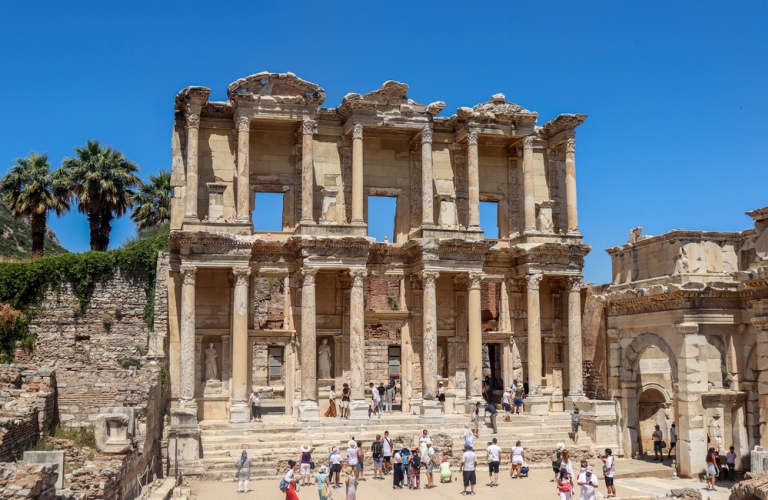
The Library of Celsus is the most recognizable monument in Ephesus and one of the finest examples of Roman architecture in the ancient city.
Built in the early 2nd century AD, the library was commissioned by Gaius Julius Aquila in memory of his father, Tiberius Julius Celsus Polemaeanus, a Roman senator and governor of the province of Asia.
The building served as a public library and a monumental tomb. Its impressive two-level façade, decorated columns and sculptural details make it one of the most photographed archaeological landmarks in Türkiye.
Although the original building suffered extensive damage, its façade was reconstructed using surviving architectural elements.
Why visit: Roman architecture, ancient libraries, sculpture and photography.
Read more in our dedicated article: Library of Celsus in Ephesus.
3. Great Theatre of Ephesus
The Great Theatre is one of the largest and most impressive structures in ancient Ephesus.
Built into the slope of Mount Pion, the theatre could accommodate approximately 25,000 spectators. It was used for theatrical performances, public gatherings and other events.
Its enormous seating area and impressive setting offer a sense of the scale and importance of ancient Ephesus.
The theatre also provides excellent views across the archaeological site and towards the ancient harbour area.
Why visit: Monumental Roman architecture, ancient entertainment and panoramic views.
4. Curetes Street
Curetes Street was one of the principal streets of ancient Ephesus and remains one of the most atmospheric parts of the archaeological site.
The marble-paved street connects important monuments and is lined with the remains of fountains, columns, temples and public buildings.
Walking along this historic route helps visitors imagine how people moved through the city during the Roman period.
Look out for the Temple of Hadrian, the Fountain of Trajan and the remains of other monumental structures along the way.
Why visit: Ancient urban architecture, historical atmosphere and photography.
5. Terrace Houses of Ephesus
The Terrace Houses offer a fascinating insight into the private lives of wealthy residents of ancient Ephesus.
Located on the hillside above Curetes Street, these residential buildings feature beautifully preserved mosaics, wall paintings, marble decorations and evidence of sophisticated domestic architecture.
The houses reveal details about Roman family life, interior decoration, heating systems and the social status of their inhabitants.
Unlike the city's public monuments, the Terrace Houses show how wealthy people lived inside their homes.
Access is subject to a separate admission arrangement, so check current ticket information before visiting.
Why visit: Roman domestic life, mosaics, frescoes and archaeology.
6. Temple of Hadrian
The Temple of Hadrian is one of the most attractive monuments along Curetes Street.
Dedicated to the Roman Emperor Hadrian, the structure is known for its decorated entrance, elegant columns and carved reliefs.
Although relatively small compared with the Great Theatre or the Library of Celsus, its architectural details make it an important stop for visitors interested in Roman art and imperial history.
Why visit: Classical architecture, decorative reliefs and Roman history.
7. Temple of Artemis
The Temple of Artemis was once one of the Seven Wonders of the Ancient World.
Located outside the main archaeological city, near modern Selçuk, it was one of the most important religious sanctuaries of the ancient Mediterranean.
The temple was dedicated to Artemis of Ephesus, a goddess whose worship had deep roots in the region. The monumental sanctuary attracted pilgrims and became a symbol of the city's religious and cultural identity.
Today, very little of the original building remains. Visitors can see foundations, scattered stone fragments and a reconstructed column marking the location of the ancient sanctuary.
Despite its limited visible remains, the site is historically significant and worth visiting if you are interested in the Seven Wonders of the Ancient World.
Why visit: Ancient religion, archaeology and the history of the Seven Wonders.
Discover more in our article about the Temple of Artemis at Ephesus.
8. House of the Virgin Mary
The House of the Virgin Mary is a religious pilgrimage site located on Mount Bülbül, several kilometres from Selçuk.
According to Christian tradition, Mary spent her final years in the area after arriving in Ephesus with Saint John. The small stone building is regarded by many pilgrims as the place where she lived.
The historical identification of the house is based on religious tradition and later investigations rather than conclusive archaeological proof.
Today, the site attracts Christian pilgrims and visitors of different faiths. Its peaceful setting among the hills makes it a distinctive stop when exploring the Ephesus region.
Why visit: Religious history, pilgrimage and a peaceful natural setting.
Read our House of the Virgin Mary in Ephesus guide before your visit.
9. Basilica of St. John
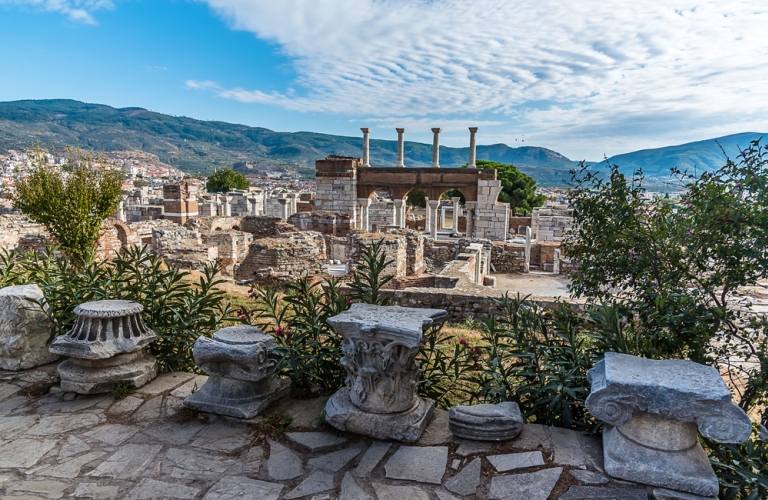
The Basilica of St. John stands on Ayasuluk Hill in Selçuk, near the remains of the Byzantine fortress.
The large church was built during the reign of Emperor Justinian in the 6th century. Christian tradition associates the site with the burial place of Saint John the Apostle.
Although much of the basilica is now in ruins, its remaining columns, walls and architectural features reveal the scale of the original building.
The hill also offers impressive views of Selçuk and the surrounding countryside.
Why visit: Byzantine architecture, early Christian history and panoramic views.
10. Ephesus Archaeological Museum
The Ephesus Archaeological Museum in Selçuk is an excellent place to understand the history of the ancient city and the wider region.
Its collections include sculptures, statues, mosaics, everyday objects and archaeological finds discovered in and around Ephesus.
Among the most famous exhibits are representations of Artemis of Ephesus, which help visitors understand the distinctive religious traditions of the ancient city.
A museum visit is particularly useful after exploring the archaeological site, as it provides additional context for the monuments and objects you have seen.
Why visit: Archaeological discoveries, ancient sculpture and regional history.
11. Şirince Village
Şirince is a picturesque village in the hills near Selçuk, known for its traditional architecture, narrow streets and relaxed atmosphere.
The village is a pleasant contrast to the archaeological sites of Ephesus. Visitors can walk through its historic streets, explore local shops, enjoy regional food and take in views of the surrounding countryside.
Şirince is also known for its local wine production and traditional village houses.
It is an enjoyable addition to a longer visit to the Ephesus region, especially for travelers interested in local culture and rural life.
Why visit: Traditional architecture, local cuisine, village atmosphere and countryside views.
How Many Days Do You Need to Visit Ephesus?
The time you need depends on how many historical sites and nearby attractions you want to explore.
| Available time | Suggested places |
|---|---|
| Half a day | Main archaeological city of Ephesus |
| One full day | Ephesus, Temple of Artemis and Basilica of St. John |
| Two days | Ephesus, House of the Virgin Mary, Ephesus Museum and Şirince |
If you are mainly interested in the ancient city, a half-day visit may be sufficient for its principal monuments. However, travelers who want to explore the wider Selçuk area should consider spending a full day or more.
How to Get to Ephesus and Selçuk
Ephesus is located near Selçuk in İzmir Province, western Türkiye.
Visitors can reach the area from İzmir, Kuşadası or other destinations along the Aegean coast.
From İzmir: You can travel to Selçuk by road or train. From Selçuk, the ancient city is a short onward journey.
From Kuşadası: Ephesus is a convenient excursion from Kuşadası, particularly for cruise passengers and travelers staying at the resort.
From Istanbul: The quickest practical option is generally to fly to İzmir and continue to Selçuk by road or train.
For more detailed transportation information, seasonal advice and practical planning tips, see our Ephesus Travel Guide.
Best Time to Visit Ephesus
Spring and autumn are generally the most comfortable seasons for exploring Ephesus.
April, May, September and October often offer pleasant conditions for walking around the archaeological sites.
Summer can be very hot, particularly during July and August. If you visit during this period, start early in the day, wear comfortable shoes and bring enough water and sun protection.
Explore Ephesus with a Guided Tour
Ephesus has a long and complex history, and many of its monuments are easier to understand with the help of a knowledgeable local guide.
A guided visit can explain the significance of the Library of Celsus, the Great Theatre, the Terrace Houses and the other archaeological remains.
Travelers who want to combine the ancient city with nearby landmarks can explore our Ephesus Tours.
Frequently Asked Questions About Places to Visit in Ephesus
What are the best places to visit in Ephesus?
The most important places include the ancient city of Ephesus, Library of Celsus, Great Theatre, Terrace Houses, Temple of Artemis, House of the Virgin Mary, Basilica of St. John and Ephesus Archaeological Museum.
Is the Temple of Artemis inside Ephesus Ancient City?
No. The Temple of Artemis is located outside the main archaeological city, near modern Selçuk. It is a separate historical site within the wider Ephesus area.
Can you visit Ephesus and the House of the Virgin Mary in one day?
Yes. Many visitors combine the ancient city with the House of the Virgin Mary during a full-day excursion. You can also include the Temple of Artemis or Basilica of St. John, depending on your available time.
How long should I spend at Ephesus?
Allow approximately 2–4 hours for the main archaeological city, depending on your pace and interest in the monuments. A full day is more suitable if you also want to visit nearby attractions.
Is Şirince worth visiting when exploring Ephesus?
Yes. Şirince offers a different experience from the ancient ruins, with traditional houses, local food, shops and countryside scenery. It is a pleasant addition to a longer visit.
Can I explore Ephesus without a tour?
Yes. You can visit the archaeological sites independently. However, a professional guide can provide historical context and explain the significance of the monuments.
Final Thoughts
The Ephesus region offers one of the richest collections of historical and cultural attractions in Türkiye. From the monumental architecture of the ancient Roman city to the Temple of Artemis, Byzantine landmarks and traditional Şirince village, there is plenty to explore beyond the famous Library of Celsus.
If you have limited time, prioritize the ancient city of Ephesus. If you can spend a full day or longer in the region, add the nearby historical sites and cultural attractions to your itinerary.
Exploring Ephesus and Selçuk together provides a deeper understanding of the civilizations, religions and traditions that shaped this remarkable part of Türkiye.

Erdal Serbest is a travel content writer and tourism professional with a background in Tekirdağ Tourism Vocational High School. He has extensive experience in the hospitality and travel agency sectors, where he worked for several years supporting tour operations and destination marketing.
Throughout his career, he has created travel-focused blog content and contributed to destination promotion projects for various tourism platforms. Today, he focuses on developing engaging, informative, and experience-based content for turkeytravel.com.
He believes that travel is the most authentic way to understand cultures, flavors, and human stories, and he aims to reflect this perspective in every article he writes.