Terrace Houses in Ephesus: A Look Inside Roman Daily Life
The Terrace Houses in Ephesus offer something different from the city's grand temples, public squares and monumental buildings. Located on the slopes of Bülbül Mountain, these ancient residences reveal how wealthy families lived during the Roman period.
Often called the houses of the wealthy Romans, the Terrace Houses are known for their elaborate mosaics, colourful wall paintings, marble decorations and carefully designed interiors. They provide one of the most fascinating insights into private life in ancient Ephesus.
If you are interested in Roman history, architecture and ancient art, the Terrace Houses are an important part of your visit to Ephesus.
What Are the Terrace Houses in Ephesus?
The Terrace Houses, also known as the Slope Houses, are a residential complex within the ancient city of Ephesus in western Türkiye. They were built on terraces along the slopes of Bülbül Mountain, close to Curetes Street.
The complex consists of seven Roman-era houses that belonged to wealthy and influential residents of Ephesus. Unlike public monuments designed for large crowds, these homes reveal the private spaces of ancient society.
The houses were constructed from the 1st century AD onwards and underwent several changes and extensions over the centuries. Their remains provide valuable evidence of the architecture, decoration and domestic culture of Roman Ephesus.
Who Lived in the Terrace Houses?
The Terrace Houses were occupied by members of the city's wealthy and socially influential classes. Their size, architectural design and expensive decorations indicate that their residents enjoyed a high standard of living.
These were not ordinary homes. Their interiors included decorated reception rooms, courtyards, dining spaces and private areas designed for family life and entertaining guests.
The houses also reveal differences in social status. While many ancient residents lived in much simpler accommodation, the owners of these properties could afford elaborate mosaics, painted walls and imported decorative materials.
The Terrace Houses therefore help archaeologists understand not only Roman architecture but also the social structure of ancient Ephesus.
Architecture of the Terrace Houses
One of the most interesting aspects of the Terrace Houses is the way their architecture adapted to the hillside.
Rather than occupying a flat area, the homes were arranged across different levels. Their layouts included rooms organized around courtyards and interior spaces connected by corridors and stairways.
Courtyards and Living Spaces
Courtyards provided light and ventilation while connecting different parts of the houses. Some rooms were used for receiving visitors, dining and social gatherings, while others served more private household purposes.
The arrangement of rooms reflects the importance of hospitality and social life among wealthy Roman families.
Marble Decorations and Interior Design
Marble was an important element of the interior decoration. Floors, walls and architectural details were finished with different materials and decorative techniques.
The surviving remains show how carefully these homes were designed. Their interiors were intended to communicate wealth, taste and social standing.
Water and Heating Systems
The houses also demonstrate the importance of comfort in Roman domestic architecture. Archaeological remains reveal sophisticated building features, including water installations and heating arrangements.
These facilities illustrate how wealthy residents adapted Roman engineering techniques to their homes.
Mosaics and Frescoes: The Artistic Highlights
The decorative art inside the Terrace Houses is among their most impressive features.
Unlike the large public monuments of Ephesus, these residences preserve details of the artistic environment in which wealthy families lived.
Roman Mosaic Floors
The floors feature mosaics made from small pieces of stone and other materials arranged into decorative patterns.
Some designs are geometric, while others include figurative and mythological subjects. These mosaics were not simply practical floor coverings; they were also expressions of wealth and artistic taste.
Colourful Wall Paintings
The wall paintings, known as frescoes, are another major attraction.
They include decorative compositions, figures and scenes inspired by mythology and everyday life. The surviving paintings help visitors imagine how colourful and richly decorated Roman interiors once looked.
Marble Panels and Decorative Details
Marble wall coverings and other decorative elements add to the impression of luxury.
UNESCO specifically recognizes Terrace House 2 for its wall paintings, mosaics and marble panelling, which illustrate the lifestyle of the upper levels of Roman society.
What Can You See Inside the Terrace Houses?
A visit to the Terrace Houses allows you to examine parts of the ancient residences at close range.
Depending on the areas accessible during your visit, you may see:
-
Preserved mosaic floors with geometric and figurative patterns
-
Colourful frescoes on interior walls
-
Marble wall coverings and decorative architectural details
-
Courtyards and rooms arranged across different levels
-
Remains of domestic installations and water systems
-
Architectural features that reveal how the houses were used
The experience is quite different from walking along the main streets of Ephesus. Instead of viewing large monuments from the outside, you get a closer look at the interiors of Roman homes.
Why Are the Terrace Houses Important?
The Terrace Houses are important because they preserve evidence of everyday life that is often missing from ancient cities.
Public buildings tell us about political power, religion, entertainment and civic life. Residential buildings, on the other hand, help explain how people organized their homes, decorated their surroundings and used private spaces.
At Ephesus, the Terrace Houses provide particularly valuable evidence of the lifestyle of wealthy Roman families.
Their mosaics, frescoes and marble decorations also make them an important part of the archaeological heritage recognized by UNESCO as part of the Ephesus World Heritage property.
Are the Terrace Houses Worth Visiting?
Yes, especially if you are interested in Roman history, ancient architecture or archaeological discoveries.
The main streets and public monuments of Ephesus are impressive, but the Terrace Houses add another dimension to the experience. They show what life was like behind the façades of the city's grand public buildings.
They are particularly worthwhile for:
-
Visitors interested in Roman domestic life
-
People who enjoy ancient mosaics and wall paintings
-
History and archaeology enthusiasts
-
Travellers who want to understand more than the main monuments of Ephesus
If you have limited time and are mainly interested in the major outdoor monuments, you may prioritize the Library of Celsus and the Great Theatre. However, the Terrace Houses offer a different perspective that many history enthusiasts will appreciate.
How to Visit the Terrace Houses in Ephesus
The Terrace Houses are located inside the archaeological site of Ephesus, near Curetes Street and the Library of Celsus.
They are generally visited as part of a wider tour of the ancient city. You can explore them independently or with a licensed guide who can explain the architecture, decorations and archaeological discoveries.
Tickets and Entrance Information
The Terrace Houses have their own admission arrangements within the Ephesus archaeological site. Check the official museum information before your visit to confirm the current ticket conditions, opening hours and access arrangements.
Official information is available through the Turkish Museums website.
How Much Time Should You Allow?
Allow additional time for the Terrace Houses beyond your visit to the main archaeological site. The amount of time you need depends on your interest in the preserved interiors, mosaics and wall paintings.
Visitors who enjoy archaeology and ancient art may want to explore more slowly.
Practical Visiting Tips
-
Wear comfortable walking shoes, as the archaeological site includes uneven surfaces and steps.
-
Bring water and sun protection, particularly during the warmer months.
-
Follow the designated visitor routes and respect barriers around protected archaeological areas.
-
Check photography rules and follow any restrictions inside the covered sections.
-
Consider visiting with a knowledgeable guide to better understand the details of the houses.
Terrace Houses and Other Attractions in Ephesus
The Terrace Houses are only one part of the wider ancient city. Several important monuments are within walking distance and can be included in the same visit.
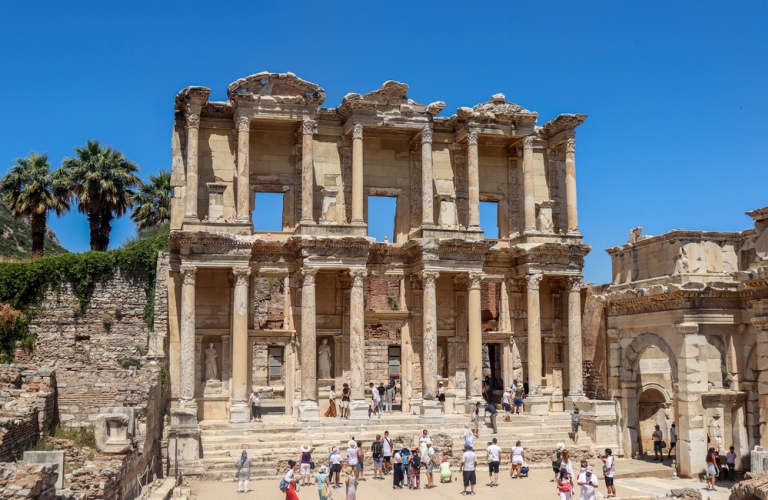
Library of Celsus: One of the most recognizable monuments of Ephesus, famous for its monumental two-storey façade.
Great Theatre of Ephesus: A large ancient theatre associated with public gatherings, performances and the events described in the Acts of the Apostles.
Curetes Street: One of the principal streets of ancient Ephesus, lined with monuments and remains of public buildings.
Temple of Hadrian: A beautifully decorated Roman monument dedicated to Emperor Hadrian.
Temple of Artemis: The remains of the sanctuary associated with one of the Seven Wonders of the Ancient World, located outside the main archaeological area.
For a broader overview, read our Ephesus Travel Guide and discover more places to visit in Ephesus.
Frequently Asked Questions About the Terrace Houses in Ephesus
What are the Terrace Houses in Ephesus?
The Terrace Houses are a group of seven Roman-era residences built on terraces along the slopes of Bülbül Mountain. They belonged to wealthy residents of ancient Ephesus and are famous for their mosaics, frescoes and marble decorations.
When were the Terrace Houses built?
The houses were first constructed from the 1st century AD onwards. They were modified and extended over the following centuries and remained in use until the later history of the city.
Who lived in the Terrace Houses?
They were home to wealthy and influential members of Ephesus society. Their elaborate interiors and architectural features reflect the high social status of their residents.
What makes the Terrace Houses special?
Their preserved interiors provide an unusually detailed picture of Roman domestic life. Visitors can see mosaics, wall paintings, marble decorations and the remains of residential spaces.
Are the Terrace Houses included in the Ephesus entrance ticket?
The Terrace Houses have separate admission arrangements. Check the official Turkish Museums website before visiting for the latest ticket information.
How long does it take to visit the Terrace Houses?
The time required depends on your interest in the archaeological details and the areas open to visitors. Allow extra time beyond your visit to the main streets and monuments of Ephesus.
Can I visit the Terrace Houses without a guide?
Yes, independent visits are possible when the site is open to visitors. However, a knowledgeable guide can help explain the architecture, artwork and daily life represented by the remains.
Final Thoughts
The Terrace Houses in Ephesus offer a rare opportunity to look inside the private world of wealthy Roman families. Their mosaics, frescoes, marble decorations and carefully planned interiors reveal a side of ancient life that public monuments alone cannot show.
Whether you are passionate about archaeology or simply curious about how people lived nearly two thousand years ago, the Terrace Houses add depth to any visit to Ephesus.
To explore these remarkable residences and the city's other ancient monuments, discover our Ephesus Tours.

Erdal Serbest is a travel content writer and tourism professional with a background in Tekirdağ Tourism Vocational High School. He has extensive experience in the hospitality and travel agency sectors, where he worked for several years supporting tour operations and destination marketing.
Throughout his career, he has created travel-focused blog content and contributed to destination promotion projects for various tourism platforms. Today, he focuses on developing engaging, informative, and experience-based content for turkeytravel.com.
He believes that travel is the most authentic way to understand cultures, flavors, and human stories, and he aims to reflect this perspective in every article he writes.