Blue Mosque Istanbul: History, Architecture and Visiting Guide
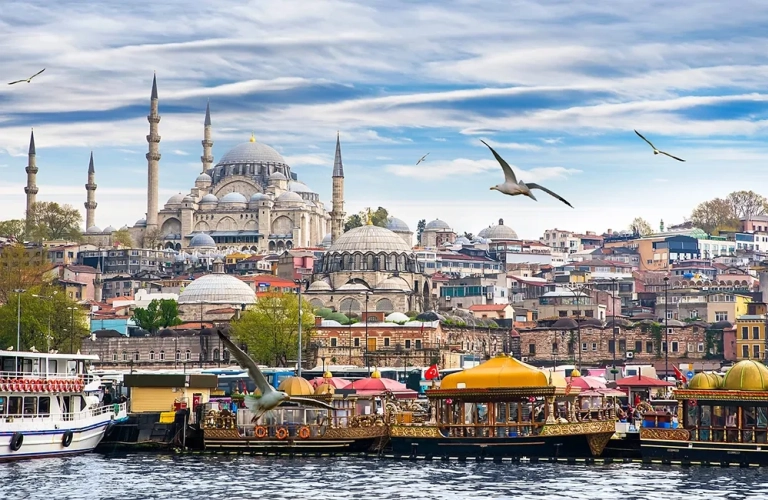
The Blue Mosque, officially known as the Sultan Ahmed Mosque, is one of Istanbul's most recognizable landmarks and a masterpiece of classical Ottoman architecture. Located in Sultanahmet Square, directly opposite Hagia Sophia, it is famous for its elegant domes, six minarets and beautifully decorated interior.
Built in the early 17th century during the reign of Sultan Ahmed I, the mosque remains an active place of worship. Its combination of architectural elegance, decorative Iznik tiles and historical importance makes it one of the essential places to visit in Istanbul.
Whether you are interested in Ottoman history, Islamic architecture or the cultural heritage of Istanbul, the Blue Mosque offers a memorable experience.
This guide explains the mosque's history, architectural features, interior decoration, visitor rules, prayer-time restrictions and how to include it in your Istanbul sightseeing itinerary.
Quick Answer: What Is the Blue Mosque in Istanbul?
The Blue Mosque is a historic Ottoman imperial mosque built between 1609 and 1617 under Sultan Ahmed I.
Its official name is the Sultan Ahmed Mosque, but international visitors commonly call it the Blue Mosque because of the blue İznik tiles decorating parts of its interior.
Its most distinctive features include:
-
Six elegant minarets
-
A large central dome surrounded by smaller domes and semi-domes
-
More than 20,000 decorative İznik tiles
-
Stained-glass windows
-
Traditional Ottoman calligraphy
-
A spacious prayer hall
-
A courtyard with monumental entrances
The mosque is located in Sultanahmet, within walking distance of Hagia Sophia, Topkapi Palace and the Basilica Cistern.
Important visitor information: Entry to the mosque is free. However, it is an active place of worship and tourist access is suspended during prayer times. Visitors must dress modestly and remove their shoes before entering the carpeted prayer hall.
The History of the Blue Mosque
Sultan Ahmed I and the Construction of the Mosque
The Blue Mosque was commissioned by Sultan Ahmed I, who ruled the Ottoman Empire from 1603 to 1617.
Construction began in 1609 and was completed in 1617, shortly before the sultan's death.
The architect was Sedefkâr Mehmed Ağa, a distinguished Ottoman architect associated with the architectural tradition of Mimar Sinan.
The mosque was designed as an imperial religious complex, reflecting the political, spiritual and architectural ambitions of the Ottoman court.
Its location was particularly significant. Built opposite Hagia Sophia and beside the historic Hippodrome, it became a prominent part of the monumental landscape of Constantinople.
Why Was the Blue Mosque Built?
Sultan Ahmed I wanted to create a major imperial mosque that would demonstrate the strength and religious identity of the Ottoman Empire.
Unlike some earlier imperial mosques, its construction was financed through the state treasury rather than being directly associated with the proceeds of military conquest.
The project also formed part of a larger religious and charitable complex, known as a külliye, which traditionally brought together facilities serving the wider community.
The Blue Mosque Through the Centuries
Over the centuries, the Sultan Ahmed Mosque has remained an important religious and architectural landmark.
It has witnessed major changes in Istanbul, from the later Ottoman period to the establishment of the Republic of Turkey and the development of the city as a modern international destination.
Today, it continues to function as a mosque while welcoming visitors from around the world outside prayer times.
Why Is It Called the Blue Mosque?
The mosque's popular international name comes from the decorative blue İznik tiles used throughout its interior.
These tiles feature floral patterns, geometric designs and traditional Ottoman decorative motifs.
The blue and turquoise tones are particularly noticeable in parts of the upper interior, where natural light enhances their colors.
Although the mosque is officially called the Sultan Ahmed Mosque, the name Blue Mosque has become widely recognized among international travelers.
Blue Mosque Architecture: A Masterpiece of Ottoman Design
The Sultan Ahmed Mosque is one of the finest examples of classical Ottoman mosque architecture.
Its design combines a monumental central dome, cascading semi-domes, slender minarets and a spacious interior.
The architect Sedefkâr Mehmed Ağa developed a composition that balances the mosque's impressive scale with visual harmony.
1. The Six Minarets
One of the mosque's most distinctive features is its six minarets.
This was unusual for an imperial mosque at the time and attracted considerable attention because the Grand Mosque in Mecca also had six minarets.
The number became the subject of a well-known historical controversy. According to the traditional account, an additional minaret was subsequently commissioned for the mosque in Mecca.
Today, the six minarets remain one of the defining features of Istanbul's skyline.
2. The Central Dome and Semi-Domes
The mosque's central dome is supported by a carefully designed system of arches, piers and surrounding semi-domes.
The arrangement creates a spacious interior with a sense of height and continuity.
Smaller domes extend the architectural composition outward, giving the building its distinctive cascading silhouette.
3. The Courtyard
The Blue Mosque has a large courtyard surrounded by arcades and smaller domes.
Its monumental entrance and symmetrical design create an impressive approach to the main prayer hall.
The courtyard is also a good place to appreciate the exterior architecture and take photographs of the mosque.
4. The Exterior Appearance
The mosque's exterior is characterized by its cascading domes, semi-domes and six minarets.
Its silhouette is particularly impressive when viewed from Sultanahmet Square, the surrounding streets and nearby historic gardens.
The architectural relationship between the Blue Mosque and Hagia Sophia makes this area one of the most recognizable parts of Istanbul.
What to See Inside the Blue Mosque
The interior of the Blue Mosque is one of the main reasons visitors come to Sultanahmet.
Its decorative elements combine religious symbolism, traditional Ottoman craftsmanship and architectural design.
İznik Tiles
The interior is decorated with thousands of İznik tiles, featuring floral and geometric patterns.
Traditional colors include blue, turquoise, green and other shades associated with Ottoman ceramic art.
The tiles are particularly noticeable on the upper walls and around architectural details.
The Main Prayer Hall
The spacious prayer hall is organized around the central dome and supported by large structural piers.
Its scale and arrangement create a remarkable sense of openness.
Visitors should remember that this is an active religious space. The prayer hall is primarily intended for worship, and designated visitor areas may be restricted.
The Mihrab
The mihrab is the architectural niche indicating the direction of Mecca.
It is an important feature of mosque interiors and is traditionally positioned at the front of the prayer hall.
The Blue Mosque's mihrab is made of finely decorated marble and forms a central part of the interior's religious design.
The Minbar
The minbar is the raised pulpit from which the imam delivers the Friday sermon and other religious addresses.
Its craftsmanship and position are important elements of the mosque's interior arrangement.
Calligraphy
Islamic calligraphy is an essential part of the mosque's decoration.
Quranic inscriptions and traditional calligraphic designs contribute to the spiritual atmosphere of the interior.
Stained-Glass Windows and Natural Light
The mosque contains numerous windows that allow natural light to enter the prayer hall.
The light interacts with the interior decoration, highlighting the tiles, domes and architectural details.
Blue Mosque vs. Hagia Sophia: What Is the Difference?
The Blue Mosque and Hagia Sophia are two of Istanbul's most important landmarks.
They stand opposite each other in Sultanahmet Square, but their histories and architectural traditions are very different.
| Feature | Blue Mosque | Hagia Sophia |
|---|---|---|
| Official name | Sultan Ahmed Mosque | Hagia Sophia Grand Mosque |
| Original construction | 1609–1617 | Completed in 537 |
| Architectural tradition | Classical Ottoman | Byzantine |
| Original function | Imperial mosque | Byzantine church |
| Current function | Active mosque | Active mosque |
| Famous for | Six minarets and İznik tiles | Monumental dome and Byzantine mosaics |
| Visitor access | Free, outside prayer times | Separate arrangements for worshippers and tourists |
The Blue Mosque represents the architectural achievements of the Ottoman period, while Hagia Sophia reflects the Byzantine heritage of Constantinople and its later Ottoman history.
Should you visit both? Yes, if your schedule allows. Their proximity makes it easy to explore both during the same visit to the historic peninsula.
Read our Hagia Sophia Istanbul Guide for more information.
Blue Mosque Entrance Fee: Is It Free to Visit?
Yes. Entry to the Blue Mosque is free for visitors.
The mosque is an active place of worship, rather than a ticketed museum. Visitors can enter outside prayer periods, subject to the mosque's visitor arrangements.
Voluntary donations may be accepted to support the upkeep of the building.
Be cautious of anyone offering an entrance ticket for the mosque itself. You do not need to purchase a general admission ticket to enter.
If you want a guided experience, a separately arranged sightseeing or guiding service may have a charge.
Blue Mosque Visiting Hours and Prayer Times
The Blue Mosque is generally open to visitors every day, but tourist access is suspended during the five daily prayer periods.
The exact visitor windows change according to prayer times, which vary throughout the year.
Friday midday prayers can create a longer restriction on tourist access.
For this reason, it is better not to rely on a fixed daily timetable copied from an old travel article.
How to Plan Your Visit
Before going:
-
Check the day's prayer times in Istanbul.
-
Avoid arriving immediately before a scheduled prayer.
-
Allow flexibility in your sightseeing schedule.
-
Follow signs and instructions at the mosque entrance.
-
Be prepared to wait if the visitor area is temporarily closed.
For current visitor guidance, consult the Blue Mosque visitor information page.
Blue Mosque Dress Code for Visitors
The Blue Mosque is an active religious building, so visitors are expected to dress modestly.
For Women
Women should:
-
Cover their heads with a scarf.
-
Cover their shoulders.
-
Wear clothing that covers their knees.
-
Avoid revealing or transparent clothing.
Head coverings may be available at the entrance if needed.
For Men
Men should:
-
Cover their shoulders.
-
Wear trousers or clothing that covers their knees.
-
Avoid entering in sleeveless or excessively revealing clothing.
Removing Shoes
All visitors must remove their shoes before entering the carpeted prayer hall.
Plastic bags are generally provided so visitors can carry their shoes.
These rules help protect the prayer space and show respect for people who come to worship.
Photography Rules Inside the Blue Mosque
Photography is generally permitted in visitor areas, but it must not disturb worshippers.
Keep the following points in mind:
-
Do not use flash photography.
-
Do not photograph people while they are praying.
-
Avoid blocking entrances or walking routes.
-
Keep noise to a minimum.
-
Follow any temporary photography restrictions.
The mosque is a place of worship, not simply a photography location. Visitors should prioritize respectful behavior.
How Long Does a Visit to the Blue Mosque Take?
Most visitors need approximately 30 to 45 minutes to explore the mosque's main visitor areas.
However, the total time can be longer if there are queues or if access is temporarily suspended for prayer.
| Available Time | Suggested Visit |
|---|---|
| 20–30 minutes | Courtyard and main interior highlights |
| 30–45 minutes | A more complete visit to the accessible areas |
| 45–60 minutes | Additional time for architecture and photography |
If you are exploring the historic peninsula, allow extra time for Hagia Sophia, the Hippodrome and other nearby attractions.
How to Get to the Blue Mosque
The Blue Mosque is located in Sultanahmet Square in Istanbul's Fatih district.
It is one of the easiest historical attractions to reach using public transportation.
By Tram
The T1 tram line is the most convenient public transportation option for many visitors.
Get off at Sultanahmet station. The mosque is only a short walk from the tram stop.
By Metro and Tram
If you are coming from another part of Istanbul, you can use the metro network and connect with the T1 tram where appropriate.
By Ferry
Visitors arriving by ferry at Eminonu can take the T1 tram toward Sultanahmet or walk through the historic peninsula.
By Taxi
Taxis are available throughout Istanbul, but traffic restrictions and congestion may affect access to the historic square.
Walking from a nearby central district or using public transportation is often more practical.
Best Time to Visit the Blue Mosque
The Blue Mosque can be visited throughout the year, but the experience varies by season and time of day.
Spring
Spring offers comfortable conditions for exploring Sultanahmet and the surrounding historical attractions.
It is also a pleasant season for walking between the mosque, Hagia Sophia and Topkapi Palace.
Summer
Summer brings longer daylight hours and more international visitors.
The area can be crowded, particularly around midday. An early visit may provide a more comfortable experience.
Autumn
Autumn is another pleasant season for exploring Istanbul's historic peninsula.
The weather is often suitable for walking tours and outdoor photography.
Winter
Winter is generally quieter, although rain and cold weather can affect outdoor sightseeing.
The mosque remains an active place of worship throughout the year, with visitor access arranged around prayer times.
Best Places to Visit Near the Blue Mosque
The Blue Mosque is located in one of Istanbul's richest historical areas.
Several major attractions are within walking distance, making it easy to organize a full day of sightseeing.
Hagia Sophia
Directly opposite the Blue Mosque, Hagia Sophia is one of Istanbul's most important architectural landmarks.
Its history spans Byzantine and Ottoman periods.
Topkapi Palace
Topkapi Palace served as the principal residence and administrative center of Ottoman sultans for centuries.
Its courtyards, imperial collections and Harem make it one of the city's essential historical attractions.
Read our Topkapi Palace Istanbul Guide.
Basilica Cistern
The Basilica Cistern is a remarkable underground Byzantine structure located close to the mosque.
Its columns, lighting and Medusa-head column bases make it one of Istanbul's most distinctive attractions.
Hippodrome of Constantinople
The historic Hippodrome is now part of Sultanahmet Square.
Visitors can see monuments such as the Obelisk of Theodosius, the Serpent Column and the Walled Obelisk.
Grand Bazaar
The Grand Bazaar is one of the world's most famous historic covered markets.
It is a good place to explore traditional Turkish crafts, carpets, jewelry, ceramics and souvenirs.
Istanbul Archaeological Museums
Located near Topkapi Palace, the museums contain important archaeological collections from ancient civilizations.
Suggested Sultanahmet Walking Route
The Blue Mosque is easy to combine with nearby attractions on a walking tour.
A practical route is:
-
Start at the Hippodrome and Sultanahmet Square.
-
Visit the Blue Mosque when tourist access is available.
-
Explore Hagia Sophia.
-
Continue to the Basilica Cistern.
-
Walk toward Topkapi Palace.
-
Finish with Gulhane Park or the Istanbul Archaeological Museums.
This route covers several important historical sites without requiring long journeys across the city.
Remember to check the opening and access arrangements of each attraction before planning the day.
Is the Blue Mosque Worth Visiting?
Yes. The Blue Mosque is one of the most important places to visit in Istanbul.
Its architecture, İznik tiles, six minarets and location opposite Hagia Sophia make it a highlight of the historic peninsula.
It also offers something different from a conventional museum visit because it remains an active religious space.
Visitors can appreciate both its architectural significance and its continuing role in the religious and cultural life of Istanbul.
Practical Tips for Visiting the Blue Mosque
Before your visit, keep these suggestions in mind:
Check Prayer Times
Tourist access is suspended during prayer periods. Check the day's schedule before setting out.
Dress Respectfully
Cover your shoulders and knees. Women should bring a headscarf or use an available covering at the entrance.
Remove Your Shoes
Shoes must be removed before entering the carpeted prayer hall. Bags are generally provided.
Keep Your Voice Low
Avoid loud conversations and follow the instructions of mosque staff.
Be Respectful When Taking Photographs
Do not use flash or photograph people while they are praying.
Allow Extra Time
Queues and prayer-time closures can affect your schedule. Avoid arranging a tightly timed visit immediately afterward.
Combine Nearby Attractions
Hagia Sophia, the Hippodrome, Basilica Cistern and Topkapi Palace are all close enough to include in the same sightseeing itinerary.
Frequently Asked Questions About the Blue Mosque in Istanbul
What is the official name of the Blue Mosque?
Its official name is the Sultan Ahmed Mosque, named after Sultan Ahmed I, who commissioned its construction.
When was the Blue Mosque built?
Construction began in 1609 and was completed in 1617 during the reign of Sultan Ahmed I.
Who designed the Blue Mosque?
The mosque was designed by the Ottoman architect Sedefkâr Mehmed Ağa.
Why is the Blue Mosque famous?
It is famous for its six minarets, large central dome, cascading smaller domes and interior decoration featuring thousands of İznik tiles.
Is the Blue Mosque free to enter?
Yes. Entry is free for visitors outside prayer times. Voluntary donations may be accepted.
Can tourists visit the Blue Mosque every day?
The mosque generally welcomes visitors daily, but tourist access is suspended during prayer times. Friday midday prayers can affect access for a longer period.
What should women wear when visiting the Blue Mosque?
Women should cover their heads, shoulders and knees. Head coverings may be available at the entrance.
Do men need to cover their knees?
Yes. Visitors should dress modestly, and men should wear clothing that covers their knees and shoulders.
Do I need to remove my shoes?
Yes. Shoes must be removed before entering the carpeted prayer hall.
How long does a Blue Mosque visit take?
Most visitors spend approximately 30 to 45 minutes exploring the accessible interior and courtyard areas, although queues and prayer closures may extend the visit.
Can I take photographs inside the Blue Mosque?
Photography is generally permitted in visitor areas, but flash should not be used and people praying should not be photographed.
Is the Blue Mosque near Hagia Sophia?
Yes. The two landmarks face each other across Sultanahmet Square and can easily be visited on the same walking tour.
Is the Blue Mosque suitable for children?
Yes. Families can visit, provided children are supervised and visitors follow the mosque's dress and behavior rules.
Is the Blue Mosque wheelchair accessible?
Some visitor access arrangements may be available for people with limited mobility. Because the building is historic and access conditions can vary, contact the mosque or ask staff at the entrance about the most suitable route.
Discover the Blue Mosque with TurkeyTravel.com
The Blue Mosque is much more than a famous Istanbul landmark. It is an enduring symbol of Ottoman architecture, Islamic art and the city's cultural heritage.
From its six minarets and monumental domes to its İznik tiles and peaceful prayer hall, the mosque offers visitors a unique opportunity to experience one of Istanbul's most important historic buildings.
Located in the heart of Sultanahmet, it can easily be combined with Hagia Sophia, Topkapi Palace, the Basilica Cistern and other nearby attractions.
TurkeyTravel.com is operated by Kontes Travel, a licensed Turkish travel agency based in Istanbul and serving international travelers since 2006.
We offer private and small-group sightseeing arrangements in Istanbul, helping visitors explore the city's historical landmarks with local guidance.
Explore our Istanbul tour packages and contact our team to plan your visit.

Erdal Serbest is a travel content writer and tourism professional with a background in Tekirdağ Tourism Vocational High School. He has extensive experience in the hospitality and travel agency sectors, where he worked for several years supporting tour operations and destination marketing.
Throughout his career, he has created travel-focused blog content and contributed to destination promotion projects for various tourism platforms. Today, he focuses on developing engaging, informative, and experience-based content for turkeytravel.com.
He believes that travel is the most authentic way to understand cultures, flavors, and human stories, and he aims to reflect this perspective in every article he writes.