Topkapi Palace Istanbul: History, Highlights and Visitor Guide
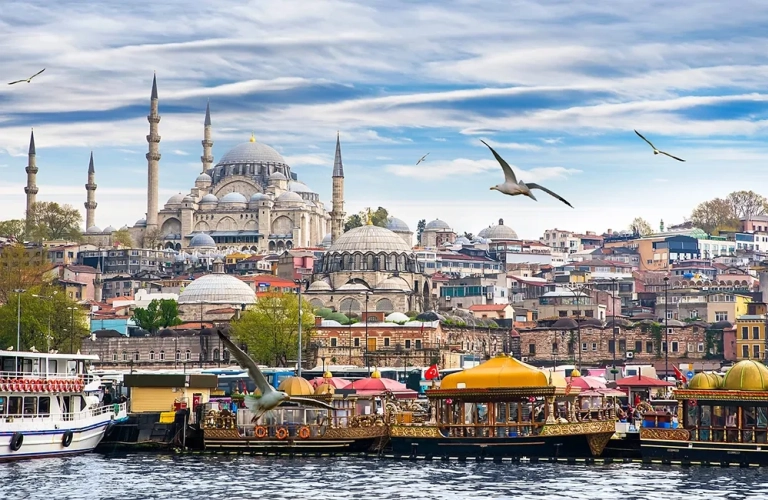
Topkapi Palace is one of the most important historical landmarks in Istanbul and one of the finest places to discover the history of the Ottoman Empire. Located on the historic peninsula, overlooking the Bosphorus and the Golden Horn, the palace served as the residence and administrative center of Ottoman sultans for nearly four centuries.
Built after the Ottoman conquest of Constantinople, Topkapi Palace developed into a remarkable complex of courtyards, pavilions, gardens, kitchens, ceremonial halls and private royal apartments. Today, its collections and historic buildings offer visitors a fascinating insight into Ottoman government, court life, architecture and culture.
Whether you are interested in Ottoman history, royal architecture, Islamic heritage or beautiful views of Istanbul, Topkapi Palace deserves a place on your itinerary.
This guide explains the palace's history, its most important sections, what to see inside, how to plan your visit and which nearby attractions you can explore on the same day.
For a wider introduction to the city, read our Istanbul Travel Guide.
Quick Answer: What Is Topkapi Palace?
Topkapi Palace was the principal residence and administrative center of the Ottoman sultans for approximately 400 years.
Construction began in 1459 under Sultan Mehmed II, following the Ottoman conquest of Constantinople in 1453. The palace expanded over the centuries and became one of the most important centers of political and cultural life in the Ottoman Empire.
Today, visitors can explore its historic courtyards, imperial collections, Harem, kitchens, religious relics, pavilions and gardens.
Topkapi Palace highlights include:
-
The Imperial Gate
-
The First, Second, Third and Fourth Courtyards
-
The Imperial Council Chamber
-
The Palace Kitchens
-
The Imperial Treasury
-
The Harem
-
The Chamber of the Holy Relics
-
The Audience Chamber
-
The Baghdad Pavilion
-
The palace terraces overlooking the Bosphorus
A thorough visit generally requires several hours. Visitors interested in the Harem and the main collections should plan their time accordingly.
The History of Topkapi Palace
Construction After the Ottoman Conquest
Following the conquest of Constantinople in 1453, Sultan Mehmed II ordered the construction of a new imperial palace.
Work began in 1459 on a site overlooking the Golden Horn, the Bosphorus and the Sea of Marmara.
The new complex became known as Topkapi Palace. It was designed to serve both as the sultan's residence and as the administrative heart of the Ottoman state.
Its location offered strategic advantages and spectacular views across the city and surrounding waterways.
The Palace During the Ottoman Empire
For centuries, Topkapi Palace was home to Ottoman sultans, members of the royal family, palace officials and court servants.
It was also the setting for important political decisions, diplomatic meetings, imperial ceremonies and administrative activities.
The palace gradually expanded as successive rulers added new buildings, gardens, pavilions and residential areas.
Each generation left its mark on the complex, creating an architectural environment that reflects different periods of Ottoman history.
The Move to Dolmabahce Palace
During the 19th century, Ottoman rulers increasingly favored European-influenced palace architecture and more modern residential arrangements.
Dolmabahce Palace became the principal imperial residence, while Topkapi continued to retain its historical and ceremonial importance.
From Imperial Residence to Museum
Following the establishment of the Republic of Turkey, Topkapi Palace was converted into a museum in 1924.
Today, it is managed by the Directorate of National Palaces and remains one of Istanbul's most significant cultural attractions.
What to See Inside Topkapi Palace
Topkapi Palace is a large complex organized around four principal courtyards. Each courtyard served a different purpose and contained buildings associated with the administration, daily life and ceremonies of the Ottoman court.
Understanding this layout makes it easier to explore the palace.
1. The Imperial Gate and First Courtyard
The Imperial Gate, also known as Bab-ı Hümayun, is the main historic entrance to the palace complex.
Beyond the gate lies the First Courtyard, a spacious area that historically connected the palace with the surrounding city.
This courtyard functioned as a more public section of the complex and contained service buildings, gardens and important structures.
The Church of Hagia Irene is also located within the outer palace grounds.
What to look for:
-
The Imperial Gate
-
Historic palace walls
-
The First Courtyard
-
Hagia Irene
-
The gardens and surrounding architecture
The First Courtyard provides an introduction to the scale and layout of the palace.
2. The Second Courtyard – The Administrative Center
The Second Courtyard was one of the most important areas of the imperial palace.
It contained buildings associated with state administration, palace services and the daily operation of the royal household.
Important sections include:
Imperial Council Chamber
The Imperial Council, known as the Divan, was where senior Ottoman officials met to discuss government affairs and important state matters.
The chamber provides insight into the political organization of the Ottoman Empire.
Tower of Justice
The Tower of Justice rises above the Second Courtyard and is one of the palace's most recognizable architectural features.
Its elevated position symbolized the authority of the Ottoman state.
Palace Kitchens
The palace kitchens prepared meals for the sultan, royal family, officials and large numbers of palace employees.
Today, the collections associated with the kitchens offer a glimpse into Ottoman culinary traditions, dining culture and the organization of the imperial household.
Harem Entrance
The entrance to the Harem is also located in this part of the palace complex.
3. The Third Courtyard – The Private Imperial Area
The Third Courtyard was more closely associated with the sultan's private world and the inner administration of the palace.
Access was historically restricted, and the buildings here were connected with imperial education, ceremonial duties and royal collections.
Important highlights include:
Audience Chamber
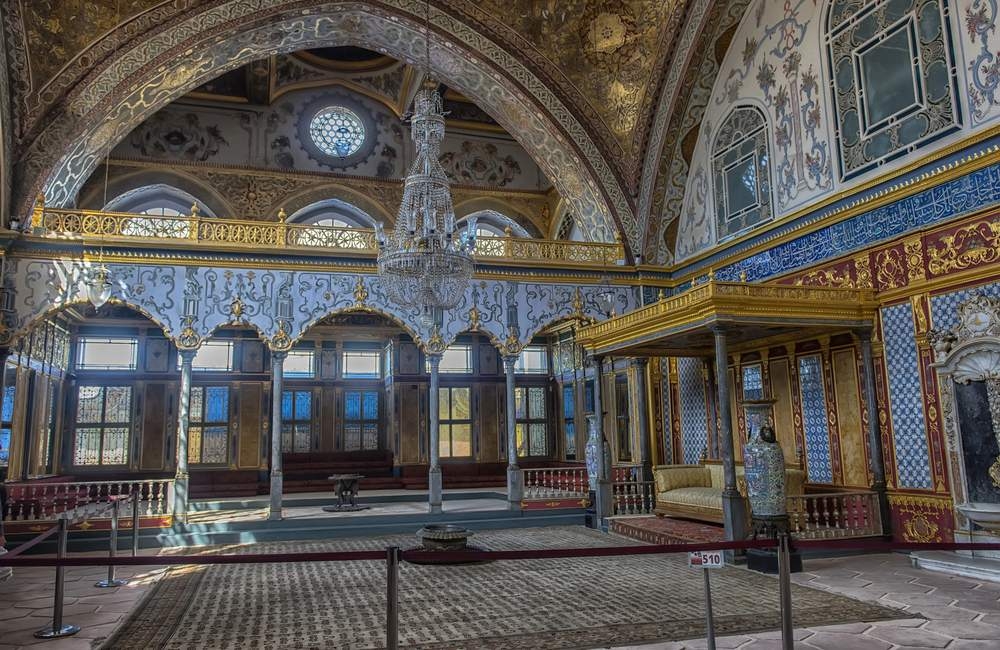
The Audience Chamber was used for official receptions and meetings between the sultan and important visitors, including foreign ambassadors.
It illustrates the ceremonial importance of the Ottoman court.
Imperial Treasury
The Treasury contains some of the palace's most famous objects, including precious jewels, ceremonial objects and valuable historical artifacts.
Among its best-known pieces are the Topkapi Dagger and the Spoonmaker's Diamond.
Chamber of the Holy Relics
This section preserves religious objects of great significance to the Islamic world.
The collection is an important part of the palace's religious and cultural heritage.
Visitors should follow the specific rules concerning respectful behavior and photography in this area.
4. The Fourth Courtyard – Gardens, Pavilions and Bosphorus Views
The Fourth Courtyard is known for its gardens, terraces and imperial pavilions.
Unlike the more administrative sections of the palace, this area provided places for relaxation and private enjoyment.
Some of its most notable features include:
Baghdad Pavilion
The Baghdad Pavilion is associated with Sultan Murad IV's campaign to Baghdad in the 17th century.
Its decorative interior features traditional Ottoman architectural details and craftsmanship.
Revan Pavilion
This pavilion commemorates the Ottoman campaign to Revan and is another example of the refined architecture of the palace.
Sofa Pavilion and Surrounding Gardens
The gardens and pavilions of the Fourth Courtyard offer a quieter atmosphere and attractive views across the surrounding waterways.
Panoramic Terraces
The palace's elevated position provides some of the most memorable views of the Bosphorus, Golden Horn and Asian shore.
Allow time to enjoy the terraces rather than rushing directly between the interior collections.
The Harem – Inside the Private World of Ottoman Royalty
The Harem is one of the most fascinating sections of Topkapi Palace.
It was the private residential area of the sultan's family and included apartments, courtyards, reception rooms and service areas.
The word harem is often misunderstood. In the Ottoman imperial context, it referred to a protected private household rather than simply a place of luxury or entertainment.
The Harem was an organized residential and social environment with its own hierarchy and responsibilities.
What Can You See in the Harem?
Highlights include:
-
Apartments associated with the Valide Sultan, the sultan's mother
-
Residential rooms
-
Courtyards
-
Ceremonial and reception spaces
-
Decorative tilework
-
Corridors and connecting passages
-
Areas associated with palace life and household administration
The architecture and decoration reveal the private side of the Ottoman court.
Is the Harem Included in the Topkapi Palace Ticket?
Ticket arrangements can change, and visitors should check exactly which sections are included in their selected ticket.
The official National Palaces information lists a combined ticket covering Topkapi Palace, the Harem and Hagia Irene. Separate access arrangements may also be available for individual sections.
Check the official National Palaces website before purchasing your ticket.
If the Harem is one of your priorities, make sure your ticket includes access before entering the palace.
The Imperial Treasury and Its Famous Collections
The Imperial Treasury is among the most popular sections of Topkapi Palace.
Its collection includes valuable objects associated with Ottoman rulers, ceremonial life and the imperial court.
Two of the best-known pieces are:
The Spoonmaker's Diamond
This large diamond is one of the most famous objects associated with the palace.
Its history is surrounded by stories and legends, adding to its attraction for visitors.
The Topkapi Dagger
The Topkapi Dagger is another celebrated piece of the imperial collection.
Its elaborate decoration and precious materials reflect the craftsmanship and wealth of the Ottoman court.
The Treasury also includes other jewels, ceremonial objects and historical artifacts.
Exhibition arrangements can change, so not every object or room should be assumed to be on display during every visit.
Topkapi Palace Architecture
Topkapi Palace is architecturally different from many European royal residences.
Rather than being one enormous building, it is a collection of courtyards, pavilions, gardens and separate structures connected through a carefully planned layout.
Its architecture reflects Ottoman traditions and the changing needs of the imperial household.
Important Architectural Features
Courtyards and Gardens
The palace's four-courtyard layout creates a gradual transition from public areas to more private imperial spaces.
Iznik Tiles
Decorative tilework appears in several palace interiors and reflects the development of Ottoman ceramic art.
Pavilions
The palace contains several pavilions associated with imperial ceremonies, private relaxation and important historical events.
Decorative Interiors
Calligraphy, painted decoration, marble details and traditional craftsmanship contribute to the palace's distinctive character.
Waterfront Position
Its location above the Bosphorus and Golden Horn gives Topkapi Palace an exceptional relationship with Istanbul's natural landscape.
Topkapi Palace Opening Days and Visiting Hours
Topkapi Palace is generally closed to visitors on Tuesdays.
The official National Palaces visitor information lists ticket office hours from 09:00 to 17:00. Opening arrangements and access to individual sections may be affected by public holidays, religious holidays, restoration work or special events.
Before your visit, check the latest information through the Directorate of National Palaces.
When Is the Best Time to Visit?
For a more comfortable visit, consider the following:
-
Arrive close to opening time.
-
Choose a weekday other than Tuesday.
-
Avoid planning your visit too late in the afternoon.
-
Allow extra time for security checks and queues.
-
Visit the Harem and popular interior collections early if they are a priority.
Spring and autumn are pleasant seasons for exploring the palace grounds and gardens.
Summer can be busy, particularly around midday. Winter may offer a quieter experience, although outdoor areas can be affected by rain and colder weather.
Topkapi Palace Tickets and Entrance Information
Topkapi Palace is a ticketed museum complex.
The official National Palaces website publishes ticket information for domestic and foreign visitors, including combined ticket arrangements.
Depending on the selected ticket, access may include:
-
The main palace sections
-
The Harem
-
Hagia Irene
The exact ticket structure and prices may change. Some sections may have separate access conditions.
Before purchasing, check:
-
Whether the Harem is included
-
Whether Hagia Irene is included
-
Which visitor category applies to you
-
Whether your ticket is valid for the intended visit date
-
Whether any restoration or temporary closure affects your planned route
For current information, use the official Topkapi Palace page.
How Long Does It Take to Visit Topkapi Palace?
A visit to Topkapi Palace usually takes around two to four hours, depending on your interests and the sections you want to explore.
| Available Time | Suggested Visit |
|---|---|
| 1–2 hours | Main courtyards and selected highlights |
| 2–3 hours | Main palace sections and important collections |
| 3–4 hours | Palace, Harem, Treasury and additional areas |
| Half a day | A more relaxed visit with time for gardens and exhibitions |
If you enjoy history and want to understand the palace properly, avoid allocating too little time.
The Harem, Treasury and religious collections deserve particular attention.
How to Get to Topkapi Palace
Topkapi Palace is located in Sultanahmet, within Istanbul's historic peninsula.
It is accessible by public transportation and is close to several major historical attractions.
By Tram
The T1 tram line is one of the most convenient ways to reach the historic peninsula.
You can get off at Sultanahmet or Gulhane and walk toward the palace, depending on your route.
By Marmaray
Sirkeci is a useful Marmaray station for visitors approaching the area from other parts of Istanbul.
From there, continue on foot toward the historic peninsula.
By Ferry
Visitors arriving by ferry at Eminonu can walk toward the historic center or connect with the tram.
By Taxi or Private Transfer
Taxis and private transfers can take you to the surrounding Sultanahmet area, although vehicle access close to the palace entrance may be restricted.
Traffic in the historic peninsula can be heavy, so public transportation is often more predictable.
What to Visit Near Topkapi Palace
One of the advantages of visiting Topkapi Palace is its location among several of Istanbul's most important historical landmarks.
You can combine the palace with other attractions in the Sultanahmet area.
Hagia Sophia
Hagia Sophia is one of Istanbul's most significant Byzantine and Ottoman landmarks.
Its architectural history and monumental dome make it an essential part of any historic peninsula itinerary.
Read our Hagia Sophia Istanbul Guide.
Blue Mosque
The Blue Mosque is famous for its domes, minarets and Iznik tile decoration.
It is located within walking distance of Topkapi Palace.
Basilica Cistern
The Basilica Cistern is an impressive underground Byzantine water reservoir with rows of columns and atmospheric lighting.
Hippodrome of Constantinople
Today known as Sultanahmet Square, the former Hippodrome preserves several historic monuments and provides an introduction to Byzantine public life.
Istanbul Archaeological Museums
Located close to Topkapi Palace, these museums contain collections related to ancient civilizations and the history of the region.
Gulhane Park
Gulhane Park was once part of the outer gardens associated with the palace.
Today, it offers a pleasant green space for a walk after sightseeing.
Suggested Topkapi Palace and Sultanahmet Walking Route
If you want to explore the historic peninsula in one day, you can organize your visit around the following route:
-
Start at Topkapi Palace.
-
Explore the palace courtyards and collections.
-
Visit the Harem if included in your ticket.
-
Walk toward Hagia Sophia.
-
Continue to the Blue Mosque.
-
Explore the Hippodrome.
-
Finish with the Basilica Cistern or a walk through Gulhane Park.
This route keeps the main attractions relatively close together and reduces unnecessary travel.
Remember that visiting every attraction in detail may require more than one day.
Is Topkapi Palace Worth Visiting?
Yes. Topkapi Palace is one of the most important places to visit in Istanbul for anyone interested in Ottoman history, architecture and culture.
Unlike a single historic monument, it offers an entire complex of buildings and collections that explain how the Ottoman imperial court operated.
Visitors can explore the administrative center of the empire, discover the private world of the royal family, see valuable historical objects and enjoy beautiful views over Istanbul.
It is particularly rewarding for travelers who want to understand the city's Ottoman heritage beyond its mosques and public monuments.
Practical Tips for Visiting Topkapi Palace
A little preparation can make your visit more enjoyable.
Wear Comfortable Shoes
The palace covers a large area, and the route includes courtyards, stone paths, stairs and uneven surfaces.
Comfortable footwear is recommended.
Check Ticket Inclusions
Do not assume that every ticket includes all sections. Check the Harem and Hagia Irene access conditions before purchasing.
Arrive Early
An early visit gives you more time to explore the main collections and reduces the pressure of approaching closing time.
Respect Museum Rules
Follow instructions regarding photography, food, drinks and visitor circulation.
Some rooms have additional restrictions, particularly those containing sensitive religious or historical objects.
Allow Time for the Gardens
The palace is not only about its indoor collections. Its gardens and terraces are an important part of the experience.
Check Accessibility
Topkapi Palace is a historic complex with uneven surfaces, stairs and some areas that may not be fully accessible to visitors with limited mobility.
If accessibility is important to your visit, contact the museum before arrival to ask about suitable routes.
Topkapi Palace Guided Tours
Exploring Topkapi Palace with a professional guide can help you understand the historical importance of its buildings and collections.
A guide can explain the roles of the four courtyards, the Ottoman court hierarchy, the Harem, the imperial collections and the events associated with different sections.
A guided visit may be particularly useful for:
-
First-time visitors to Istanbul
-
Travelers interested in Ottoman history
-
Visitors with limited time
-
Families who prefer an organized sightseeing experience
-
Travelers who want explanations beyond the museum displays
If you are planning to visit several historical landmarks, compare our Istanbul tour options.
Frequently Asked Questions About Topkapi Palace
Where is Topkapi Palace located?
Topkapi Palace is located in the Sultanahmet district of Istanbul's Fatih area, on the historic peninsula overlooking the Bosphorus and the Golden Horn.
Who built Topkapi Palace?
Construction began in 1459 under Sultan Mehmed II, following the Ottoman conquest of Constantinople.
How long did Topkapi Palace serve as an Ottoman residence?
It served as the principal imperial residence and administrative center for approximately four centuries.
Is Topkapi Palace open every day?
No. The palace is generally closed on Tuesdays. Visitors should check the official schedule for public holidays and special arrangements.
What time does Topkapi Palace open?
The official National Palaces information lists ticket office opening at 09:00. Check the current visitor information before planning your arrival.
Is the Harem included in the Topkapi Palace ticket?
The official National Palaces ticket information lists a combined ticket covering Topkapi Palace, the Harem and Hagia Irene. Ticket arrangements can change, so confirm the inclusions before purchasing.
How much time should I spend at Topkapi Palace?
Allow approximately two to four hours, depending on whether you want to explore the Harem, Treasury, courtyards and other collections in detail.
Can I visit Topkapi Palace and Hagia Sophia on the same day?
Yes. They are both located in the historic peninsula and can be combined in a sightseeing itinerary. Allow sufficient time for each attraction.
Is Topkapi Palace suitable for children?
Yes. Children interested in history, architecture and royal collections may enjoy the visit. However, the complex involves considerable walking, so plan breaks and allow enough time.
Is Topkapi Palace wheelchair accessible?
Some courtyards and visitor areas are easier to access than others. However, the historic buildings contain stairs, uneven surfaces and narrow passages. Visitors should contact the museum to confirm suitable routes before arrival.
Can I take photographs inside Topkapi Palace?
Photography rules vary by section. Follow posted signs and staff instructions, particularly in sensitive exhibition and religious areas.
Is a guided tour necessary?
A guided tour is not essential, but it can provide valuable historical context and help visitors understand the significance of the palace's different sections.
Discover Topkapi Palace with TurkeyTravel.com
Topkapi Palace offers a unique opportunity to explore the history, architecture and traditions of the Ottoman Empire.
From its impressive courtyards and imperial collections to the Harem, Sacred Relics and Bosphorus-facing gardens, every part of the palace reveals another aspect of imperial life.
Whether you are visiting Istanbul for the first time or returning to discover more of its history, Topkapi Palace is an essential destination.
TurkeyTravel.com is operated by Kontes Travel, a licensed Turkish travel agency based in Istanbul and serving international travelers since 2006.
We offer private and small-group sightseeing arrangements in Istanbul, with itineraries designed to help visitors discover the city's most important historical and cultural landmarks.
Explore our Istanbul tour packages and contact our team to plan your visit.

Erdal Serbest is a travel content writer and tourism professional with a background in Tekirdağ Tourism Vocational High School. He has extensive experience in the hospitality and travel agency sectors, where he worked for several years supporting tour operations and destination marketing.
Throughout his career, he has created travel-focused blog content and contributed to destination promotion projects for various tourism platforms. Today, he focuses on developing engaging, informative, and experience-based content for turkeytravel.com.
He believes that travel is the most authentic way to understand cultures, flavors, and human stories, and he aims to reflect this perspective in every article he writes.