Spice Bazaar Istanbul: History, What to Buy and Visiting Guide
The Spice Bazaar in Istanbul, also known as the Egyptian Bazaar or Mısır Çarşısı, is one of the city's most famous traditional markets. Located in Eminönü, beside the New Mosque and close to the Golden Horn, this historic covered bazaar is filled with colorful spices, Turkish delight, dried fruits, nuts, teas and traditional food products.
Built during the seventeenth century, the Spice Bazaar has been an important part of Istanbul's commercial life for generations. Today, it offers visitors an opportunity to discover Turkish culinary traditions, explore historic market architecture and shop for local specialties.
Whether you are looking for authentic Turkish spices, edible souvenirs or simply an enjoyable cultural experience, the Spice Bazaar deserves a place on your Istanbul itinerary.
This guide explains its history, what to buy, how to shop, nearby attractions and practical tips for visiting.
Quick Answer: What Is the Spice Bazaar in Istanbul?
The Spice Bazaar, locally known as Mısır Çarşısı, is a historic covered market in Eminönü, Istanbul.
It is particularly famous for its traditional food products and Turkish specialties, including:
-
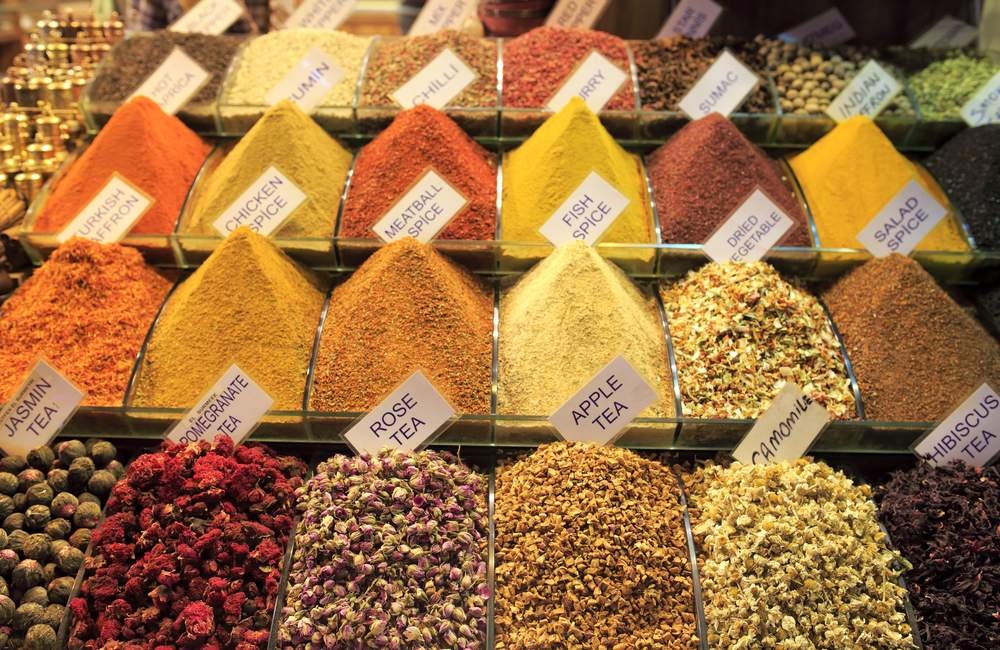
Turkish spices and herbs
-
Turkish delight (lokum)
-
Dried fruits and nuts
-
Turkish tea and herbal infusions
-
Turkish coffee
-
Baklava and other sweets
-
Honey, olives and selected local delicacies
Unlike the larger Grand Bazaar, which sells a wide range of products including carpets, jewelry, textiles and handicrafts, the Spice Bazaar has a stronger focus on food and culinary products.
Entry to the market is generally free, and most visitors can explore its main hall in approximately 30–60 minutes. Allow additional time if you plan to shop and explore the surrounding streets.
Where Is the Spice Bazaar in Istanbul?
The Spice Bazaar is located in Eminönü, within Istanbul's Fatih district, on the Historic Peninsula.
It stands beside the New Mosque (Yeni Cami), close to the Golden Horn waterfront and the Eminönü ferry terminals.
Its central location makes it easy to combine a visit with several nearby attractions, including:
-
New Mosque
-
Rüstem Pasha Mosque
-
Eminönü Square
-
Galata Bridge
-
Grand Bazaar
-
Süleymaniye Mosque
The T1 tram line has an Eminönü stop close to the market, making public transportation one of the easiest ways to reach it.
The History of the Spice Bazaar
The Spice Bazaar has an important place in Istanbul's Ottoman commercial history.
Construction During the Ottoman Period
Construction began in 1660 during the reign of Sultan Mehmed IV, under the patronage of Turhan Hatice Sultan, the sultan's mother.
The building was completed in 1664 as part of the complex associated with the New Mosque.
The market was designed to generate income for the religious and charitable institutions connected with the mosque complex.
Its location near the Golden Horn and the waterfront trading areas made it a convenient center for merchants and shoppers.
Why Is It Called the Egyptian Bazaar?
The Turkish name Mısır Çarşısı translates as Egyptian Bazaar.
The commonly accepted explanation connects the name with Egypt and the historical spice trade. Revenue associated with Egypt is also traditionally linked to the market's construction and upkeep.
During the Ottoman period, spices and other valuable goods reached Istanbul through extensive commercial networks connecting Asia, the Middle East, North Africa and the Mediterranean.
The bazaar became associated with these products and eventually acquired the name by which it is known today.
A Historic Market That Remains Active
Unlike many historic buildings that now function exclusively as museums, the Spice Bazaar remains a working commercial market.
Its shops continue to sell food products, spices, sweets, tea and other traditional goods.
This combination of historical architecture and everyday commerce makes the bazaar an interesting place to experience Istanbul's market culture.
What to Buy at the Spice Bazaar Istanbul
The Spice Bazaar is particularly suitable for visitors looking for traditional Turkish food products and edible souvenirs.
Here are some of the most interesting things to look for.
1. Turkish Spices and Herbs
Spices are the defining products of the market.
You will find a wide selection of seasonings used in Turkish and regional cuisines.
Popular choices include:
-
Sumac: A tangy spice frequently used in salads, onions and grilled dishes.
-
Pul biber: Turkish red pepper flakes used in many traditional recipes.
-
Urfa pepper: A dark, aromatic pepper with a distinctive flavor.
-
Dried mint: Commonly used in soups, yogurt dishes and sauces.
-
Cumin: An important seasoning in meat dishes and köfte.
-
Cinnamon: Used in desserts, drinks and some savory recipes.
-
Saffron: A valuable spice used in selected rice dishes and desserts.
If you are unfamiliar with Turkish spices, ask the shopkeeper about their flavor, intensity and recommended uses.
2. Turkish Delight (Lokum)
Turkish delight, known as lokum, is one of the most popular products at the Spice Bazaar.
These traditional sweets are made in many varieties, with different textures, fillings and flavors.
Popular options include:
-
Pistachio lokum
-
Rose-flavored lokum
-
Pomegranate lokum
-
Lemon lokum
-
Hazelnut lokum
-
Double-roasted pistachio lokum
Many shops offer samples, allowing you to compare different varieties before buying.
If you are purchasing lokum as a gift, check the packaging, ingredients and best-before date.
3. Dried Fruits and Nuts
Dried fruits and nuts are widely available throughout the market.
Common choices include:
-
Dried apricots
-
Dried figs
-
Raisins
-
Dates
-
Pistachios
-
Almonds
-
Hazelnuts
-
Walnuts
These products are popular both as snacks and as gifts to take home.
Check whether products are sold loose or packaged, particularly if you plan to travel internationally with them.
4. Turkish Tea and Herbal Infusions
Tea is an important part of everyday life in Türkiye.
At the Spice Bazaar, you can find traditional black tea as well as various herbal and fruit-based blends.
Popular choices include:
-
Turkish black tea
-
Apple-flavored tea
-
Rosehip tea
-
Linden tea
-
Sage tea
-
Pomegranate-flavored infusions
If you are buying tea as a souvenir, ask whether it is a traditional tea or a flavored fruit and herbal mixture. These products are not necessarily the same.
5. Turkish Coffee
Turkish coffee is one of the country's best-known traditional drinks.
Some shops sell finely ground coffee and selected blends suitable for preparation in a traditional cezve.
Visitors can also find coffee-related gifts and accessories.
For an authentic Turkish coffee experience, consider trying a cup at a nearby traditional café.
6. Baklava and Traditional Sweets
The surrounding Eminönü area is also known for traditional Turkish sweets.
Depending on the shop, you may find:
-
Baklava
-
Pistachio pastries
-
Halva
-
Sesame-based sweets
-
Sugar-coated nuts
-
Traditional confectionery
For products that are difficult to carry during a long journey, consider buying smaller quantities or asking about suitable packaging.
7. Honey, Olives and Other Local Products
Some market shops also sell honey, olives, olive oil, cheeses and other delicatessen products.
These items provide an opportunity to discover different regional food traditions.
For international travelers, remember that customs regulations may restrict the import of certain food products. Check the rules of your destination country before purchasing products intended for travel.
How to Shop at the Spice Bazaar
Shopping at the Spice Bazaar can be enjoyable, but it is worth taking a little time to compare products and prices.
Compare Prices Before Buying
You will find several shops selling similar products.
Prices can vary according to quality, origin, packaging and quantity.
Compare a few options before making a purchase, especially for expensive products such as saffron, pistachios and premium Turkish delight.
Ask About Product Quality
Do not hesitate to ask questions.
For spices, you can ask about:
-
Country or region of origin
-
Freshness
-
Flavor intensity
-
Whether the product is pure or blended
-
Recommended storage
For sweets and packaged foods, check the ingredients and production date where relevant.
Taste Samples When Available
Some shops offer samples of Turkish delight, nuts, dried fruits and other products.
Sampling can help you choose products that suit your taste.
You should never feel obliged to purchase something simply because you have accepted a sample.
Understand the Bargaining Culture
Bargaining practices vary from shop to shop.
In established food stores, prices may be clearly displayed and negotiation may be limited. Some sellers may be more flexible when you purchase larger quantities.
A polite question such as "Is there a better price for this quantity?" is usually sufficient.
Do not assume that every product has a negotiable price.
Check Packaging for Travel
If you are buying food products to take home, ask for sealed packaging and check the destination country's customs rules.
Properly labeled and sealed products are generally easier to identify during travel than loose, unmarked goods.
Spice Bazaar vs. Grand Bazaar: Which Should You Visit?
Both markets are important parts of Istanbul's commercial heritage, but they offer different shopping experiences.
| Feature | Spice Bazaar | Grand Bazaar |
|---|---|---|
| Turkish name | Mısır Çarşısı | Kapalıçarşı |
| Main focus | Food, spices and delicacies | General shopping and traditional crafts |
| Famous products | Spices, lokum, tea and dried fruits | Carpets, jewelry, ceramics, textiles and souvenirs |
| Location | Eminönü | Beyazıt |
| Atmosphere | Compact food-focused market | Large historic shopping complex |
| Suggested visit | About 30–60 minutes | Several hours if exploring extensively |
If you are interested in Turkish food and edible souvenirs, the Spice Bazaar is a natural choice.
If you want to explore traditional handicrafts, carpets, jewelry and a wider range of products, the Grand Bazaar offers a different experience.
Many visitors choose to see both during their stay in Istanbul.
Read our Grand Bazaar Istanbul shopping guide for more information.
What to Eat Around the Spice Bazaar
The Eminönü area is one of Istanbul's most interesting places to explore traditional street food and local flavors.
After visiting the market, consider trying some of the following specialties.
Balık Ekmek
Balık ekmek is a traditional fish sandwich associated with the waterfront around Eminönü.
It is commonly prepared with grilled fish, bread, onions and salad.
Turkish Tea
A glass of Turkish tea is a familiar part of local café culture.
You can enjoy it at one of the cafés around the bazaar or along the waterfront.
Turkish Coffee
Turkish coffee is traditionally prepared in a small pot called a cezve and served in a small cup.
It is often enjoyed slowly, making it a pleasant break during a busy sightseeing day.
Baklava
Baklava is one of Türkiye's most famous desserts, traditionally made with layers of thin pastry, nuts and syrup.
Pistachio and walnut varieties are among the most popular.
Simit
Simit is a circular bread covered with sesame seeds and commonly sold by street vendors throughout Istanbul.
It is an easy snack while exploring Eminönü.
For more food recommendations, read our What to Eat in Istanbul guide.
Best Time to Visit the Spice Bazaar
The Spice Bazaar can be visited throughout the year.
The best time depends on your preferred atmosphere and tolerance for crowds.
Early Morning
Morning visits are often more comfortable for visitors who prefer a quieter shopping experience.
You can explore the market before the busiest sightseeing periods.
Weekdays
Weekdays may offer a more relaxed atmosphere than busy weekend periods, although the market can still be lively.
Weekends
The bazaar can become crowded with both local shoppers and international visitors, particularly during popular travel seasons.
Religious and National Holidays
Opening arrangements may differ during public holidays and religious celebrations.
Check local information before visiting if your trip coincides with a holiday.
Spice Bazaar Opening Hours and Entrance Fee
The Spice Bazaar is a working public market rather than a ticketed museum.
Entry is generally free, and visitors can browse the market without purchasing anything.
Opening times are commonly reported as approximately 09:00–19:00, but individual shop schedules and holiday arrangements may differ.
Before your visit, check the latest local information, particularly during religious holidays and special closure periods.
How to Get to the Spice Bazaar
The Spice Bazaar is centrally located in Eminönü and is easy to reach using public transportation.
By Tram
The T1 tram line is one of the most convenient ways to reach the market.
Get off at Eminönü. The bazaar is only a short walk from the tram stop.
By Ferry
Eminönü is an important ferry hub connecting the European and Asian sides of Istanbul.
If you are traveling from Kadıköy or Üsküdar, a ferry to Eminönü can be a convenient option.
From Sultanahmet
Take the T1 tram toward Eminönü.
The journey is short, and the market is within walking distance of the stop.
From Galata and Karaköy
You can reach Eminönü by crossing Galata Bridge on foot or using nearby public transportation.
The walk also provides attractive views of the Golden Horn and the historic waterfront.
For more information, read our Istanbul transportation guide.
Best Places to Visit Near the Spice Bazaar
The market is surrounded by important historic and cultural attractions.
You can easily combine your shopping visit with several nearby landmarks.
1. New Mosque (Yeni Cami)
The New Mosque stands directly beside the Spice Bazaar.
Construction began in the late sixteenth century under Safiye Sultan and was completed in 1663 under Turhan Hatice Sultan.
Its impressive domes, courtyard and waterfront setting make it one of Eminönü's most recognizable landmarks.
2. Rüstem Pasha Mosque
Rüstem Pasha Mosque is a remarkable Ottoman mosque known for its extensive İznik tile decoration.
Designed by the famous Ottoman architect Mimar Sinan, it is located a short walk from the Spice Bazaar.
Its interior is particularly interesting for visitors who appreciate Ottoman architecture and decorative arts.
3. Galata Bridge
Galata Bridge crosses the Golden Horn and connects Eminönü with Karaköy.
The bridge is known for its fishing activity, waterfront atmosphere and views of the historic skyline.
4. Grand Bazaar
The Grand Bazaar is one of Istanbul's most famous historic markets.
It is located farther west in the Beyazıt area and can be reached by tram or on foot.
5. Süleymaniye Mosque
Süleymaniye Mosque is one of the masterpieces of Mimar Sinan.
Its elevated location offers beautiful views across the Golden Horn and surrounding historic neighborhoods.
6. New Mosque Square and Eminönü Waterfront
The waterfront around Eminönü is one of the liveliest areas in central Istanbul.
Ferries, street food vendors, historic buildings and busy pedestrian streets create a distinctive atmosphere.
Suggested Eminönü Walking Route
If you have a few additional hours, you can combine the Spice Bazaar with several nearby attractions.
Suggested route:
-
Start at the New Mosque.
-
Explore the Spice Bazaar.
-
Walk through the surrounding streets and local food shops.
-
Visit Rüstem Pasha Mosque.
-
Continue toward Galata Bridge.
-
Enjoy the waterfront atmosphere in Eminönü.
-
Finish with a ferry ride or continue toward the Grand Bazaar.
This route combines food, architecture, shopping and waterfront sightseeing without requiring extensive transportation.
Practical Tips for Visiting the Spice Bazaar
-
Bring some cash: Many shops accept cards, but cash can be useful for smaller purchases.
-
Compare prices: Check several shops before purchasing expensive spices or sweets.
-
Ask about ingredients: Especially when buying spice blends, teas and packaged foods.
-
Check quantities: Confirm whether prices are quoted per kilogram, per package or per smaller unit.
-
Protect your purchases: Keep food products sealed and stored appropriately during travel.
-
Check customs regulations: Some food products may be restricted in your destination country.
-
Allow enough time: A short visit is possible, but shopping and exploring nearby streets can take longer.
-
Keep valuables secure: Eminönü is a busy tourist and transport area, so take normal precautions in crowded places.
Frequently Asked Questions About the Spice Bazaar Istanbul
What is the Spice Bazaar in Istanbul famous for?
The Spice Bazaar is famous for Turkish spices, herbs, Turkish delight, dried fruits, nuts, tea, coffee and other traditional food products.
What is the Turkish name of the Spice Bazaar?
Its Turkish name is Mısır Çarşısı, which translates as Egyptian Bazaar.
When was the Spice Bazaar built?
Construction began in 1660 and the bazaar was completed in 1664 during the Ottoman period.
Why is it called the Egyptian Bazaar?
The name is traditionally associated with Egypt and the historical spice trade. Revenue connected with Egypt is also commonly linked to the market's construction and maintenance.
Is the Spice Bazaar free to enter?
Yes. Entry is generally free because it is an operating public market rather than a ticketed museum.
Is the Spice Bazaar open on Sundays?
The market is generally reported to open on Sundays, unlike the Grand Bazaar. However, individual shop schedules and holiday arrangements can differ, so check before visiting.
How long should I spend at the Spice Bazaar?
Approximately 30–60 minutes is enough for a quick visit. Allow one or two hours if you want to shop, sample local products and explore the surrounding streets.
What is the difference between the Spice Bazaar and the Grand Bazaar?
The Spice Bazaar focuses mainly on food products, spices and Turkish delicacies, while the Grand Bazaar offers a much wider selection of traditional crafts, jewelry, carpets, textiles and souvenirs.
Can I buy Turkish delight at the Spice Bazaar?
Yes. Turkish delight is one of the market's most popular products, with many varieties and flavors available.
Is bargaining expected at the Spice Bazaar?
Bargaining practices vary by shop and product. Some shops display fixed prices, while others may offer flexibility for larger purchases. It is best to ask politely.
How do I get to the Spice Bazaar from Sultanahmet?
Take the T1 tram toward Eminönü and walk a short distance from the Eminönü stop to the market.
Is the Spice Bazaar suitable for families?
Yes. Families can explore the market, sample traditional sweets and discover Turkish food products. However, the covered aisles can become crowded during busy periods.
Experience Istanbul's Traditional Food Culture
The Spice Bazaar is much more than a shopping destination. It is a living part of Istanbul's commercial and culinary heritage.
From colorful spice displays and traditional Turkish delight to dried fruits, nuts, teas and local delicacies, the market offers an opportunity to discover the flavors of Türkiye in a historic setting.
Its location beside the New Mosque and close to the Golden Horn also makes it easy to combine with a wider exploration of Eminönü and the Historic Peninsula.
Whether you are shopping for souvenirs, discovering traditional ingredients or simply enjoying the atmosphere, the Spice Bazaar is a memorable part of an Istanbul visit.
Explore our Istanbul tour packages and discover more of the city's historic markets, neighborhoods and cultural attractions with TurkeyTravel.com.

Erdal Serbest is a travel content writer and tourism professional with a background in Tekirdağ Tourism Vocational High School. He has extensive experience in the hospitality and travel agency sectors, where he worked for several years supporting tour operations and destination marketing.
Throughout his career, he has created travel-focused blog content and contributed to destination promotion projects for various tourism platforms. Today, he focuses on developing engaging, informative, and experience-based content for turkeytravel.com.
He believes that travel is the most authentic way to understand cultures, flavors, and human stories, and he aims to reflect this perspective in every article he writes.