Basilica Cistern Istanbul: History, Architecture and Visitor Guide
Hidden beneath the historic streets of Sultanahmet, the Basilica Cistern is one of Istanbul's most fascinating Byzantine monuments. Its underground chamber, impressive rows of marble columns, atmospheric lighting and mysterious Medusa heads create an experience unlike any other in the city.
Known in Turkish as Yerebatan Sarnıcı, the Basilica Cistern was built during the reign of Byzantine Emperor Justinian I in the 6th century. It formed part of Constantinople's water supply system and helped provide water to important imperial buildings.
Today, visitors can walk along raised pathways above the water, admire the ancient architecture and discover the stories behind its unusual columns and sculptures.
Whether you are interested in Byzantine history, architecture or unusual places to visit, this guide explains what makes the Basilica Cistern special and how to plan your visit.
If you are exploring the historic peninsula, you can also discover our Istanbul tours.
Quick Answer: What Is the Basilica Cistern in Istanbul?
The Basilica Cistern is a large underground water reservoir built during the Byzantine period under Emperor Justinian I, traditionally dated to 532 AD.
Located in Sultanahmet, close to Hagia Sophia, it is one of the most remarkable examples of Byzantine engineering in Istanbul.
The cistern is famous for:
-
Its 336 marble columns arranged in 12 rows
-
The mysterious Medusa head column bases
-
The atmospheric underground architecture
-
Its historical role in Constantinople's water supply
-
The unusual Weeping Column
-
Its location near Hagia Sophia and the Blue Mosque
A typical visit takes approximately 45–60 minutes, although you may want more time to explore the architecture and photograph the interior.
The History of the Basilica Cistern
Why Was the Basilica Cistern Built?
Constantinople was a major imperial capital with a large population, important public buildings and an extensive palace complex.
Supplying sufficient water to the city was an essential challenge, particularly during dry periods or sieges.
The Byzantine authorities developed an extensive water infrastructure involving aqueducts, distribution channels, reservoirs and underground cisterns.
The Basilica Cistern was one of the most important components of this system.
It was constructed to store water for the Great Palace and surrounding buildings, helping provide a reliable supply to the imperial centre.
Construction Under Emperor Justinian I
The cistern was built during the reign of Emperor Justinian I, who ruled the Eastern Roman Empire from 527 to 565.
Construction is traditionally dated to 532 AD, a period when major building projects were undertaken in Constantinople following the Nika Revolt.
The structure demonstrates the engineering capabilities of the Byzantine Empire.
Its brick vaults, waterproof construction and extensive column system were designed to support a large underground water reservoir.
Why Is It Called the Basilica Cistern?
The name comes from the Basilica Stoa, a public structure that once stood above or near the site.
The Turkish name, Yerebatan Sarnıcı, means approximately "Sunken Cistern."
The building is also popularly called the Sunken Palace because of its underground appearance and impressive rows of columns.
How Was the Cistern Used?
The cistern stored water brought into Constantinople through the city's water infrastructure.
Its reserves helped supply the Great Palace and nearby buildings.
Over time, as the city's water distribution arrangements changed, the cistern became less central to everyday water supply.
It was later rediscovered and brought to wider public attention through accounts of local residents drawing water from underground spaces.
Today, it is preserved as an important historical monument and visitor attraction.
Basilica Cistern Architecture: 336 Columns Beneath Istanbul
One of the most impressive aspects of the Basilica Cistern is its monumental underground structure.
The interior covers approximately 10,000 square metres and is supported by 336 marble columns arranged in 12 rows.
The columns are approximately nine metres high, creating the appearance of an underground forest of stone.
The Column Arrangement
The columns support the brick vaults and distribute the weight of the structure across the underground chamber.
Many of them were reused from earlier buildings, a common practice in ancient and Byzantine construction.
This reuse of architectural materials is known as spolia.
The different column capitals and decorative details suggest that the materials came from more than one earlier structure.
Brick Vaults and Waterproof Construction
The ceiling consists of brick vaults supported by the columns.
The walls and floor were constructed with waterproofing techniques suitable for holding large quantities of water.
The combination of masonry, columns and vaults illustrates the technical knowledge required to build a reservoir of this scale.
The Atmosphere Inside
The interior is known for its low lighting, reflections and quiet underground atmosphere.
Water remains visible beneath the raised visitor walkways, while the columns and brick ceiling create a dramatic architectural setting.
The lighting makes the space particularly attractive for photography, although visitors should follow the current photography rules.
What to See Inside the Basilica Cistern
Several architectural features make the cistern particularly interesting. These are the main details to look for during your visit.
1. The Medusa Heads
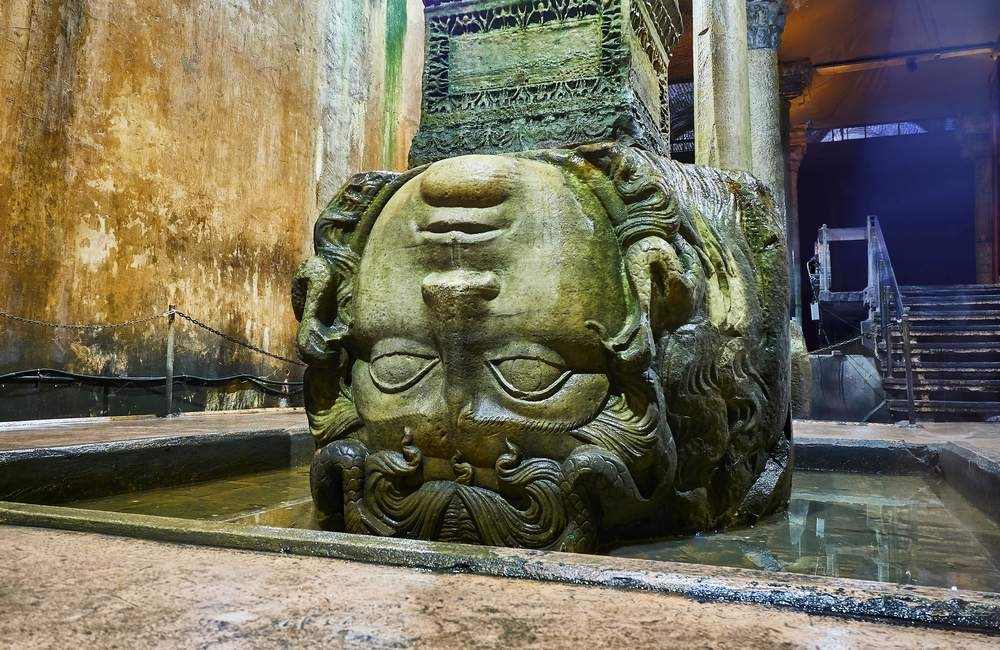
The Medusa heads are among the most famous features of the Basilica Cistern.
Two ancient stone Medusa heads are positioned beneath columns near the far end of the structure.
One is placed upside down, while the other is positioned sideways.
Their original purpose and the reason for their unusual placement remain uncertain.
Medusa is a figure from Greek mythology, traditionally depicted with snakes instead of hair. According to the myth, her gaze could turn people to stone.
The heads have inspired many stories and interpretations over the years, but there is no definitive explanation for their placement in the cistern.
Look carefully at the stonework and the unusual positioning of these sculptures as you explore the visitor pathways.
2. The Weeping Column
Another notable feature is the column often called the Weeping Column.
It has a distinctive surface decoration resembling tears or eyes.
The column is also associated with the memory of workers who suffered or died during the construction of the cistern.
Although the popular stories are difficult to verify historically, the column remains one of the structure's most recognizable decorative features.
3. The 336 Marble Columns
The rows of columns are the defining architectural feature of the cistern.
Their different capitals, textures and decorative details make the interior more interesting than a simple underground reservoir.
Take time to compare the columns as you walk through the chamber.
4. The Reflections on the Water
The shallow water beneath the walkways creates reflections of the columns and ceiling.
These reflections contribute to the cistern's distinctive atmosphere and make it a popular location for photography.
5. The Underground Brick Ceiling
The vaulted ceiling demonstrates how the structure was engineered to support the weight of the buildings and ground above it.
The brickwork, arches and columns are important parts of the cistern's historical character.
Is the Basilica Cistern Worth Visiting?
Yes, the Basilica Cistern offers a very different experience from Istanbul's mosques, palaces and outdoor historical monuments.
Its underground setting, Byzantine engineering and unusual sculptures make it a distinctive attraction.
It is particularly interesting for:
-
Visitors interested in Byzantine history
-
Architecture enthusiasts
-
Photography lovers
-
Families exploring Istanbul's historic peninsula
-
Travelers who want to see something different from the city's main mosques and palaces
The cistern is also conveniently located close to several major attractions, making it easy to include in a Sultanahmet sightseeing itinerary.
Where Is the Basilica Cistern?
The Basilica Cistern is located in the Sultanahmet neighbourhood of the Fatih district, on Istanbul's historic peninsula.
Its entrance is on Yerebatan Street, close to Hagia Sophia and Sultanahmet Square.
Address:
Alemdar, Yerebatan Caddesi, Fatih, Istanbul, Türkiye.
Its central location makes it easy to reach on foot from many of the area's main historical landmarks.
How to Get to the Basilica Cistern
By Tram
The T1 Kabataş–Bağcılar tram line is one of the most convenient ways to reach the cistern.
Get off at Sultanahmet station and walk towards the entrance on Yerebatan Street.
By Metro
Visitors arriving from other parts of Istanbul can use the metro network and connect to the T1 tram line where appropriate.
The best connection depends on your starting point.
On Foot
The cistern is within walking distance of several major attractions:
-
Hagia Sophia
-
Blue Mosque
-
Hippodrome of Constantinople
-
Topkapi Palace
-
Gülhane Park
This makes it an easy addition to an Old City walking tour.
By Taxi or Private Transfer
A taxi or private transfer can be convenient if you are travelling from another district or with children.
However, traffic and pedestrian restrictions can affect access to the historic centre. You may need to walk the final section to the entrance.
Basilica Cistern Opening Hours and Tickets
The cistern has its own visitor arrangements, and opening hours, admission prices and ticketing policies may change.
Before your visit, check the current information through the official visitor website:
Plan Your Visit – Basilica Cistern
Should You Buy Tickets in Advance?
Advance booking can be useful during busy travel periods, particularly when visitor numbers are high.
Check the available ticket types, entry sessions and cancellation conditions before purchasing.
Is Museum Pass Valid at the Basilica Cistern?
Do not assume that the national Museum Pass (MüzeKart) is accepted.
The cistern has had changes to its management and ticketing arrangements, so check the current admission policy directly before relying on a museum pass.
Are Evening Visits Available?
Evening access and special visiting sessions may depend on the current operating programme.
If you are interested in an evening visit, check whether a separate ticket or reservation is required.
Official Visitor Information
For current opening arrangements, admission policies and visitor rules, consult the Basilica Cistern visitor information page.
How Long Does It Take to Visit the Basilica Cistern?
Most visitors can explore the main visitor route in approximately 45–60 minutes.
You may want additional time if you enjoy photography, historical details or guided explanations.
A visit can be planned as follows:
| Activity | Suggested Time |
|---|---|
| Entering and orientation | 5–10 minutes |
| Exploring the main column hall | 15–20 minutes |
| Viewing the Medusa heads | 10–15 minutes |
| Photography and additional exploration | 10–15 minutes |
These are approximate planning estimates rather than a fixed visiting schedule.
Best Time to Visit the Basilica Cistern
The cistern can be visited throughout the year, subject to its operating schedule.
Because it is underground, the experience is less directly affected by outdoor weather than many other Istanbul attractions.
Spring
Spring is a pleasant season for exploring Sultanahmet and combining the cistern with nearby outdoor landmarks.
Summer
Summer is a popular travel season, and the cistern may experience high visitor numbers.
Consider planning your visit earlier in the day or checking whether advance tickets are available.
Autumn
Autumn is a comfortable season for exploring the historic peninsula.
The cistern can be combined with a longer walking tour around Sultanahmet.
Winter
Winter is a useful time to explore indoor attractions, especially on rainy or cold days.
The underground environment remains relatively cool and humid throughout the year.
What Time of Day Is Best?
An early visit can help you avoid some of the busiest periods.
However, visitor numbers vary by season and day, so there is no guaranteed quiet time.
Check the latest visitor guidance before choosing your entry time.
Practical Tips for Visiting the Basilica Cistern
A few simple preparations can make your visit more comfortable.
Wear Comfortable, Non-Slip Shoes
The underground environment can be humid, and some surfaces may be damp.
Wear comfortable shoes with good grip.
Be Prepared for Low Lighting
The cistern is deliberately kept dimly lit to create its distinctive atmosphere.
Allow your eyes a little time to adjust after entering.
Check Photography Rules
Personal photography may be permitted, but rules concerning flash, tripods and professional equipment can differ.
Follow the current visitor regulations and instructions from staff.
Travel Light
Large bags and luggage may be subject to restrictions.
Check the visitor rules before arriving with bulky belongings.
Allow Time for Security Checks
Security procedures and visitor capacity controls can affect the time required to enter.
Avoid scheduling your visit too tightly with another attraction.
Respect the Historic Structure
Do not touch the columns, sculptures or other historic surfaces.
Stay on designated visitor walkways and follow all signs.
Check Accessibility Arrangements
The Basilica Cistern is a historic underground building, so accessibility may differ from that of a modern museum.
Visitors who require step-free access or mobility assistance should contact visitor services before booking.
What Can You Visit Near the Basilica Cistern?
The cistern is surrounded by some of Istanbul's most important historical landmarks.
Hagia Sophia
Located just a short walk away, Hagia Sophia is one of Istanbul's most significant architectural monuments.
Its Byzantine origins and Ottoman history make it an essential stop for visitors exploring the Old City.
Read our Hagia Sophia Istanbul guide.
Blue Mosque
The Blue Mosque stands across Sultanahmet Square from Hagia Sophia.
Its domes, courtyard and İznik tile decoration make it one of the most recognizable Ottoman landmarks in the city.
Explore our Blue Mosque visitor guide.
Topkapi Palace
Topkapi Palace was the residence and administrative centre of Ottoman sultans for centuries.
Its courtyards, imperial collections and historic rooms provide insight into Ottoman court life.
Read our Topkapi Palace Istanbul guide.
Hippodrome of Constantinople
Sultanahmet Square preserves monuments associated with the ancient Hippodrome.
The Egyptian Obelisk, Serpent Column and Walled Obelisk are among its most recognizable historic features.
Grand Bazaar
The Grand Bazaar is one of Istanbul's best-known traditional markets.
It offers a very different experience from the quiet underground atmosphere of the cistern, with covered streets, shops and traditional products.
Read our Grand Bazaar shopping guide.
Suggested Half-Day Istanbul Old City Itinerary
The Basilica Cistern can easily be included in a half-day exploration of Sultanahmet.
Here is one possible route:
First stop: Hagia Sophia
Explore the historic building and its surroundings.
Second stop: Blue Mosque
Visit the mosque and appreciate its Ottoman architecture.
Third stop: Hippodrome
Walk through Sultanahmet Square and discover the remaining monuments of the ancient racing track.
Fourth stop: Basilica Cistern
Descend underground and explore the Byzantine reservoir.
Final stop: Gülhane Park or Topkapi Palace
If you have additional time, continue to Topkapi Palace or enjoy a relaxing walk through Gülhane Park.
The order can be adjusted according to attraction opening arrangements, prayer times and your preferred pace.
For a complete walking route, see our Istanbul Old City Walking Tour guide.
Frequently Asked Questions About the Basilica Cistern
What is the Basilica Cistern in Istanbul?
The Basilica Cistern is a large underground water reservoir built during the Byzantine period under Emperor Justinian I. It is located in Sultanahmet and is famous for its 336 columns and Medusa head sculptures.
When was the Basilica Cistern built?
The cistern was constructed during the reign of Emperor Justinian I in the 6th century. Its construction is traditionally dated to 532 AD.
Why is the Basilica Cistern famous?
It is famous for its underground architecture, 336 marble columns, Medusa heads, historical importance and atmospheric lighting.
How many columns does the Basilica Cistern have?
The cistern contains 336 marble columns arranged in 12 rows.
What are the Medusa heads in the Basilica Cistern?
They are two ancient stone sculptures used as column bases. One is placed sideways and the other upside down. Their original purpose and exact placement remain uncertain.
How long should I spend at the Basilica Cistern?
Most visitors spend approximately 45–60 minutes exploring the main visitor route. You may want longer if you enjoy photography or guided explanations.
Is the Basilica Cistern worth visiting?
Yes. It offers a distinctive underground historical experience and provides insight into Byzantine engineering and the water infrastructure of Constantinople.
Is the Basilica Cistern close to Hagia Sophia?
Yes. The cistern is located a short walk from Hagia Sophia in Sultanahmet.
Can I visit the Basilica Cistern and Topkapi Palace on the same day?
Yes. Both attractions are within walking distance of each other. However, Topkapi Palace requires considerably more time if you want to explore its main sections.
Is the Basilica Cistern suitable for children?
Children interested in history and unusual architecture may enjoy the visit. Parents should supervise them on the walkways and follow the site's safety instructions.
Is photography allowed inside the Basilica Cistern?
Photography rules depend on the current visitor regulations. Check the official information and follow restrictions concerning flash, tripods and professional equipment.
Is the Basilica Cistern accessible for wheelchair users?
Access conditions should be confirmed directly with visitor services. The building is a historic underground structure, and accessibility arrangements may differ from those in modern museums.
Is Museum Pass accepted at the Basilica Cistern?
Do not assume it is accepted. Check the current ticketing policy with the cistern's visitor service before your visit.
Discover the Basilica Cistern with TurkeyTravel.com
The Basilica Cistern is one of Istanbul's most extraordinary historical attractions. Its 336 columns, mysterious Medusa heads and remarkable underground architecture offer a fascinating glimpse into the engineering achievements of the Byzantine Empire.
Whether you are interested in history, architecture or simply want to discover a different side of Istanbul, the cistern deserves a place on your sightseeing itinerary.
Its location in Sultanahmet also makes it easy to combine with Hagia Sophia, the Blue Mosque, Topkapi Palace and other historic landmarks.
TurkeyTravel.com is operated by Kontes Travel, a licensed Turkish travel agency based in Istanbul. We offer private and small-group sightseeing experiences for visitors who want to explore Istanbul's history and cultural heritage.
Discover our Istanbul tours or browse our Turkey tour packages to plan your journey.

Erdal Serbest is a travel content writer and tourism professional with a background in Tekirdağ Tourism Vocational High School. He has extensive experience in the hospitality and travel agency sectors, where he worked for several years supporting tour operations and destination marketing.
Throughout his career, he has created travel-focused blog content and contributed to destination promotion projects for various tourism platforms. Today, he focuses on developing engaging, informative, and experience-based content for turkeytravel.com.
He believes that travel is the most authentic way to understand cultures, flavors, and human stories, and he aims to reflect this perspective in every article he writes.