Istanbul Old City Walking Tour: Route, Highlights and Tips
Walking through Istanbul's Old City is one of the best ways to discover the city's remarkable history. In the Sultanahmet district, Byzantine monuments, Ottoman mosques, ancient streets and traditional markets are located within a relatively compact area.
An Istanbul Old City walking tour takes you through the historic heart of the city, where you can explore landmarks such as Hagia Sophia, the Blue Mosque, the Hippodrome, Basilica Cistern and Topkapi Palace.
You can follow the route independently or join a guided walking tour with a professional local guide. Either way, exploring on foot allows you to appreciate the architecture, discover small streets and experience the atmosphere of historic Istanbul at your own pace.
This guide provides a practical walking route, explains the main attractions and offers useful advice about timing, transportation, entrance arrangements and guided tours.
If you are planning a longer stay, explore our Istanbul tours for additional sightseeing ideas.
Quick Answer: What Is the Best Istanbul Old City Walking Tour?
A classic Istanbul Old City walking tour focuses on the Sultanahmet area and its surrounding historic landmarks.
A suggested route includes:
-
Hagia Sophia
-
Blue Mosque
-
Hippodrome of Constantinople
-
Basilica Cistern
-
Topkapi Palace
-
Istanbul Archaeological Museums or Gülhane Park
-
Grand Bazaar
Allow approximately three to four hours for a shorter walk with exterior sightseeing and selected stops. If you plan to enter several museums, palaces and historical buildings, allow a full day or divide the attractions across two days.
The route can be adapted depending on your interests, walking pace and the opening arrangements of individual attractions.
Why Explore Istanbul's Old City on Foot?
Sultanahmet is one of Istanbul's most historically significant districts. Many of its major attractions are close enough to explore during a walking itinerary.
Discover Byzantine and Ottoman History
The Old City contains landmarks from different periods of Istanbul's history.
You can see the legacy of the Byzantine Empire around Hagia Sophia and the Hippodrome, followed by the architectural achievements of the Ottoman period at the Blue Mosque and Topkapi Palace.
Enjoy the Historic Streets
Walking between the major attractions gives you the opportunity to discover traditional streets, courtyards, small shops and historic buildings that are easy to miss when travelling by vehicle.
Explore at Your Own Pace
A walking tour allows you to spend more time at the places that interest you most.
You can stop for photographs, take a break at a café or spend additional time exploring a museum without following a fixed vehicle schedule.
Experience the Atmosphere of Sultanahmet
The historic square, surrounding gardens, traditional streets and nearby markets create a distinctive atmosphere.
The area is especially rewarding for visitors interested in history, architecture, culture and photography.
Istanbul Old City Walking Tour Route: Main Attractions
The following route is designed around the central Sultanahmet area. You can complete the shorter version in a few hours or extend it by visiting the interiors of the main attractions.
Stop 1: Hagia Sophia
Begin your walk at Hagia Sophia, one of the most important architectural monuments in Istanbul.
Originally completed in 537 during the reign of Byzantine Emperor Justinian I, the building served as a church for centuries before becoming an Ottoman imperial mosque following the conquest of Constantinople in 1453.
Today, Hagia Sophia is a mosque and an important historical landmark.
Its enormous dome, historic mosaics, marble columns and architectural details reflect more than fourteen centuries of history.
What to look for:
-
The monumental central dome
-
Byzantine architectural features
-
Historic mosaics and decorative details
-
Ottoman additions and Islamic calligraphy
-
The building's exterior and surrounding square
Visitor access arrangements differ between the prayer area and the designated tourist visiting areas. Check the current rules, ticket requirements and visitor information before entering.
Read our detailed Hagia Sophia Istanbul guide for more information.
Stop 2: Blue Mosque
The Blue Mosque stands directly opposite Hagia Sophia and is one of the most recognizable Ottoman landmarks in Istanbul.
Officially known as Sultan Ahmed Mosque, it was built during the reign of Sultan Ahmed I and completed in the early 17th century.
The mosque is famous for its elegant domes, six minarets and interior decoration featuring İznik tiles.
Highlights include:
-
The impressive main dome
-
The cascading smaller domes
-
The spacious courtyard
-
The İznik tile decoration
-
The historic calligraphy and interior details
The Blue Mosque remains an active place of worship. Visitor access may be restricted during prayer times, and visitors should follow the mosque's dress code and instructions.
Read our Blue Mosque Istanbul visitor guide before your visit.
Stop 3: Hippodrome of Constantinople
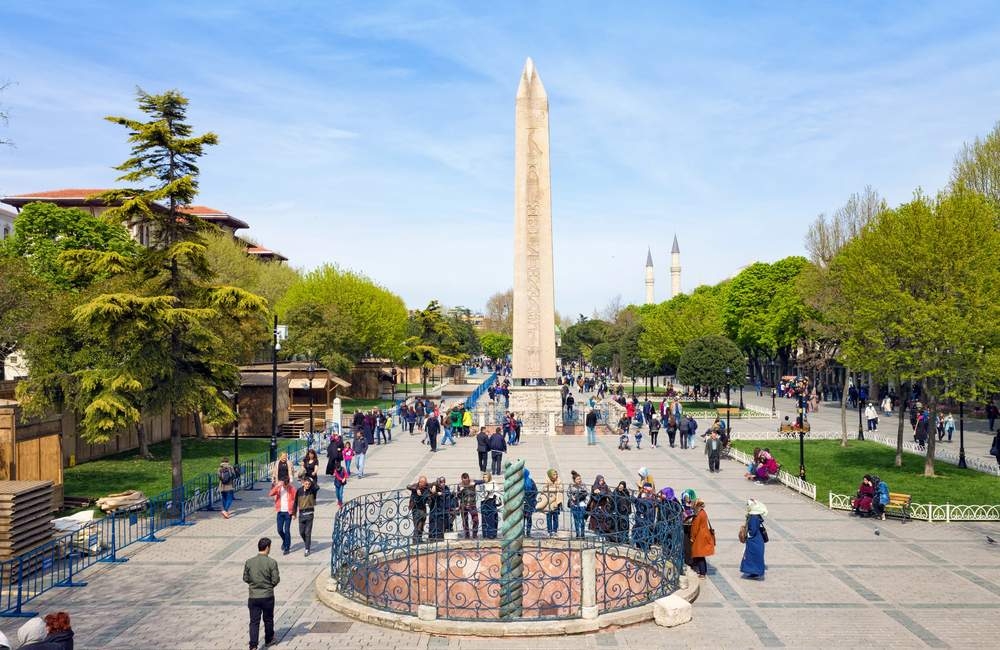
After visiting the Blue Mosque, explore the historic Hippodrome, now known as Sultanahmet Square.
During the Byzantine period, the Hippodrome was the centre of public entertainment, political gatherings and chariot racing.
Although much of the original structure has disappeared, several important monuments remain.
Main historical features include:
-
The Egyptian Obelisk
-
The Serpent Column
-
The Walled Obelisk
-
The former site of the monumental racing track
The square provides an opportunity to understand the importance of Constantinople as the capital of the Byzantine Empire.
It is also a convenient place to take photographs and enjoy the surrounding historic architecture.
Stop 4: Basilica Cistern
Continue towards Basilica Cistern, one of Istanbul's most fascinating underground historical structures.
Built during the Byzantine period under Emperor Justinian I, the cistern was designed to store water for the city and nearby imperial buildings.
Its atmospheric interior contains rows of columns supporting the underground structure.
Main highlights include:
-
The large underground chamber
-
Rows of ancient columns
-
The Medusa head column bases
-
The lighting and reflections across the water
The Basilica Cistern is one of the most distinctive attractions in the Old City.
It is a popular visitor site, so allow additional time during busy periods. Check current admission arrangements and opening information before your visit.
Stop 5: Topkapi Palace
From Basilica Cistern, continue towards Topkapi Palace, the former residence and administrative centre of Ottoman sultans.
The palace was established following the Ottoman conquest of Constantinople and developed over several centuries.
Its courtyards, imperial collections, gardens and historic buildings provide insight into the political and private life of the Ottoman court.
Important sections include:
-
The Imperial Gate
-
The First, Second, Third and Fourth Courtyards
-
The Imperial Council building
-
The Harem
-
The Imperial Treasury
-
The Sacred Relics collection
-
The palace gardens and pavilions
Topkapi Palace is much larger than the other attractions on this route. If you want to explore the interior properly, allow several hours rather than treating it as a brief stop.
Check which sections are open and included in your ticket before entering.
Read our Topkapi Palace Istanbul guide for a detailed explanation of the palace.
Stop 6: Istanbul Archaeological Museums or Gülhane Park
After Topkapi Palace, you can choose between a museum visit and a more relaxed outdoor walk.
Option A: Istanbul Archaeological Museums
Located near the palace grounds, the Istanbul Archaeological Museums are among the city's important cultural institutions.
Their collections cover several ancient civilizations and include archaeological objects from different parts of the former Ottoman territories.
This is a worthwhile addition for visitors interested in ancient history and archaeology.
Official information: Istanbul Archaeological Museums
Option B: Gülhane Park
If you prefer a break from museums, walk through Gülhane Park.
Once part of the outer gardens of Topkapi Palace, the park offers shaded paths and green spaces in the historic peninsula.
It is a pleasant place to relax before continuing your walk.
Stop 7: Grand Bazaar
Finish your walking tour at the Grand Bazaar, one of Istanbul's best-known historic markets.
The covered market has a long history and contains numerous lanes and shops selling traditional Turkish products.
You can explore:
-
Turkish carpets and kilims
-
Ceramics and decorative objects
-
Jewelry and accessories
-
Textiles and leather goods
-
Lamps and traditional souvenirs
The Grand Bazaar is not simply a shopping destination. Its covered streets, historic architecture and lively atmosphere are part of the Old City's cultural experience.
Opening arrangements can vary on Sundays and public holidays, so check before planning your final stop.
For shopping advice, read our Grand Bazaar Istanbul guide.
Suggested Istanbul Old City Walking Tour Map and Route
The following order provides a practical way to explore the main landmarks without repeatedly crossing the same streets.
Suggested route:
Hagia Sophia → Blue Mosque → Hippodrome → Basilica Cistern → Topkapi Palace → Archaeological Museums or Gülhane Park → Grand Bazaar.
You can shorten the route by finishing after Basilica Cistern or extend it by spending more time inside the palace and museums.
The walking conditions are not entirely flat. Some streets have slopes, uneven paving and crowded pedestrian areas, so comfortable footwear is important.
How Long Does an Istanbul Old City Walking Tour Take?
The time required depends mainly on how many attractions you enter.
| Walking Tour Style | Suggested Time | What to Expect |
|---|---|---|
| Short walking route | 2–3 hours | Main squares, exterior views and selected stops |
| Standard walking tour | 3–4 hours | Main landmarks with time for photographs and short breaks |
| Extended sightseeing | 5–6 hours | Several attractions visited inside |
| Full-day exploration | 6–8 hours | Palace, cistern, museums, market and meal breaks |
These are planning estimates rather than fixed tour durations. Entrance queues, security checks, prayer schedules and the time spent inside each attraction can change the total.
If you want to explore Topkapi Palace and several other attractions in detail, a full day may be more comfortable.
Self-Guided vs Guided Istanbul Old City Walking Tour
You can explore Sultanahmet independently or join a guided walking tour.
Both options have advantages.
Self-Guided Walking Tour
A self-guided route is suitable for visitors who prefer flexibility.
Advantages:
-
Choose your own starting time
-
Spend as long as you like at each attraction
-
Take breaks whenever needed
-
Control your sightseeing budget
-
Change the route according to your interests
However, you will need to organize the route yourself and research the historical background of the places you visit.
Guided Walking Tour
A guided walking tour provides historical explanations and a structured itinerary.
Advantages:
-
Learn about Byzantine and Ottoman history
-
Understand the historical connections between attractions
-
Receive explanations from a local guide
-
Follow an organized route
-
Ask questions during the visit
Some guided tours may include entrance arrangements, but this varies by provider. Do not assume that every guided tour includes admission or skip-the-line access.
Before booking, confirm the guide's language, duration, group size, included attractions and entrance fees.
Which Option Should You Choose?
Choose a self-guided walk if you enjoy exploring independently and want complete control over your schedule.
Choose a guided tour if historical explanations, local knowledge and an organized sightseeing experience are important to you.
You can compare available experiences on our Istanbul tours page.
Best Time to Explore Istanbul's Old City
Sultanahmet can be visited throughout the year, but the season and time of day can influence your experience.
Spring: April to May
Spring generally offers comfortable conditions for walking around the historic peninsula.
The gardens and surrounding streets become particularly pleasant, although popular attractions can be busy.
Summer: June to August
Summer brings longer daylight hours but can also mean high temperatures and larger visitor numbers.
Start early, carry water and plan indoor attractions during the warmest part of the day.
Autumn: September to October
Autumn is another comfortable season for exploring the Old City.
The weather is often suitable for longer walking routes and outdoor sightseeing.
Winter: November to March
Winter is generally colder and wetter, but the historic attractions remain interesting throughout the season.
Wear suitable footwear and clothing, particularly if you plan to spend several hours outdoors.
What Is the Best Time of Day?
Starting in the morning is generally practical because it gives you more time to explore attractions before they close.
It can also help you avoid some of the busiest periods around the main squares.
Remember that mosque visitor access may be restricted during prayer times.
Practical Tips for an Old City Walking Tour
A little preparation will make your visit more comfortable.
Wear Comfortable Walking Shoes
Historic streets may include uneven paving, steps and slopes. Comfortable shoes are strongly recommended.
Dress Respectfully at Mosques
Visitors entering Hagia Sophia's designated visitor areas and the Blue Mosque should follow the current dress requirements.
Modest clothing is appropriate, and women may need to cover their hair in mosque visitor areas.
Check Attraction Opening Arrangements
Museums, palaces and religious sites may have different opening days, visiting hours and temporary restrictions.
Check the official information before planning your route.
Carry Water
Walking between attractions can take longer than expected, particularly during warmer months.
Allow Time for Security Checks
Popular attractions may have security procedures and queues.
Avoid scheduling every stop too tightly.
Plan Your Lunch Break
Sultanahmet has cafés and restaurants where you can take a break during your walk.
A relaxed lunch can make a full-day itinerary more enjoyable.
Keep Personal Belongings Secure
The historic peninsula attracts many visitors. Keep your phone, wallet and other valuables secure in crowded areas.
Respect Historic Buildings
Avoid touching historic surfaces, climbing on monuments or entering restricted areas.
Follow signs and instructions from site personnel.
How to Get to Istanbul's Old City
Sultanahmet is accessible by several public transportation options.
By Tram
The T1 tram line is one of the most convenient ways to reach the historic peninsula.
Sultanahmet station is close to Hagia Sophia, the Blue Mosque and the Hippodrome.
By Metro and Tram Connection
Visitors arriving from other districts can use the metro network and connect to the T1 tram where appropriate.
The best connection depends on your hotel location.
By Taxi or Private Transfer
A taxi or private transfer can be convenient for reaching the historic peninsula, especially if you are travelling with luggage or children.
However, traffic restrictions and congestion can affect access to the busiest parts of Sultanahmet.
On Foot
If you are staying in Sirkeci, Gülhane or Sultanahmet, many of the main attractions may be within walking distance of your accommodation.
For further information, see our Istanbul transportation guide.
Can You Explore Istanbul's Old City in One Day?
Yes. A full day is enough to explore several of Sultanahmet's most important attractions, provided you plan your route carefully.
However, entering every palace, museum and historic building in one day can make the schedule demanding.
A practical approach is to select two or three major interior visits and enjoy the remaining landmarks from their surrounding squares and streets.
For example:
Morning
-
Hagia Sophia
-
Blue Mosque
-
Hippodrome
Midday
-
Basilica Cistern
-
Lunch in Sultanahmet
Afternoon
-
Topkapi Palace or the Archaeological Museums
-
Gülhane Park
-
Grand Bazaar, if time and opening arrangements permit
If you want to explore Topkapi Palace, the Harem and several museums in detail, consider extending your stay or dividing the route into two days.
Frequently Asked Questions About Istanbul Old City Walking Tours
What is the best walking route in Istanbul Old City?
A practical route starts at Hagia Sophia, continues to the Blue Mosque and Hippodrome, then visits Basilica Cistern and Topkapi Palace before ending near the Archaeological Museums, Gülhane Park or Grand Bazaar.
How long does an Old City walking tour take?
A shorter walk can take two to four hours. A full-day visit is more suitable if you plan to enter several attractions and explore their interiors.
Can I explore Sultanahmet without a guide?
Yes. The main attractions are relatively close to each other, and you can follow a self-guided route. A local guide can provide additional historical context and help explain the connections between the monuments.
Is the Old City walking route free?
Walking through public streets and squares does not normally require an admission ticket. However, individual attractions such as palaces, museums and underground sites may charge entrance fees.
Can I visit Hagia Sophia and the Blue Mosque on the same day?
Yes. They are located opposite each other and can easily be included in the same walking itinerary. Check their visitor arrangements and prayer schedules before entering.
Is Topkapi Palace within walking distance of Hagia Sophia?
Yes. Topkapi Palace is located a short walk from Hagia Sophia through the historic Sultanahmet area.
Is Istanbul Old City suitable for families?
Yes, but the route should be adapted to children's ages and walking ability. Plan breaks, carry water and avoid trying to visit too many interiors in one day.
Is the walking route suitable for people with limited mobility?
Some sections have uneven paving, slopes, steps and crowded pedestrian areas. Accessibility differs between individual attractions. Check the access information for each site before planning the route.
What should I wear for a walking tour in Sultanahmet?
Wear comfortable shoes and weather-appropriate clothing. If you plan to enter mosques, follow their visitor dress requirements.
Can I combine the Old City walking tour with the Grand Bazaar?
Yes. The Grand Bazaar can be included as an additional stop, although you should check its opening arrangements and allow enough time to explore its covered streets.
What is the best time to start a Sultanahmet walking tour?
Morning is generally a practical starting time because it allows more flexibility for visiting attractions and taking breaks during the day.
Explore Istanbul's Historic Old City with TurkeyTravel.com
An Istanbul Old City walking tour brings together some of the most important landmarks in the city's history.
From Hagia Sophia and the Blue Mosque to the ancient Hippodrome, Basilica Cistern, Topkapi Palace and Grand Bazaar, the historic peninsula offers an extraordinary sightseeing experience within a relatively compact area.
Whether you prefer to explore independently or join a guided walking tour, planning a sensible route will help you make the most of your time.
TurkeyTravel.com is operated by Kontes Travel, a licensed Turkish travel agency based in Istanbul. We offer private and small-group sightseeing arrangements for visitors who want to discover the city's history and cultural heritage.
Explore our Istanbul tour packages or browse our Turkey tour packages to plan a wider journey through Türkiye.

Erdal Serbest is a travel content writer and tourism professional with a background in Tekirdağ Tourism Vocational High School. He has extensive experience in the hospitality and travel agency sectors, where he worked for several years supporting tour operations and destination marketing.
Throughout his career, he has created travel-focused blog content and contributed to destination promotion projects for various tourism platforms. Today, he focuses on developing engaging, informative, and experience-based content for turkeytravel.com.
He believes that travel is the most authentic way to understand cultures, flavors, and human stories, and he aims to reflect this perspective in every article he writes.